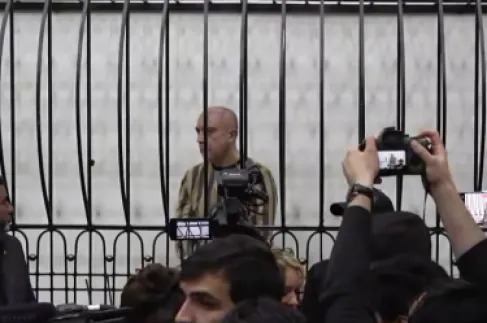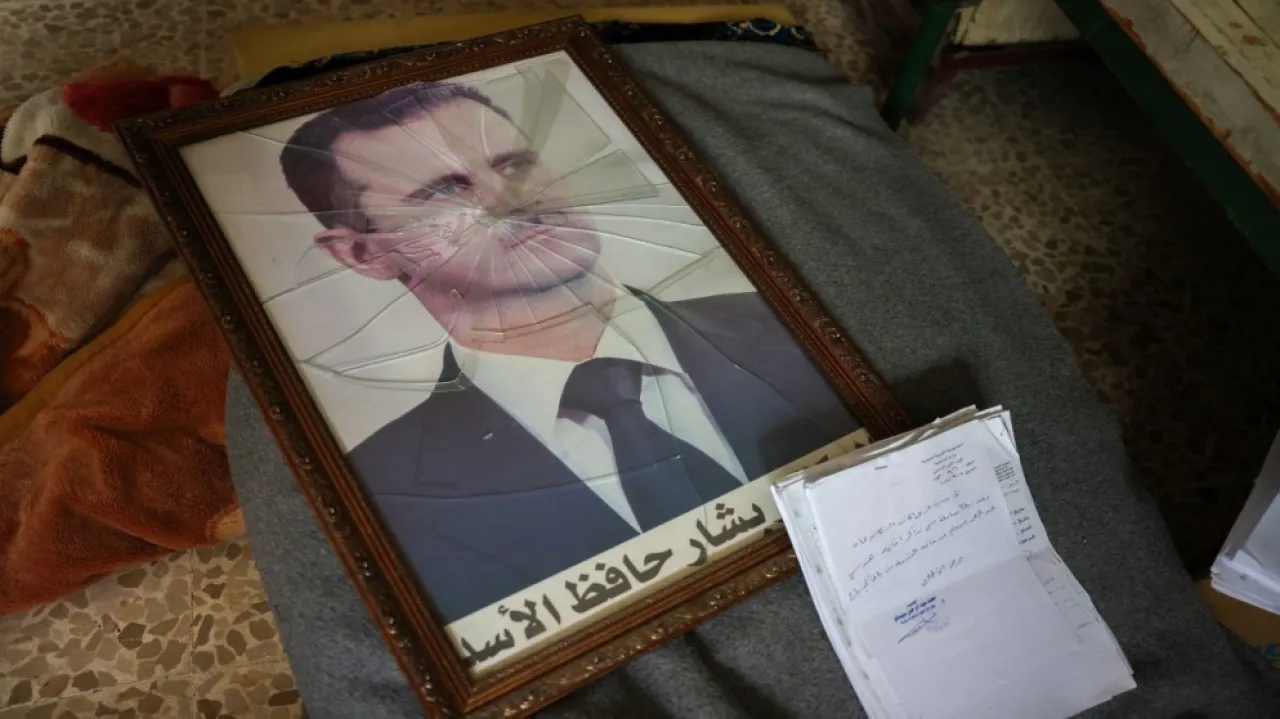
Khaberni - The first in absentia trial session for ousted Syrian President Bashar al-Assad and his brother Maher, alongside several symbols of the former regime, was held on Sunday, with the former security official Atef Najib who appeared in person before the court.
A judicial source, who chose to remain unnamed, informed AFP that "the first session of the transitional justice trials kickstarts with the preparation for the in absentia trial of criminal Bashar al-Assad and his brother Maher, along with the in-person trial of several security and military officials, the first being the criminal Atef Najib," who was detained in January 2025.
Najib was brought handcuffed to the court in Damascus and is a relative of the ousted president Bashar al-Assad. He previously headed the political security branch in Daraa (south), where the spark of civil protests ignited in 2011 and was responsible for a large-scale repression and arrest campaign in the province.
The criminal court judge Fakhr al-Din Al-Arian began the session by stating, "Today, we commence the first transitional justice trials in Syria... they include a suspect who has been arrested, present in the dock, and suspects who have fled from justice," before sequentially listing the names of other figures from the former regime, notably the ousted president Bashar al-Assad and his brother Maher Assad, who will be tried "in absentia".
The judge did not interrogate the accused Atef Najib during this session, stating it was designated "for administrative and legal procedures for preparation," and announced a second trial session on the 10th of May.
The judicial source confirmed that the in-person trials will include Waseem Assad, a relative of the ousted president, the former Grand Mufti Badr al-Din Hassoun, and other military and security officials detained by the new authorities over recent months and who will be tried for committing atrocities against Syrians.
According to the Syrian criminal procedure law, the in absentia path in the criminal court allows for proceeding with the pursuit of defendants who are not detained or who have fled, after notifying and providing them with due process. If they do not appear, the court can consider the charges filed against them and personal compensation claims, and can issue an in absentia judgment at the end of the process.
The fate of tens of thousands of missing and detained individuals in Syria, and the mass graves believed to have been used by the previous regime to bury prisoners who died under torture, represents one of the most significant aspects of the Syrian tragedy, following a conflict that killed over half a million people.