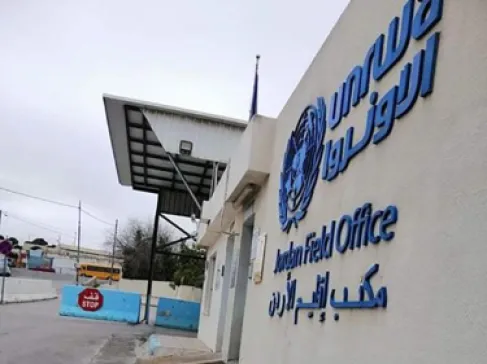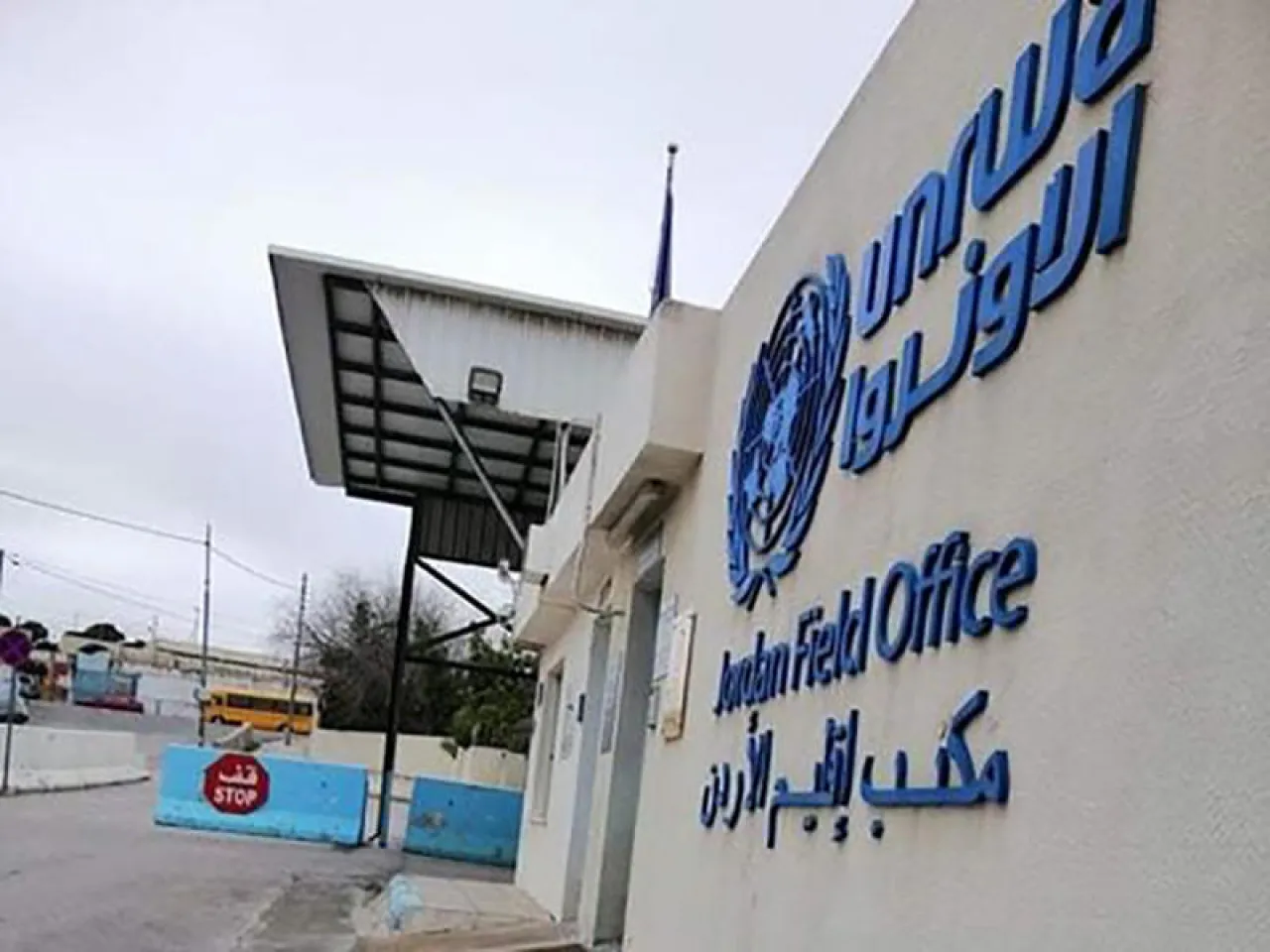
Khaberni - The United Nations Relief and Works Agency for Palestine Refugees (UNRWA) announced last month that it was forced to reduce service hours at its centers in accordance with the decision to cut the salaries of employees across all its areas of operation, including Jordan, in order to face the financial crisis, according to Tamara Al-Rifai, Director of External Relations and Communications.
Al-Rifai said, as reported by Al-Mamlaka today Sunday, that the measures were taken in centers in "Jordan, Lebanon, Syria, the West Bank, and the Gaza Strip" due to a decline in donations from donor countries.
She added that the measures included reducing the service hours, including those of employees in schools and health centers, by 20%, which was also reflected in reducing the students' school hours by the same percentage, where they now attend fewer hours during weekdays.
She added that the measures of reducing working hours led to a 20% cut in employee wages, amidst difficult living conditions and rising living costs.
Regarding Jordan, Al-Rifai pointed out that the schools affiliated with the agency in Jordan still operate 5 days a week, in line with the days of public schools, but for fewer hours.
She noted that medical services at UNRWA clinics dropped to 5 days a week instead of 6, which means that the time a doctor spends with a patient decreased and there is now more pressure on the clinics.
Regarding the West Bank, it reduced the school hours to 4 days a week instead of 5, until the end of the academic year 2025–2026.
She appealed to donor countries to increase their financial support for UNRWA, stating that the continued decline in funding will force the agency to continue reducing the services provided to Palestinian refugees, along with continuing to cut employees' wages.
Al-Rifai held the donors responsible for the agency's need to take these measures, pointing out that the international community had renewed its trust in UNRWA a few months ago by voting in the United Nations General Assembly to extend its mandate for an additional three years, but this coincided with the lowest level of funding for the agency over the past ten years.
She affirmed that UNRWA's role is not limited to providing basic services to Palestinian refugees such as education and healthcare, but extends to being an important stabilizing factor in the region, as the continuity of these services contributes to enhancing the refugees' sense of stability, especially in light of the wars and political crises the region is experiencing.
Al-Rifai emphasized that the presence of UNRWA is essential in maintaining regional stability, amidst the volatile conditions the region is experiencing.
It is noted that the United Nations Relief and Works Agency for Palestine Refugees (UNRWA) was established by a resolution of the United Nations General Assembly in 1949 and began its operations on May 1, 1950, to provide relief and basic services to Palestinian refugees in its five areas of operation.