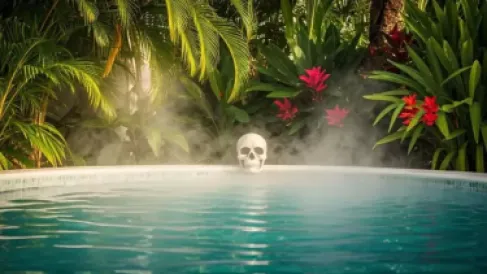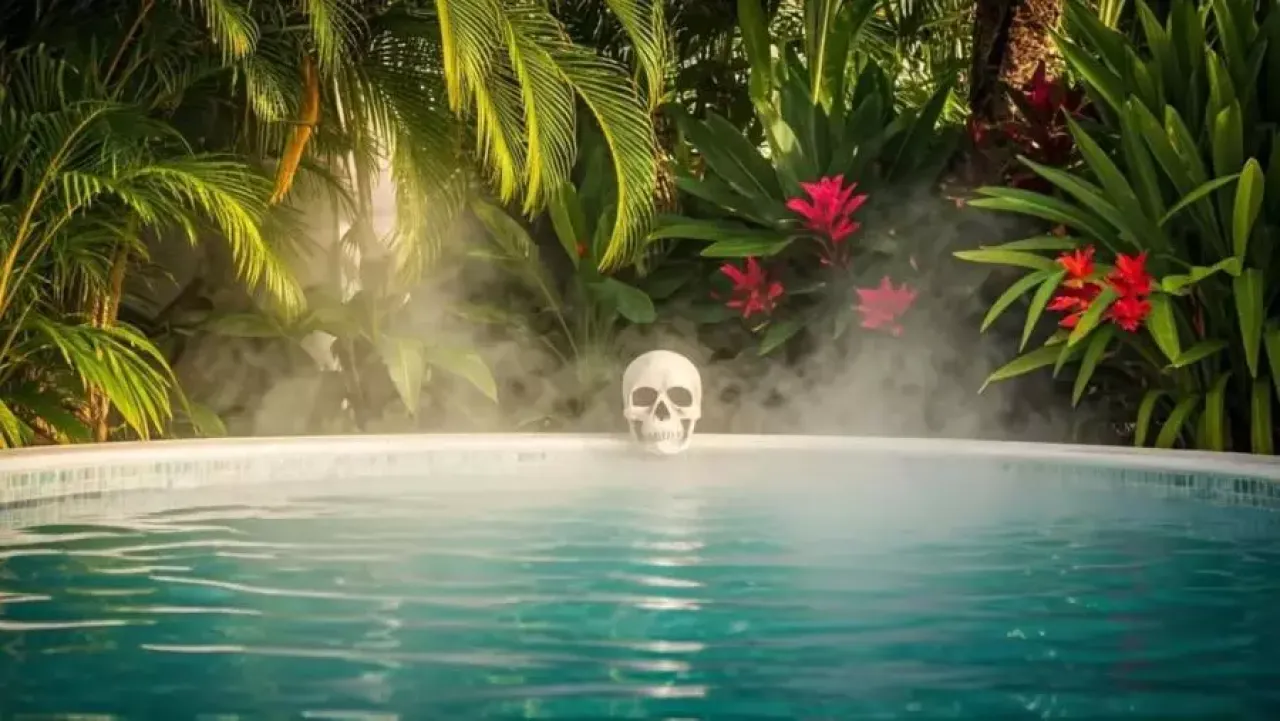
Khaberni - Normally, a "jacuzzi" symbolizes the luxury of peaceful relaxation in a warm bath, including steam bubbles, hot water, and fragrant aromas.
But if we modify the scene to make those steam bubbles filled with methane gas, and the clear hot water to salty water, we are talking about the "Jacuzzi of Death" in the Gulf of Mexico off the coast of Louisiana.
Therefore, this underwater salty pool is not a vacation spot, but a toxic pocket of seawater that kills anything that swims in it.
What is the "Jacuzzi of Death"?
The "Jacuzzi of Death" or "Jacuzzi of Despair" is a strange geographical occurrence that dates back to the Jurassic period over 140 million years ago when dinosaurs roamed the earth.
Between 2014 and 2015, the ship "EV Nautilus" discovered this deadly salty water pool at a depth of about 3300 feet below the surface of the Gulf of Mexico.
The "Jacuzzi of Death" is about 100 feet in circumference and 12 feet deep, with a temperature much warmer than the nearby ocean.
The "Jacuzzi of Death" formed when a small sea separated from the larger ocean. The evaporation of seawater left behind huge salt deposits, which, when ocean water returned, dissolved into the seawater to form a saline solution.
With the salt level 5 times higher than normal seawater, very low oxygen levels, and higher amounts of methane and hydrogen sulfide gases, these salty water pools like the "Jacuzzi of Death" become extremely deadly to creatures that crawl into them.
The "Jacuzzi of Death" attracts a number of creatures and bacteria such as mussels, which thrive on the methane that saturates the surrounding barite walls, but not by entering the pool.
What is the importance of the "Jacuzzi of Death"?
These "strange" environments may seem like life on other planets. However, the importance of the "Jacuzzi of Death" is not linked to its depth, but to its unusual nature and the things it hasn't killed.
Some microbes and bacteria can live in these salty water pools. These microorganisms are known as "extremophiles" due to their ability to survive in such inhospitable environments.
Meanwhile, the salty water pools themselves, of which there are only a few dozen around the world, are "extreme habitats" that might provide a preview of the variety of environments we might find on other planets.
Eric Cordes, an assistant professor of biology at Temple University who has studied salty water pools, considers salty water baths to be a totally unique and bizarre world and really interesting places, as they contain many microbes not found anywhere else in the world or in any other habitat.
He added that there is a lot we can learn from studying the organisms that can survive in salty water pools right at the edge, and it helps us to know more about the possibilities of life on Earth and on other planets.
Are there other salty baths around the world?
Salty baths are very rare around the world. Not all the world's oceans or bays contain salty pools like the "Jacuzzi of Death".
Aside from the Gulf of Mexico, salty water pools are found only in two other places: the Red Sea and the Mediterranean Sea.
Salty pools in the Mediterranean Sea originated through salt deposits left by the massive Zanclean flood, which refilled the Mediterranean Sea and reshaped the Earth's geological history.
Unlike those found in the Gulf of Mexico, these salty pools formed when the sea was isolated from the ocean in ancient times, allowing the emergence of "tectonics of salt" that later produced them.
Most of the salty pools that have been discovered, numbering 25 so far, are located in the Red Sea, an area known for shark attacks off the coast of the Red Sea in Egypt.