Khaberni - Israeli reports revealed Egyptian and Jordanian pressures on Israel and the United States to resume gas supplies from the Tamar platform amid concerns about the collapse of electricity networks.
The Israeli newspaper "Yedioth Ahronoth" stated that the energy sector in Tel Aviv is trying to recover from 40 days of war under a continuous barrage of rocket fire.
The Hebrew newspaper added that the Leviathan and Karish platforms were disabled for fear of a direct strike in a step that caused the economy billions of dollars in losses, while the Tamar platform alone faced the situation.
The Hebrew newspaper reported that its correspondent visited the platform and heard about the intense tension at sea and spoke with the workers who remained on the surface despite the danger.
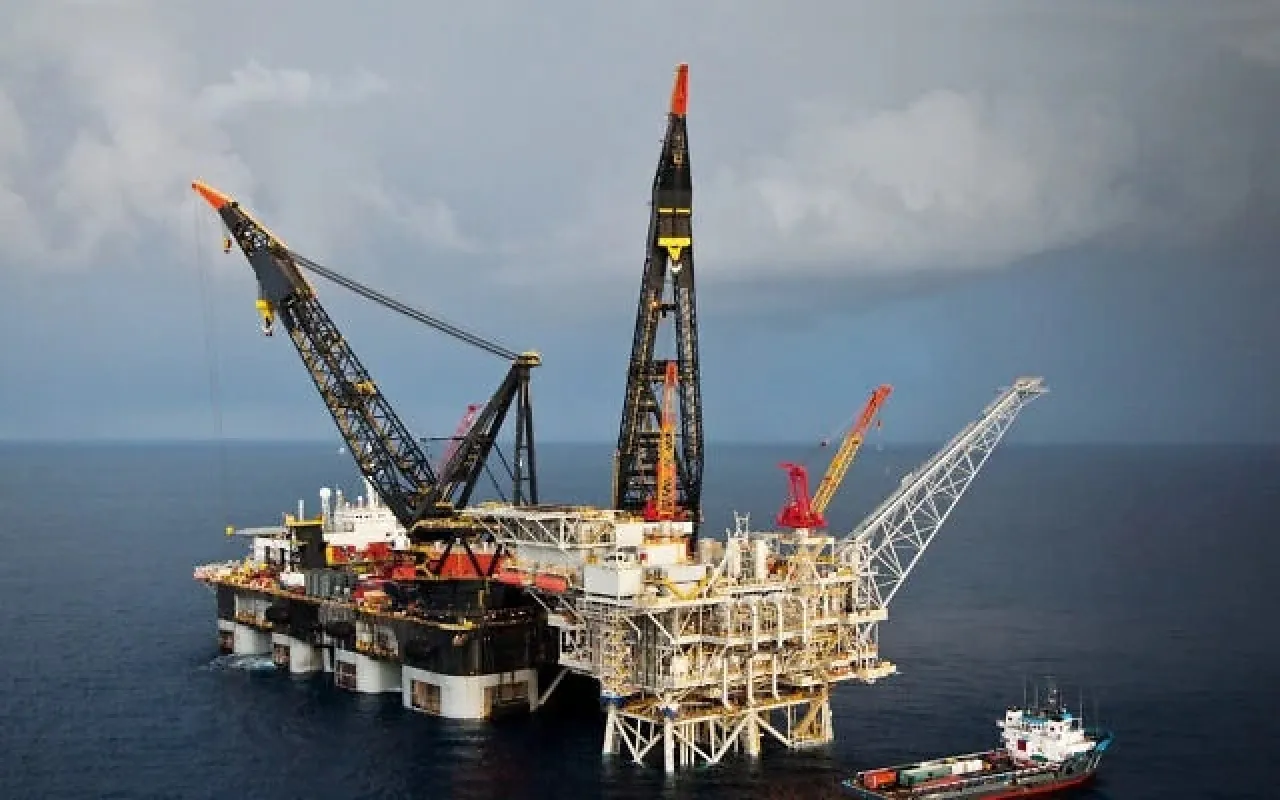
The Hebrew newspaper said that the Tamar platform, which was built at a cost of about 3 billion dollars and started operations in 2013, has become during this period the central pillar of the energy sector in Israel, and added that during the war it alone provided all the country's gas consumption and thus prevented a scenario of electricity blackout.
It noted that the platform is managed by the American energy giant Chevron, and is operated by a trained crew of about 40 people, including engineers, technicians, and system operators who are American and Israeli.
The newspaper said that one of the workers confirmed that when a drone approaches, he knows it is aimed at hitting him, and added that in this case, the emergency system is activated immediately, the gas flow stops, and the pipes are isolated within a few seconds.
The newspaper stressed that this process is implemented through automatic valves placed on the platform and on the seabed, whose task is to trap the gas inside the tank and submarine pipes, thus preventing a massive gas leak that could lead to a huge explosion and unprecedented damage even if the platform itself suffered material damage.
It mentioned that this capability allows the Ministry of Energy and Chevron to make rapid precautionary shutdown decisions whenever there is suspicion of rockets being launched towards the platform, as happened more than once during the recent battle, and added that despite the great danger, the platform continued its operation throughout the period of the war.
The Hebrew newspaper quoted Benny Zomer, Vice President of Regional Affairs at Chevron East Mediterranean, saying that it is hard to say that no one felt fear, but they had no doubt about the need to continue working, and noted that they had learned to operate under fire since October 7 and realized that something would happen with Iran so they prepared and accelerated the works.
It added that the highest priority is to maintain the safety of the workers, the environment, and the facility, then they think about the most pressing need currently, and these are the people who stayed on the platform to enable them to provide gas to the Israeli market and to their partners in neighboring countries.
The newspaper also mentioned that despite the threat of rockets, dozens of workers remained on the platform, and noted that foreign workers stayed 28 consecutive days before they traveled to rest at their homes, while Israeli workers returned to their homes every two weeks.
It added that there are logistical challenges such as the entry and exit of people when there are no flights and bringing in foreign contractors, and noted that this matter is more costly, but the most important thing is to convince those who come from abroad that their presence there is safe.
The newspaper stated that Chevron operates in more than 100 countries around the world and has very strong relationships with global contractors, yet many foreign contractors were reluctant to come to Israel since October 7, and added that in the end, because Chevron is considered a reliable company, they agreed to come and laid a pipeline 150 kilometers long during the war, enabling them to reach the peak production of Tamar.
The Hebrew newspaper pointed out that during Operation Lion's Roar, the Israeli energy sector became one of the central targets for Iran, which tried to cause an electricity blackout in the state by targeting strategic facilities, and added that Tehran well understands Israel's increasing reliance on natural gas responsible for about 70 percent of electricity production and understood that hitting gas platforms off the coast could paralyze the country's economic activity.
It said that this situation also turned the abundance of Israeli energy into a point of weakness, and added that the Haifa refinery complex was hit last month by direct Iranian bombardment, and at the same time, drones and rockets were sent towards the gas platforms in the Israeli economic waters.
The newspaper noted that this situation posed a complex dilemma for the security apparatus, as while there was a huge risk of hitting a working platform, the complete shutdown of gas platforms could have immediately damaged the electricity supplies and forced a shift to using expensive and polluting fuel.
The Hebrew newspaper stated that in the end, despite the land and sea defense systems for the platforms, which billions of shekels were invested in, the decision was to shut down the Leviathan and Karish platforms as soon as the fighting broke out, while the Tamar platform remained operational under enhanced protection to provide the minimum amount of energy to the market.
It added that the decision to shut down two out of three gas platforms for a long period yielded costly economic prices and left open questions about the readiness of the Israeli energy for future confrontations.
It noted that according to a report by the BDO consulting firm prepared by Chief Economist Chen Herzog, shutting down gas stocks caused damage to the Israeli market of about 1.5 billion shekels in just four weeks due to a roughly 22 percent increase in electricity costs resulting from the shift to using more costly and polluting fuels like coal and diesel.
It said that the report also refers to a loss of state revenues of about 400 million shekels from royalties and taxes, in addition to damage of about half a billion shekels in output due to reduced profits of gas companies.
The newspaper added that most of the gas produced from Tamar is directed to the Israeli market, while a large part of the Leviathan gas reserves are intended for export to Egypt and Jordan, and noted that the dependence of the two neighbors on Israeli gas is very large.
It stated that Egypt is already dealing with a severe energy crisis that includes planned power outages, and added that during the war, the Egyptians and Jordanians exerted heavy pressure on Israel and the United States to renew gas supplies for fear of a collapse in electricity supplies, mass demonstrations, and damage to the stability of the authorities.
The newspaper quoted Energy Minister Eli Cohen as saying that despite criticisms from parties in the sector, the matter is a success story, and he added that throughout the war the energy sector worked flawlessly and expectations spoke of possible injuries to infrastructure and energy facilities that would lead to electricity blackouts, and they said there would be blackouts for 48 hours, and they asked him if they would need to buy generators, but he said they would be able to meet the needs of the market, and indeed the Israelis did not lack gas, nor water, nor electricity.
It pointed out that Cohen confirmed the understanding that Israeli gas is also very important for regional stability due to the dependence developed by Egypt and Jordan on it, but there was a need for risk management and the needs of the Israeli market were always the highest priority.
The Hebrew newspaper stated that the Tamar platform is managed as a floating factory consisting of a complex network of tanks and refining towers that separate sand and fluids from the gas, and added that under the water operates the high-tech highway that is managed remotely.
It noted that the gas is extracted from geological layers at a depth of about 5 kilometers below the sea surface where high pressures and temperatures prevail, and from there it rushes towards a submarine system from the wellheads on the seabed at a depth of 1700 meters, and begins a journey of 150 kilometers in giant pipes placed on the bottom until it reaches the processing platform off Ashkelon.
It said that the old Mary B platform off its coast could be seen directly, which previously provided gas from the Yam Tethys reserve and went out of use in 2013 when it was depleted, and added that although it is no longer producing gas, it remained an important logistical base for Chevron and is used as a residence and storage facility for the work crew who move from it to the Tamar platform and back through small boats.
It added that for Chevron, Tamar is considered a huge profit driver that feeds the local market and export agreements to Egypt and Jordan, but its presence there also grants the state of Israel a kind of American immunity against security threats.
It said that the Leviathan platform, also managed by Chevron, only resumed operation on March 24, about a month after the start of the war, and added that the Karish platform, managed by the British company Energean, remained disabled until the ceasefire came into effect on April 8.
The Hebrew newspaper noted that the development of events and decision-making raise question marks about stability and certainty in the gas sector, and added that while central industrial facilities like the Haifa refinery continued to work, decisions were made to completely shut down gas platforms sometimes without detailed explanations or clear criteria.
It said that despite this, a huge amount, estimated at about 3 billion shekels, was invested in defending the platforms, which includes purchasing defense ships from Germany and various technological means, and added that the gap in operating decisions remained a point of contention.
It noted that while the government justified this with security considerations and energy continuity, parties in the market pointed to the identity of the operators as a crucial factor and hinted that the platforms managed by American Chevron were given priority over British Energean.
The Hebrew newspaper stated that the Ministry of Energy first took care of the gas flow to the Israeli market, but the reality of closing other platforms for weeks also affects the country's ability to attract new investments, and added that while the state asks to encourage international companies to enter drilling activity in economic waters, it actually sends a signal of regulatory instability.
It noted that for foreign investors, such uncertainty might be seen as a significant risk and hurt the attractiveness of the local market.
It quoted Minister Cohen as saying that he believes foreign companies will continue to come and understand that they acted for safety based on professional considerations and that they have defense systems of quality that can withstand these threats, and added that in the Gulf states there were more severe injuries to energy facilities and fortunately for them, this did not happen to them.
It said that the location of the platforms led to the decision of who opens and who closes, and added that no one knew how the war would develop or when it would stop and they were prepared even to silence the platforms for a longer period and almost did not touch their stocks.
The newspaper noted that the complete closure of a platform has wide economic and operational ramifications, and added that despite this, gas companies did not receive any response regarding financial compensation for the estimated financial damage of hundreds of millions of shekels.
It said that besides that, questions were also raised about whether the decision to shut down the platforms would be taken every time the threat of rockets returns and how billions of shekels invested in their defense may not be enough to enable the continuation of activity also during wartime.
It quoted Minister Cohen's response that they acted according to the instructions of the Naval Forces and military intelligence to minimize damages, and added that he does not know if they will act the same way next time and they will need risk management in each event accordingly.
It pointed out that the decision to close the platforms was for their protection but it should also be remembered that the gas has not disappeared but remains stored with them and they will continue to retrieve it now when they are operational.
It said that they have received a request for compensation from the companies and it is a legal issue they will examine whether it is justified or not and will decide accordingly, and added that natural gas is a strategic asset that brings billions to the state and leads to lower consumer prices and contributes to regional stability and therefore his policy is to expand the search for gas.
It is noteworthy that in 2018, Egypt and Israel signed a $15 billion agreement to export Israeli gas from the Leviathan field to Egypt over 10 years, and the East Mediterranean Gas Company (EMG) of Egypt receives the Israeli gas and processes it at the Idku facility to export it as liquefied gas to Europe and Asia, and Jordan imports the Israeli gas from the Tamar field for electricity generation.
These agreements form a pillar of regional economic cooperation despite the political sensitivities, and Egypt relies on Israeli gas to bridge the gap of the increasing local demand and export the surplus, while this dependency raises security concerns amid escalating regional tensions.