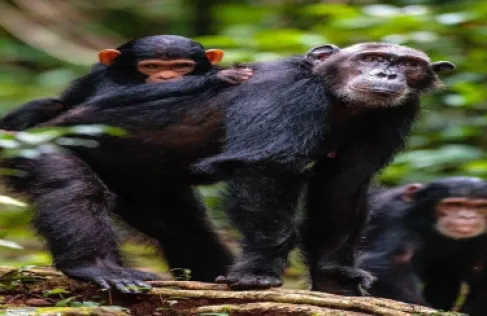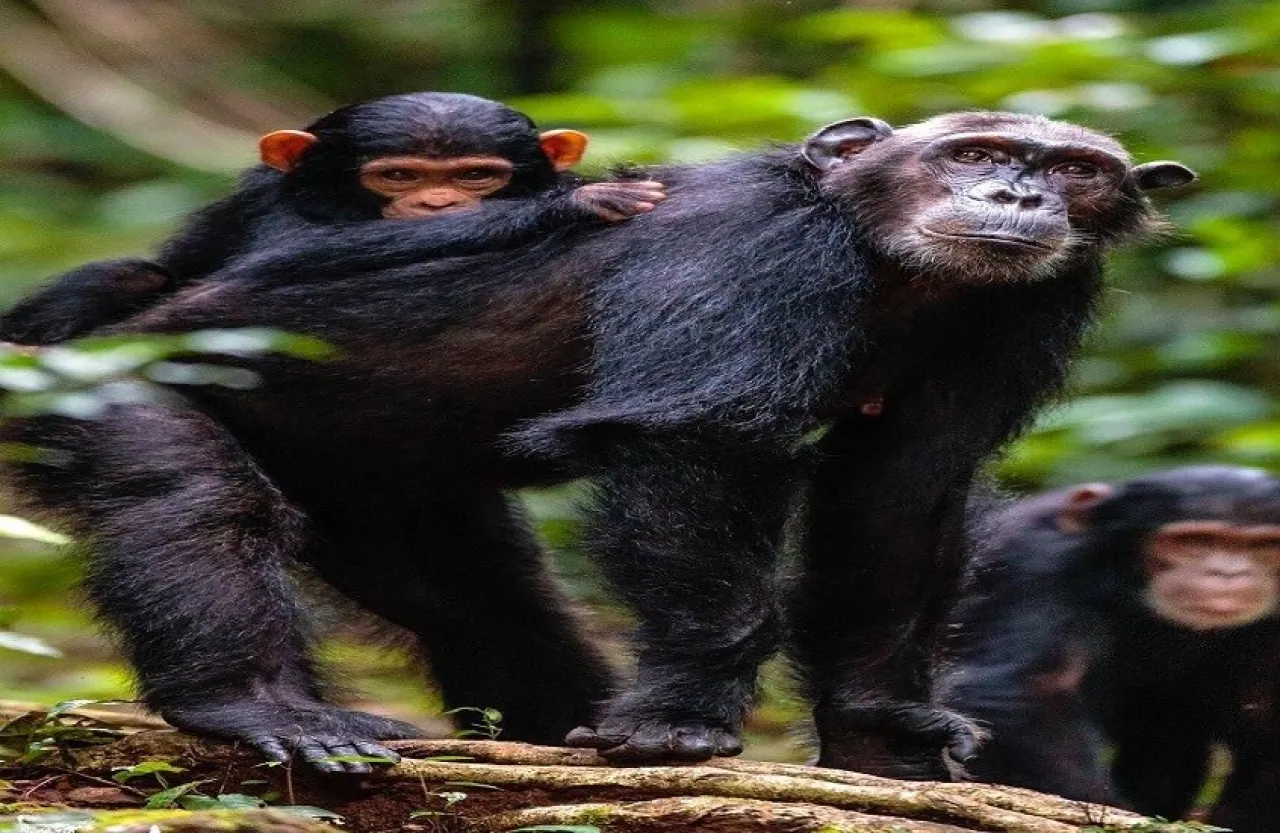
Khaberni - Scientists studying chimpanzees in the Budongo Forest in Uganda have observed that these primates not only treat their own wounds but also care for other animals.
It appears that the provision of medical assistance among chimpanzees is a more common phenomenon than previously thought, and is not limited to caring for close relatives only.
Dr. Elodie Freeman from Oxford University, the lead author of the study published in the journal Frontiers in Ecology and Evolution, said, "Our research helps shed light on the evolutionary roots of human medicine. By documenting how chimpanzees recognize medicinal plants, use them, and offer help to other animals, we gain a deeper insight into the cognitive and social foundations of human behavior."
The scientists studied two groups of chimpanzees in the Budongo Forest, known as "Sonso" and "Waibira". It was noted that about 40% of the individuals in the Sonso group suffered from injuries caused by traps.
Researchers spent four months observing the two groups, and identified the plants that the chimpanzees used to care for themselves and others. Some of these plants contain chemical properties that may help in wound healing, and are also used in traditional medicine.
During direct observation, the scientists recorded 12 injuries in the Sonso group, all resulting from internal conflicts, while five injuries were recorded in the Waibira group, including one female injured by a trap, and four males due to fights. The researchers also noted that the chimpanzees treated injured individuals from the Sonso group more frequently compared to the Waibira group.
The researchers documented 41 cases of treatment in general, including 7 cases of treating other animals and 34 cases of self-treatment.
Freeman said: "Chimpanzee wound care involves several behaviors, including directly licking wounds, which may transfer antimicrobial compounds found in saliva, licking fingers then touching the wound, placing leaves on wounds, or chewing plant materials and applying them directly to injuries. All chimpanzees recovered, although we do not know if the outcomes would have been different had they not received any care. We also documented hygiene-related behaviors, such as cleaning the genital organs with leaves after mating, and wiping with leaves after defecation, practices that may help in infection prevention."