Khaberni - There has been a pressing question about Iran since the onset of the initial strikes launched by the United States and Israel at the start of the war, simply put: Who is in charge in Iran now?
Officially, the answer might seem clear. Mojtaba Khamenei assumed the position of Supreme Leader after the death of his father, Ali Khamenei, on the first day of the war on February 28. According to the governing system in place in the Islamic Republic, this position plays a crucial role. The Supreme Leader has the final say in almost everything important: war, peace, and the strategic direction of the state.
But in reality, the true picture is much more ambiguous.
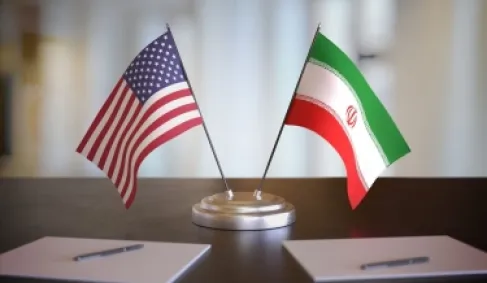
U.S. President Donald Trump described the Iranian leadership as "divided" and indicated that the United States is waiting for Tehran to present a "unified proposal".
The concept of unity was definitely present in the minds of Iranian leaders on Thursday night when they broadcast a message on mobile phones to Iranians, which read: "There is no such thing as hardliner or moderate in Iran - there is one nation, one direction".
The Hidden Leader
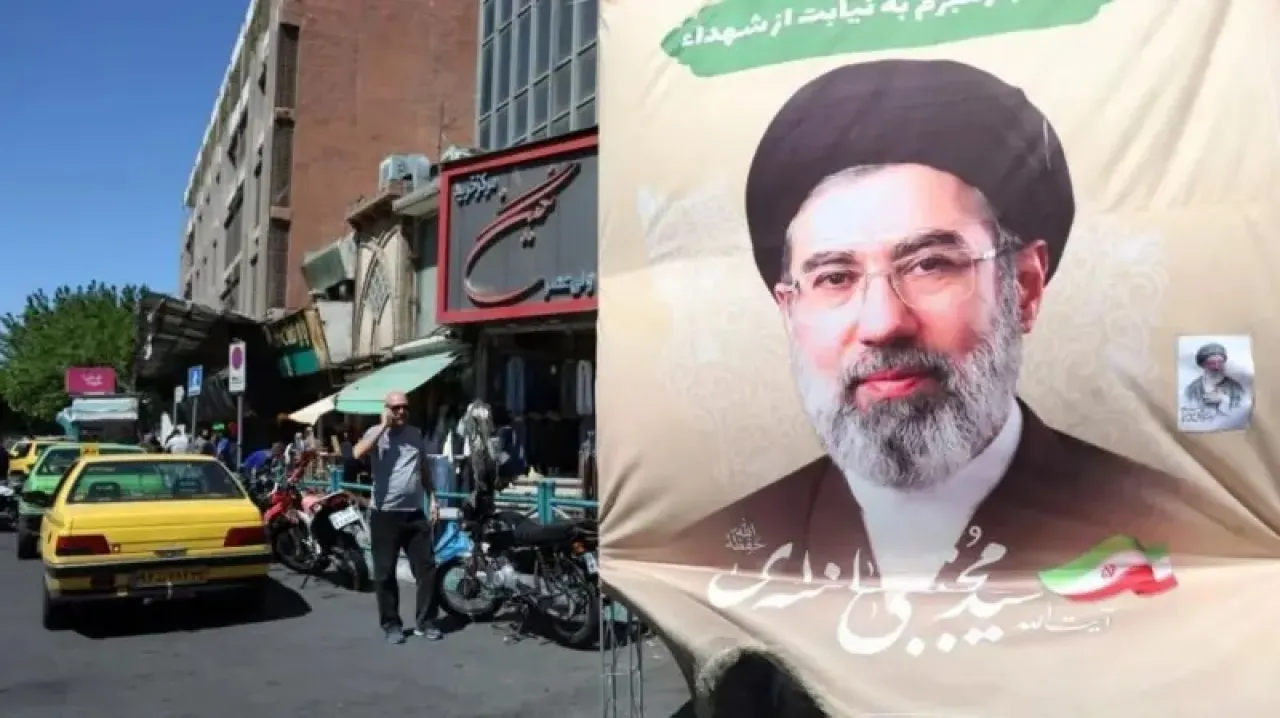
The new leader, Mojtaba Khamenei, has not appeared publicly since he came to power. There is no direct evidence that he controls the day-to-day administration of the country, except for a few written statements, including one confirming the ongoing closure of the Strait of Hormuz.
Iranian officials acknowledged that Mojtaba was injured in the initial strikes, but did not provide many details.
This week, The New York Times, citing Iranian sources, reported that he may have sustained multiple injuries, including facial injuries that have made it difficult for him to speak.
This absence is significant. In the Iranian political system, authority is not only institutional but also extends to the exercise of power itself. The late leader Khamenei expressed his orientations through his speeches, his studied appearances, and his public role as a mediator between powers. Now, this directive function has largely disappeared.
The current result is a void in understanding what is happening in Iran. Some believe that Mojtaba Khamenei's rise to power during the war did not allow him to consolidate his authority according to his own terms. Others point to reports of his injuries and wonder whether he is capable of effectively managing the system.
In both cases, the decision-making process has become less centralized than before the war.
The diplomatic channels are open but with extreme difficulty
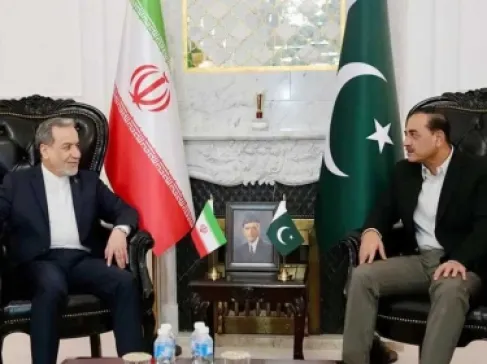
In theory, diplomacy is the responsibility of the government. Foreign Minister Abbas Araghchi continues to represent Tehran in talks with the United States, in the presence of Iranian President Masoud Pezeshkian.
However, it does not appear that either Pezeshkian or Araghchi is spearheading strategy, and there are doubts about the power they hold, due to the fact that the Iranian delegation is led by Parliament Speaker Mohammad Bagher Ghalibaf.
Araghchi seems to play a more practical than directive role in diplomacy. His quick retraction of his stance on opening or closing the Strait of Hormuz provides a rare glimpse into the limited control of the diplomatic path over military decisions in Iran, as he initially mentioned resuming traffic then quickly retracted that.
As for Pezeshkian, he appears to lean towards the general orientation of the regime without clearly contributing to shaping it. As a relatively moderate figure, he has so far avoided adopting an independent line.
The stalling of the second round of talks with the United States in Islamabad points this out. Even when diplomatic channels are open, it seems the regime is either unable or unwilling to make a commitment.
Increased Influence of the Military
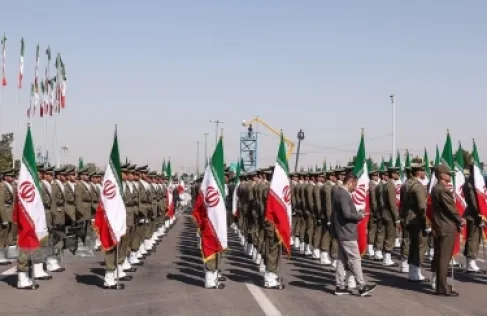
Control over the Strait of Hormuz is considered an immediate major source of influence for Iran. However, decisions to close it are made by the Islamic Revolutionary Guard, led by Ahmad Vahidi, not by the diplomatic team.
This places the real power in the hands of actors operating in the shadows. Unlike previous crises, there is no single person clearly in charge of the strategy. However, a pattern emerges: actions first, then messages later, and not always consistently.
In reality, it seems that the movements of the Iranian Revolutionary Guard, whether in enforcing the closure of the Strait of Hormuz or in striking targets in the Gulf states, determine the pace of the crisis. Often, political and diplomatic responses come after the execution of military tasks, not at the beginning.
This does not necessarily mean the collapse of administrative authorities in Iran, but it does indicate an increase in the operations autonomy of the Iranian Revolutionary Guard, albeit temporarily, in the absence of arbitration by political institutions.
Ghalibaf Advances
In the midst of this ambiguity, Mohammad Bagher Ghalibaf emerges.
Ghalibaf, the current Speaker of Parliament and former commander in the Revolutionary Guard, has become one of the most prominent figures currently. He has engaged in negotiations, addressed the public, and sometimes dealt with the war from a pragmatic rather than ideological perspective.
Resistance to negotiations remains strong within the parliament and across the conservative stream.
The harsh rhetoric has intensified, as government media and public campaigns portray the negotiations as a sign of weakness in the face of the country's enemies.
Therefore, Ghalibaf's position is unstable; he is active but does not hold a clear mandate. He insists that his actions are in line with the desires of Mojtaba Khamenei, yet there is no clear evidence of direct coordination.
In a system that relies on top-down instructions, this ambiguity is significant.
Alleged or Real Cohesion
All these dynamics together indicate that the system works, but it lacks cohesive guidance.
The authority of the Supreme Leader exists, but it is not exercised openly. The presidency is intertwined in the process, but it does not lead. Diplomacy is active, but not decisive. The military holds the reins, but without a clear political architect. Political figures advance, but without absolute legitimacy.
However, this does not constitute a collapse. The Islamic Republic still exists. But this indicates something more precise, as the system struggles to convert its influence, like its ability to close the Strait of Hormuz, into a clear strategy at a moment of severe pressure. It can still move on multiple fronts, but it struggles to convey a clear message to its centers of power.
In the Iranian political model, signals are the means to maintain cohesion.
Currently, the system maintains its stability, keeps its control, and avoids any clear collapse despite increasing pressures. However, this raises widespread questions about whether cohesion is actually being practiced genuinely or if it is merely a claim.