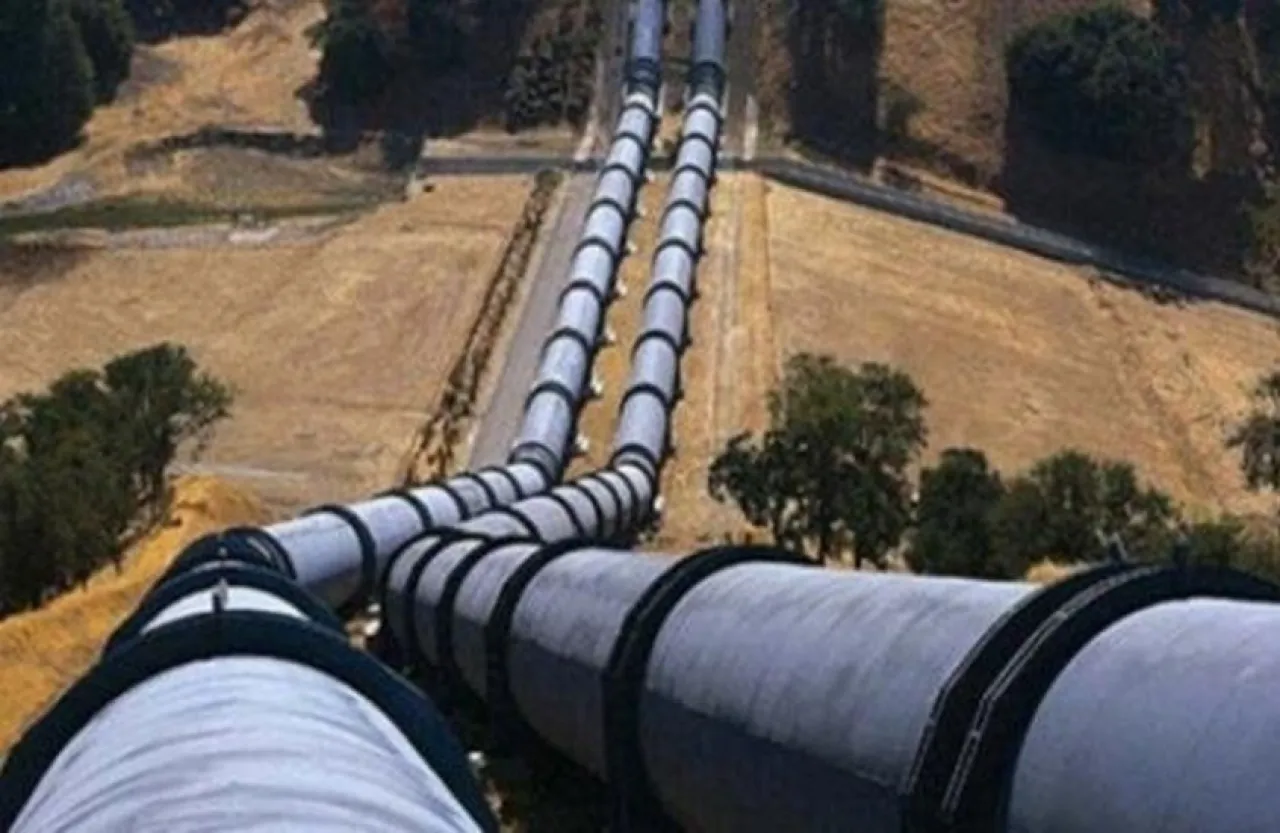
Khaberni - Representatives from the energy ministries in Syria, Jordan, and Lebanon discussed the executive procedures related to activating the "Arab Gas Pipeline," a step reflecting a regional movement to enhance economic integration in the energy sector.
The Ministry of Energy stated in an announcement yesterday Friday, that the technical meeting via video discussed the final timelines for starting the trial pumping operations for this project. Ghayath Diab, the Deputy Minister of Energy for Oil Affairs, confirmed that the Syrian network is at the highest readiness levels after completing the necessary technical tests along the path extending from the Syrian-Jordanian border to the Lebanese border.
Diab highlighted the strategic dimension of this project, stating that it serves as a vital artery enhancing economic integration among these countries, with Syria continuing to play its pivotal role as a safe and stable transit country for regional energy.
Energy Minister Mohammed Al-Bashir confirmed the day before yesterday that the resumption of gas pumping through Jordan, maintenance works, and the balanced use of electricity all contributed to supporting the improvement and stability of the electric grid in most regions of Syria.
This move comes at a time when the energy sector in the Middle East is undergoing major transformations, with Arab countries looking to reactivate joint infrastructure projects. The "Arab Gas Pipeline" is one of these prominent projects, extending from Egypt through Jordan and Syria to Lebanon.
In January, Jordan and Syria signed a natural gas sale and purchase agreement, stipulating that Jordan would supply Syria with about 4 million cubic meters of gas daily through Jordanian territory, a step aimed at supporting the Syrian electricity sector and alleviating the energy crisis in the country.
Despite these positive developments, the activation process of the Arab Gas Pipeline faces several challenges, particularly concerning securing the necessary financing to rehabilitate the infrastructure damaged due to the conflict in Syria, where the pipeline network has suffered extensive damage, estimated to be more than 70% according to reports from specialized international organizations.
A previous report by the "Financial Times" indicated that some of the gas to be pumped through the pipeline might be of Israeli origin, as Jordan relies on Israeli gas imported from the "Leviathan" field to meet part of its needs, which raises questions about the actual sources of the gas that will pass through Syria.
Officials in the three countries are counting on the activation of the Arab Gas Pipeline to improve the electricity situation in Lebanon, which is suffering from a severe energy crisis, and to help stabilize the Syrian electric grid that suffers from widespread outages.
Observers expect the project to make further progress in the coming weeks as the necessary technical and logistical procedures are completed to start the trial pumping operations.