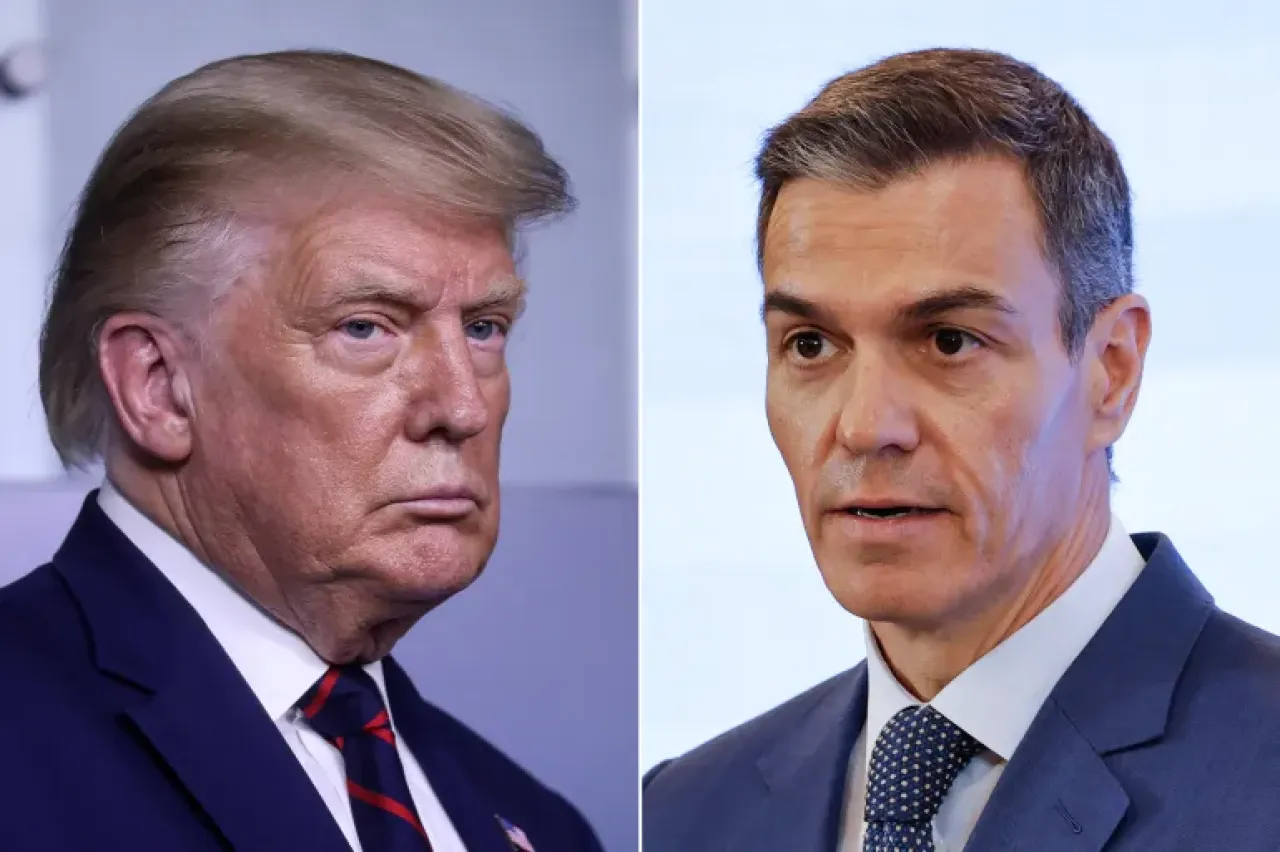
Khaberni - Spanish Prime Minister Pedro Sanchez refused to be dragged into a conflict with the United States regarding reports that the Pentagon is considering whether to punish NATO members who do not support American operations in the war on Iran.
Sanchez said on Friday that his government will continue to cooperate normally with its allies in NATO.
Sanchez added in statements to journalists during the European Union summit in Cyprus: "Well, we do not operate via emails. We operate through official documents and the positions taken by, in this case, the United States government."
He said, "Our positions are clear, which is absolute cooperation with the allies."
Spain is one of the countries that refused to allow US forces to use its bases or airspace. Spain asserts that the actions of the United States and Israel in the Iranian war violate international law.
Message and Options
Reuters quoted a US official saying that an internal email in the US Department of Defense (Pentagon) proposed suspending Spain's NATO membership and reviewing the US position regarding Britain's claim to sovereignty over the Falkland Islands.
He explained that the email contained options for the United States to punish NATO member countries that are believed to have not supported American operations in the war on Iran.
The official, who requested anonymity, added that the political options are detailed in a memorandum describing the disappointment with what is perceived as hesitation or refusal by some NATO members to grant the United States rights of military access, positioning, and airspace transit in the context of the Iran war.
He noted that the message described the rights of military access, positioning, and airspace transit as "just the absolute minimum for NATO," adding that the options had been discussed at high levels within the Pentagon.
The official told Reuters that one of the options in the message includes suspending difficult-to-deal countries from holding important or prestigious positions in NATO.
Criticism and Comments
President Donald Trump sharply criticized NATO members for not sending naval fleets to help open the Strait of Hormuz, which Iran closed to global maritime navigation on February 28th, following the war launched by America and Israel against it.
Trump also mentioned that he is considering withdrawing from the alliance, and wondered during an interview with Reuters early April, "Wouldn't you do the same if you were in my place?", responding to a question on whether the US withdrawal from NATO was being considered.
In response to a request for comment on the email, Pentagon spokeswoman Kingsley Wilson said, "As President Trump said, despite all that the United States has done for allies in NATO, they did not stand by us."
The Pentagon spokeswoman added, "The Department of Defense will ensure that the president has reliable options to ensure that our allies are not just paper tigers but fulfill their roles. We have no further comment on any internal deliberations on this matter."
European Concerns
Analysts and diplomats believe that the American-Israeli war on Iran has raised serious questions about the future of NATO, which was founded 76 years ago, and sparked unprecedented concern that the United States may not lend a hand to its European allies if they are attacked.
Britain, France, and other countries stated that joining the American maritime blockade would mean entering the war, but they would be willing to help keep the strait open once a permanent ceasefire is reached or the war ends.
However, Trump administration officials emphasized that NATO should not be a one-way street.
They expressed disappointment with Spain, whose government, led by the Socialist Workers' Party, said it would not allow the use of its bases or airspace to attack Iran. The United States has two important military bases in Spain, the Naval Base Rota and Moron Air Base.