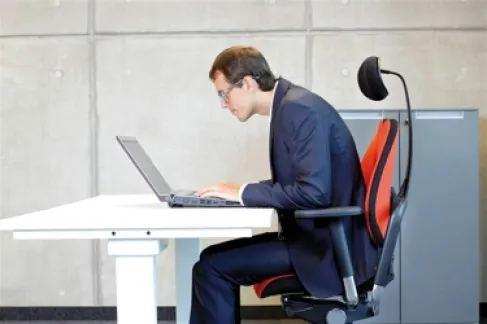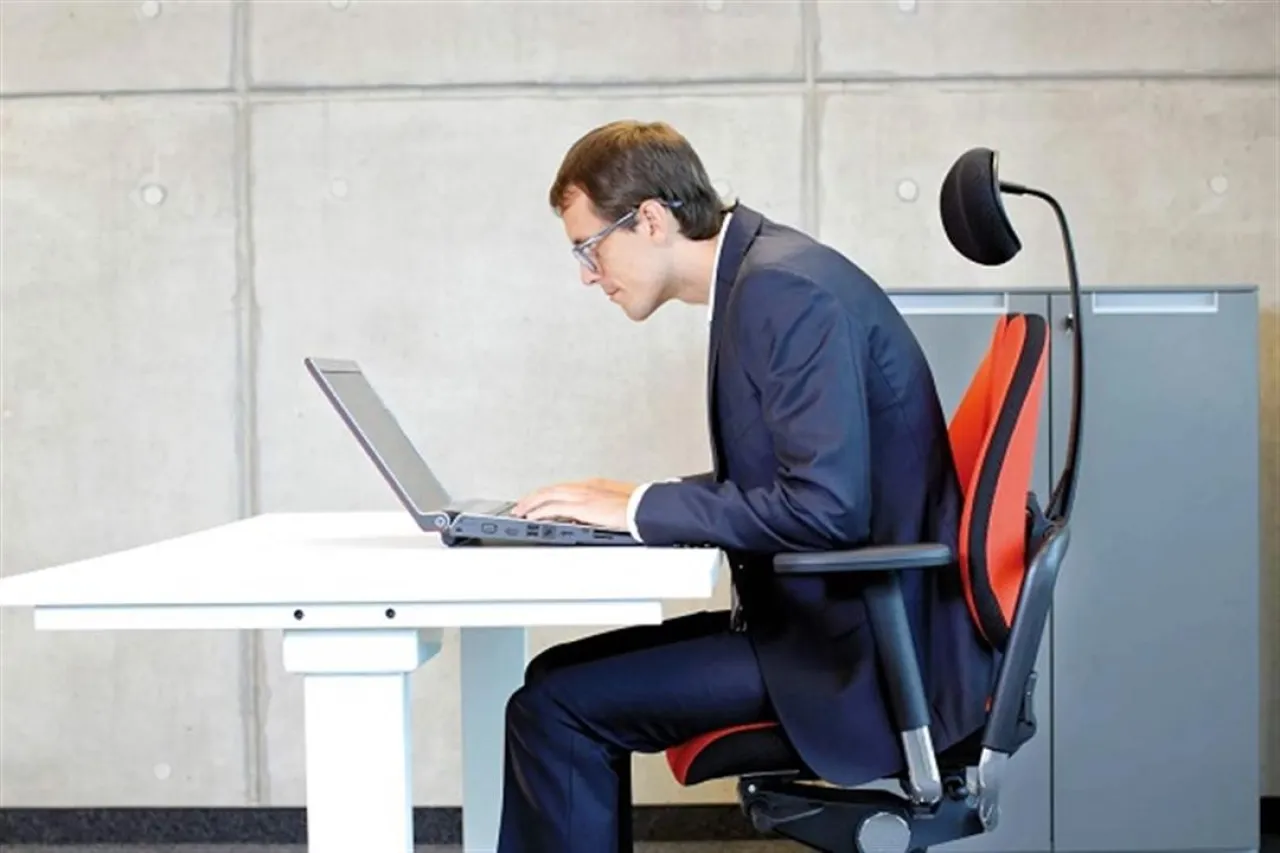
Khaberni - For many years, the saying "Sitting is the new smoking" has echoed as a slogan summarizing the risks of a sedentary life; which prompted millions to replace their chairs with standing desks. Nonetheless, health experts assert that this perspective overly simplifies a more complex issue; the truth is that our bodies do not reject sitting per se, but rather reject prolonged stillness in any position.
While sitting is seen as an enemy to health, millions of workers in the healthcare, education, restaurant, and manufacturing sectors face a heavy health toll due to standing for long hours, according to "Science Alert".
Continuous motion diversity
Specialists explain that the human body wasn’t designed to remain static; prolonged sitting puts pressure on the lumbar spine and neck, while continuous standing leads to excessive strain and pain in the back and lower extremities.
The problem starts from the feet, which serve as the mechanical base distributing pressure to the knees, pelvis, and spine; recent studies have shown that a workday spent standing leads to significant changes in pressure distribution on the soles of the feet and overall body posture.
The European Agency for Safety and Health at Work confirms that the solution lies not in choosing one posture, but in continuous motion diversity.
Despite the proliferation of innovative solutions such as height-adjustable desks and comfortable cushions, they remain only assistive tools that do not substitute for designing a workday that includes brief regular breaks, task rotation, exercising, and wearing appropriate footwear.
Ultimately, experts say: There is no need to demonize the chair or exalt standing; the real key to health is constant movement and avoiding prolonged stillness.