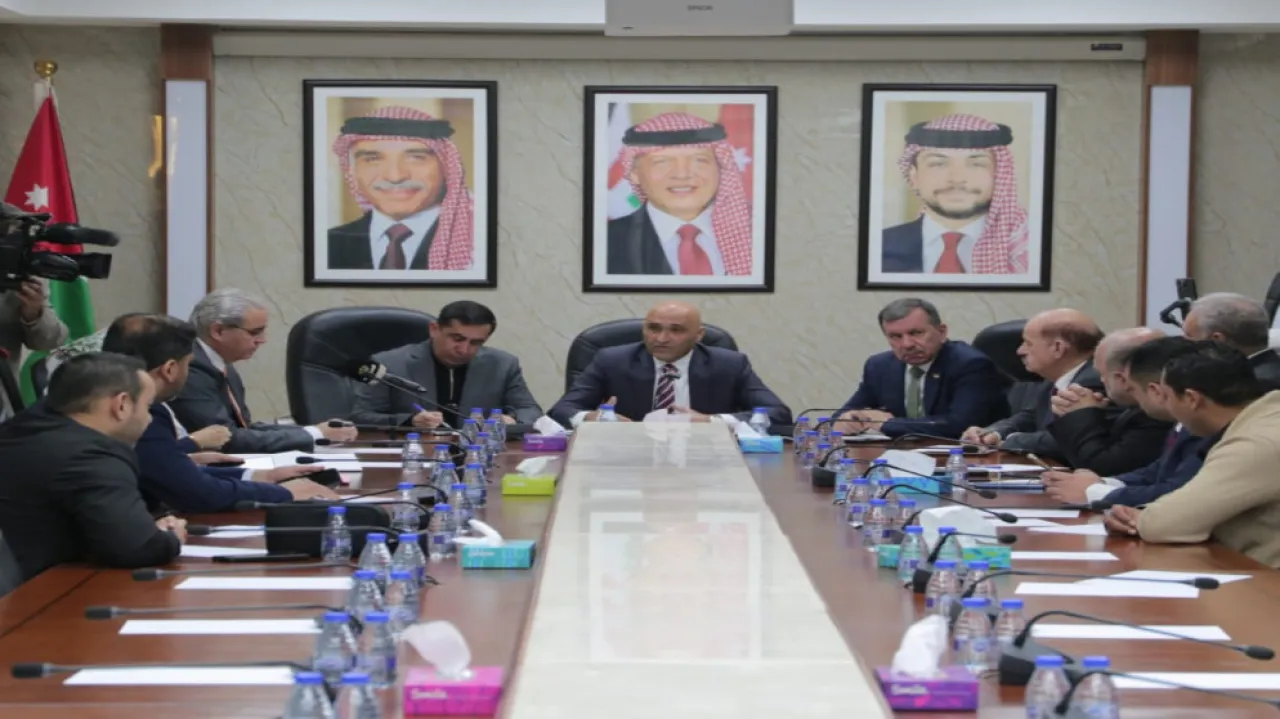
Khaberni - The Parliamentary Health and Food Committee, chaired by MP Ahmed Alsarhanah, discussed on Wednesday the reality of resident doctors and the challenges they face, in the presence of the Minister of Health, Ibrahim Al-Badoor, and the Secretary-General of the Jordanian Medical Council, Manar Al-Lawama.
Alsarhanah emphasized the pivotal role that the health sector plays with its various components from university hospitals and Royal Medical Services to the private sector in delivering health services, praising the efforts of the medical staff, especially the resident doctors, considering them the cornerstone in the training and medical system.
He stressed that developing the medical training environment has become an urgent necessity in order to balance professional qualification requirements and work pressures, and to positively reflect on the quality of health services and the stability of medical staff.
He also highlighted the importance of organizing the relationship between residency programs and the rights of resident doctors, especially in terms of working hours, rest periods, and the level of academic supervision, affirming the ongoing monitoring of this file with the relevant authorities.
For their part, committee members MPs Abdul Hadi Al-Barizat, Hayeel Ayash, Shaher Al-Shatnawi, Ayman Abu Al-Rub, and Hakam Almaadat emphasized the importance of reviewing and developing medical residency programs in accordance with international standards, ensuring a fair and organized training environment, contributing to enhancing doctors' efficiency and improving health sector outcomes, stressing the necessity of enhancing academic supervision and systematic practical training.
Meanwhile, Al-Badoor explained that the Ministry of Health gives special priority to the file of resident doctors, considering them the fundamental pillar for the future of the health sector, noting the work on developing residency programs and raising acceptance standards and exams, in addition to expanding training seats and enhancing partnerships with various health institutions to achieve a balance between training and service requirements.
He added that the ministry developed a specialization examination mechanism by establishing a national question bank, aimed at enhancing fairness and transparency and equality of opportunity among candidates.
In her turn, Lawama explained that the Jordanian Medical Council approved new standards for accrediting training programs at the end of 2025, focusing on the quality of the training process rather than just infrastructure, and includes regulating working hours, number of shifts, rest periods, and level of academic supervision, as well as introducing performance indicators to ensure compliance and improve the quality of implementation.
She explained that the instructions defined the shift system such that it does not exceed every "third day" for a duration of 24 hours extendable for educational purposes and patient handover, with no more than 6 additional hours, and a cap of no more than 80 working hours per week, in accordance with the international standards adopted in medical residency programs.