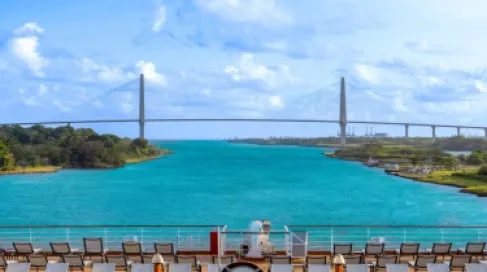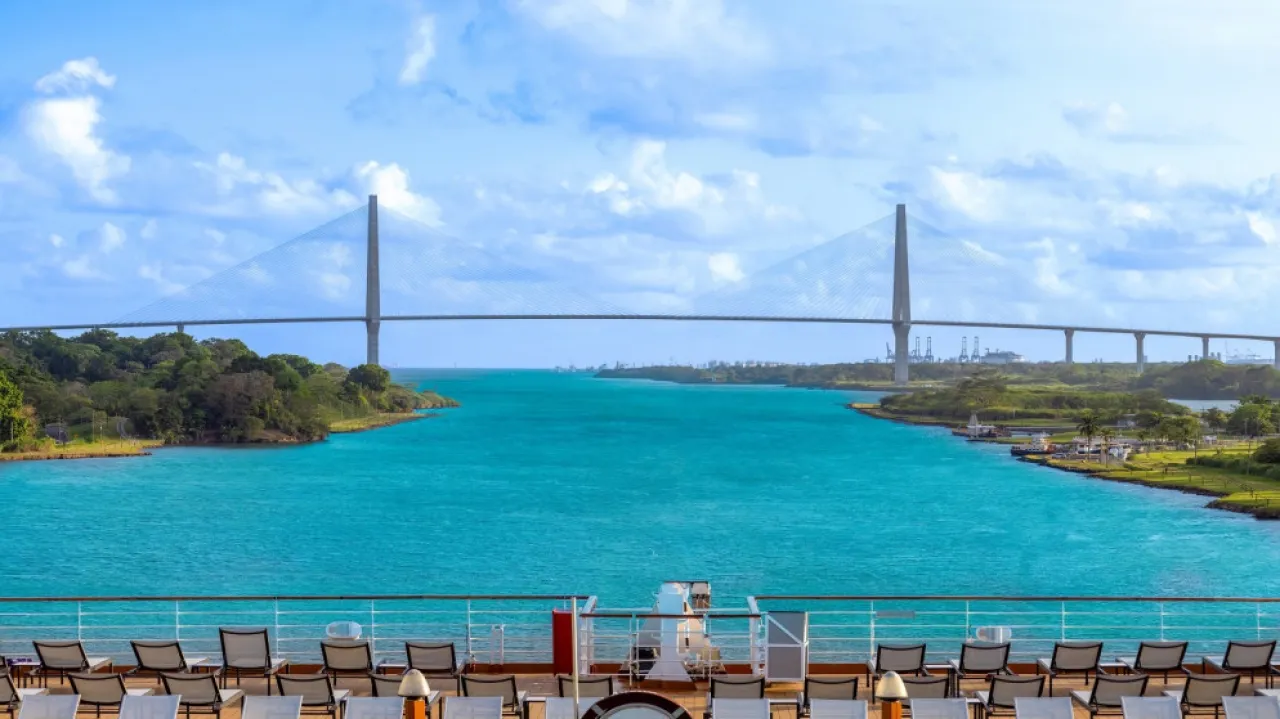
Khaberni - The war in the Middle East has led to increased demand for transportation of vital goods through the Panama Canal to the extent that one vessel carrying liquefied natural gas paid 4 million dollars to avoid waiting and pass quickly, according to a statement by the Canal administration.
In the face of American and Israeli attacks, Iran closed the Strait of Hormuz, which was used by about 20% of the oil and liquefied natural gas headed to global markets, especially Asia and Europe.
As part of the rearrangement of shipping routes, Asian oil refineries now choose to buy oil and gas from the United States and transport it through the Panama Canal.
The average number of daily transits in the canal rose to 37 in March, with a peak reaching 40 on some days, according to the statement, compared to 34 in January.
It explained that "this increase reflects changes in global trade patterns and geopolitical factors that affect the main routes".
Ships that cross the canal book their passage in advance, but vessels without a reservation must wait for an average of 5 days. However, there is an auction where last-minute transit trips can be purchased.
The Panama Canal Authority mentioned that the latest auction included a bid of 4 million dollars for a liquefied natural gas ship, and in recent weeks bids from two oil tankers exceeded 3 million dollars.
5% of global maritime trade passes through the Panama Canal, and the United States and China are the main users. This passage primarily connects the East Coast of the United States with China, South Korea, and Japan.
In the first half of the fiscal year 2026, which extends from October to September, the canal recorded 6,288 ship transits, an annual increase of 3.7%, according to official figures.