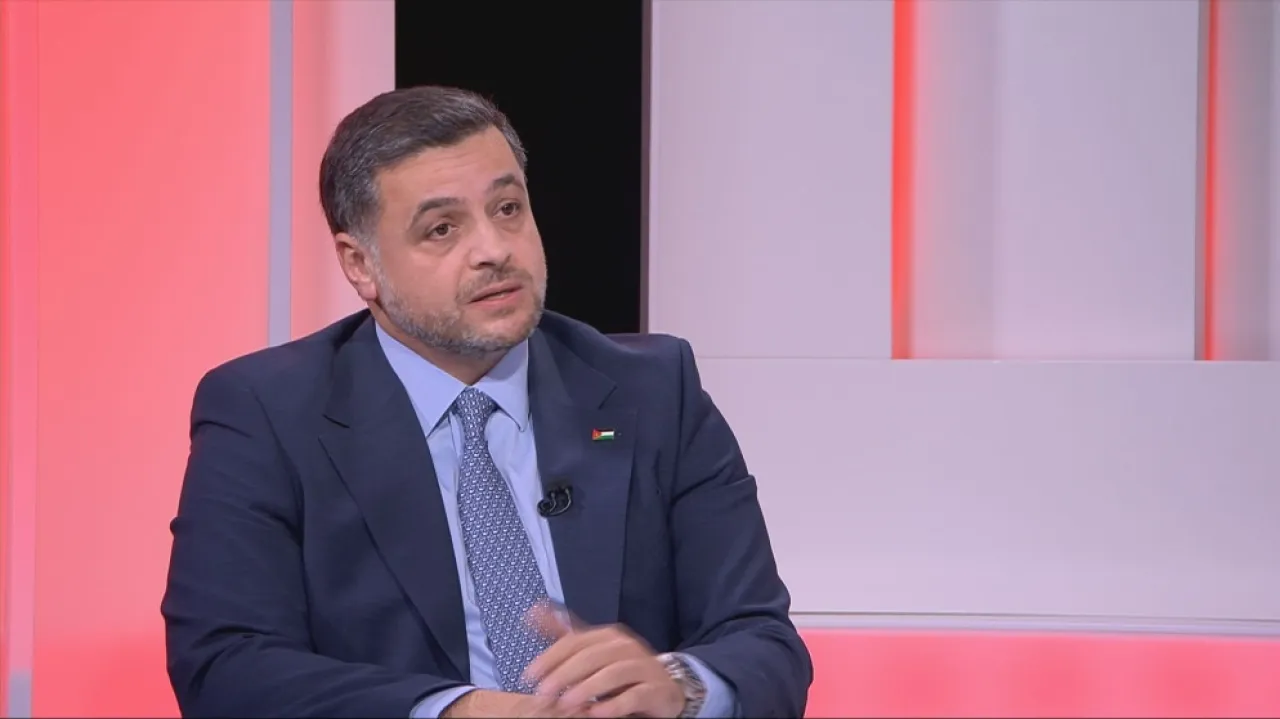
Khaberni - The director of the National Carrier project, Saddam Khalifat, stated on Tuesday that the National Carrier project is one of the largest infrastructure projects in the history of the kingdom. It is an integral part of the economic modernization vision and embodies the government's approach in translating this vision into reality.
During his speech on the "Voice of the Kingdom" program, Khalifat added that the project represents the future of Jordan's water resources and promotes self-reliance in this sector, in addition to supporting various productive sectors and enhancing the level of services provided to citizens.
He explained that the "National Carrier" does not signify the end of Jordan's water crisis permanently, pointing out that the project will provide water supplies sufficient to meet the kingdom’s needs for a period ranging between 10 and 15 years, emphasizing the need to later think about additional strategic projects.
Khelifat assured that the citizens will notice an improvement in the quality of services over the next 15 years, clarifying that, parallel with completing the contractual procedures and starting the project execution, work on planning for future projects will be conducted.
He detailed that the project will provide about 40% of Jordan's water needs, supplying the kingdom with approximately 300 million cubic meters annually. However, it will not cover the full water deficit, as there will remain a shortage estimated at about 100 million cubic meters.
He mentioned that the project will contribute about 500 million cubic meters to the water balance.
Khalifat stated that about 700 million cubic meters of water will be drawn from the Gulf of Aqaba, with 300 million cubic meters of it being desalinated and 400 million cubic meters of brine water returned to the gulf.
He pointed out that the transition of the project from the negotiation phase to the accomplishment phase came after sustained efforts over 16 months since the signing of the agreement in January 2025, which included negotiations with the developer, the contractors, as well as donor and lending parties and all financial parties involved in the project.
Khalifat clarified that this stage differs from previous ones as it represents a consolidation of the government's position with various partners and strengthens the trust in the project, despite the challenges and conditions witnessed in the region, affirming that reaching this stage was necessary to move to more advanced execution stages.
He indicated that the latest signing resulted in achieving three main axes, represented in solidifying the agreement, reaching a preliminary and indicative price with the developer, and signing understandings with financial entities to affirm their commitment to financing the project.
He added that all funding parties have obtained approvals from their boards of directors to proceed with financing the project, indicating a clear and integrated financial position among the financiers and the developer.
Khalifat noted that the next phase will include completing a number of technical and financial issues, notably agreeing on an inflation equation and a cost-calculation mechanism, paving the way for the actual implementation of the project.
The director of the National Carrier project provided insights on the current phase, which took about 16 months, preparing the transition to completing the essential technical and financial aspects, especially agreeing on the inflation equation and the cost-calculation mechanism.
Khalifat explained that the work will focus during the upcoming period on identifying variables that enter into the calculation of the final price, through studying the provided indicators and ensuring their suitability for the government's interest, leading to a fixed price at the financial closing stage.
He added that among the essential files also includes completing the requirements of the donor entities, which involve procedural conditions that must be implemented to transfer the financing to the developer’s accounts, noting that these conditions represent procedural arrangements rather than challenges.
He explained that these processes include registering companies associated with the project, determining the authorities, signing contracts between the developer, the contractors, and the operating companies, as well as forming the boards of directors and specifying the authorized signatories, in addition to delivering the lands necessary for the project implementation.
Khalifat confirmed that work is underway in coordination with the developer to complete these requirements in about 70 days, preparing for the transition to the next implementation phases and completing price-related appendices once the inflation equations and financier conditions are met.
He revealed that the National Carrier project will provide about 4,000 jobs during the construction phase, the majority of which will be for Jordanians.
Prime Minister Jaafar Hassan witnessed the signing of the final technical and legal agreement for the National Carrier project in preparation for concluding the financial closing in July next year, and starting the construction and excavation works next summer, with a capital cost estimated at about 4.3 billion dollars, while the total cost of the project reaches about 5.8 billion dollars, including financing costs.
The final technical and legal agreement came after efforts made by the government over the last 16 months with the concerned parties, aiming to improve the financing terms and achieve the best possible price, and to enhance the engineering and technical specifications of the project.
The Jordanian National Carrier project is the first of its kind globally, as it integrates several strategic pillars, represented in: desalinating 300 million cubic meters annually from seawater, pumping systems reaching up to 1100 meters above sea level through pipes extending for about 450 kilometers, and heavily relying on renewable energy with the latest advanced and environmentally friendly technologies.
The project will also provide about 40% of the kingdom’s drinking water needs and is expected to begin water pumping in 2030 to form a primary source in enhancing national water security. The 300 million cubic meters of water that the project will provide annually is close to the total capacity of all the kingdom's dams, about three times what the Disi project produces, and will double the annual per capita water share from 60 to 110 cubic meters, and will contribute to increasing the number of water supply days from one day to three days a week in all provinces of the kingdom.
The final technical and legal agreement included reducing the water price from about 3 dollars per cubic meter in 2024 to an indicative price estimated at about 2.7 dollars per cubic meter. Currently, negotiations are focused on calculating the inflation equation to reach the final closing. The government will bear the costs of supporting water prices during the upcoming periods, noting that the water authority's current debt accounts for about 12% of the total public debt.
The numbers will rise due to the high cost of water and associated projects, which are essential projects with no alternatives. The government aims to reduce the debt burden of the water sector over the coming years through the expansion of efficient water projects, water treatment, reducing losses, and rationalizing consumption.
The National Carrier will alleviate pressure on traditional water sources, improve the regularity of water access to different industrial, agricultural, and economic sectors, and achieve sufficiency for water needs until 2040. Additionally, solar energy fields with a production capacity of about 300 megawatts will be established, representing 30% of its energy needs, and the project will be implemented according to the build-operate-transfer model, with the government fully owning the project after 26 years of operation.