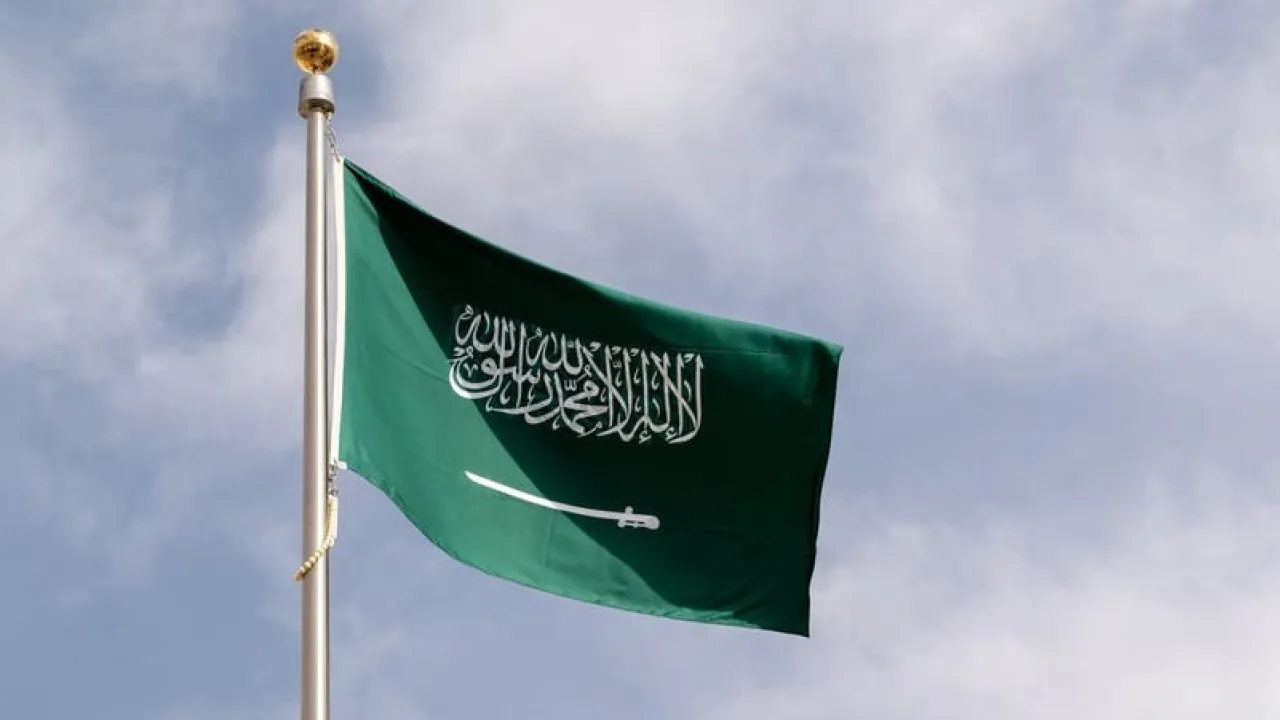
Khaberni - Saudi Arabia has reaffirmed its commitment to continue providing financial and political support to the Palestinian people, their national institutions, and the necessity of an immediate and unconditional release of Palestinian clearance funds detained by Israel.
The Kingdom valued the role played by the Palestinian Prime Minister, Mohammad Mustafa, in leading and his efforts in promoting a realistic reform agenda under extremely difficult conditions, emphasizing that the return of the Palestinian government to Gaza must be based on true Palestinian unity, and the principle of the indivisibility of Gaza from the West Bank, including East Jerusalem, stressing the necessity of this process being led by Palestinians, with full respect for Palestinian sovereignty, and supported by international mechanisms without replacing them.
This was stated during the Kingdom's participation in the meeting of foreign ministers of the member states in the International Support Group for Palestine (AHLC), held in the capital, Brussels, where the Kingdom was represented in the meeting by the Minister Plenipotentiary at the Ministry of Foreign Affairs, Dr. Manal bint Hassan Radwan.
Dr. Manal Radwan mentioned the necessity of leveraging three decades of experience to correct the course of "Oslo," emphasizing the need to move from managing recurring crises to establishing a reliable and non-reversible path towards peace, fully supporting the Kingdom's implementation of Security Council Resolution 2803 and the comprehensive peace plan.
She explained that these frameworks provide an organized approach that integrates lessons learned since Oslo, affirming that humanitarian work, security, governance, and political progress are interconnected elements that cannot be addressed in isolation from each other, and that the Peace Board (BoP) plays a pivotal, indispensable role at the core of this structure, emphasizing the Kingdom's support for the Peace Board as the main platform for aligning political, security, humanitarian, and recovery paths within a single executive framework.
Radwan highlighted that the situation in the West Bank is no less urgent, drawing attention to the fact that escalating violence, settlement expansion, and unilateral actions are rapidly undermining the political and geographical foundations of a two-state solution, underscoring the importance of protecting Palestinian civilians in the West Bank as not a marginal issue but a fundamental component of any credible stability strategy.
She emphasized that having a reliable political horizon that leads to the embodiment of an independent Palestinian state based on the 1967 borders with East Jerusalem as its capital is not an optional choice but a fundamental condition for any sustainable peace.