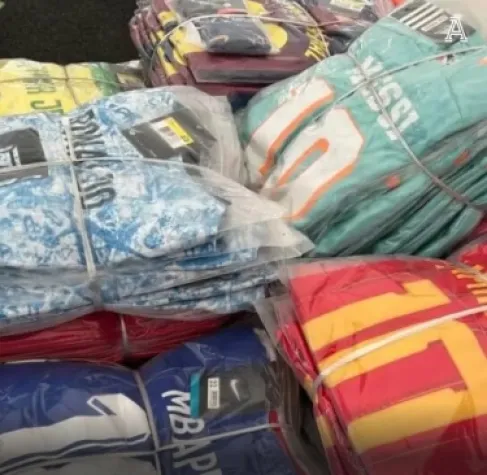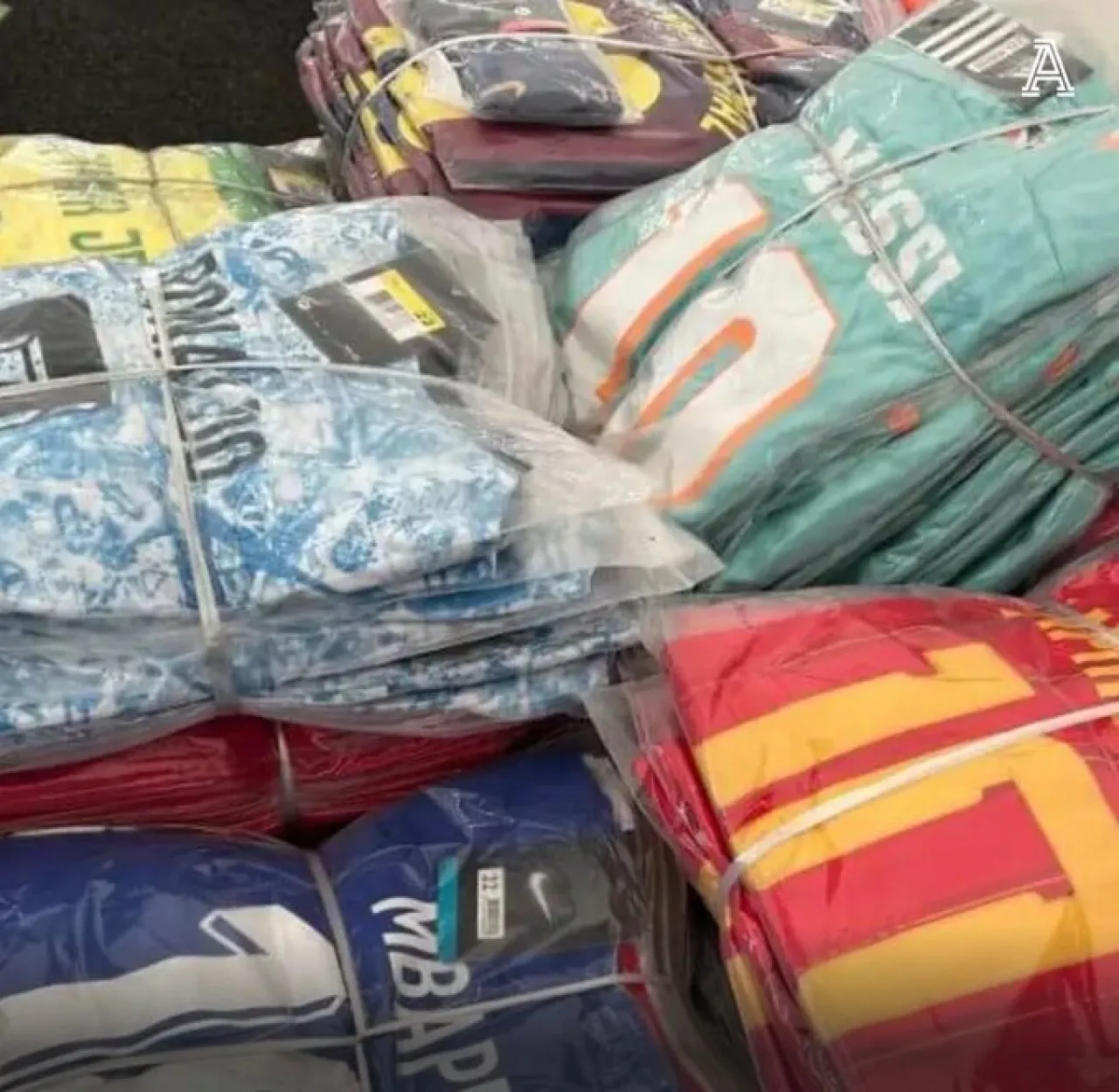
Khaberni - Media reports stated that the British police seized more than 4400 fake football shirts during a wide raid in the Midlands area, as part of an escalating campaign against commercial piracy associated with football, in one of the biggest security strikes targeting the counterfeit products market before the 2026 World Cup.
The Touchline account on X explained that the operation, which took place inside one of the largest open markets in England, came after a period of close monitoring of a stall suspected of selling counterfeit shirts at strikingly low prices, where they were offered at about 20 British pounds only compared to about 80 pounds for the original versions, raising the authorities’ suspicions and prompting them to act.
According to what was revealed by The Athletic British newspaper, the operation named "Blockswitch" was carried out with the participation of the Intellectual Property Crime Unit of the City of London Police, where a team of officers raided the site before nine o'clock in the morning, and 4433 pieces of counterfeit shirts belonging to major teams like Argentina, France, Portugal, and England, along with shirts of prominent European clubs, were seized.
The raid resulted in the arrest of one of the suspects on charges of trafficking in counterfeit products, before he was released on bail, while authorities continue their investigations to track other parties believed to be part of a wider network distributing these products, at a time when the seized items are being analyzed as evidence in the case.
Estimates indicate that this quantity of counterfeit goods would have caused losses of about 400,000 British pounds to the official market, reflecting the large economic size of this illegal trade, especially with the increasing demand for team jerseys as the global tournament approaches.
In statements conveyed by The Athletic, officials warned that purchasing counterfeit products is not just a minor offense, but is linked to organized criminal networks that may include money laundering, human trafficking, forced labor, and drug trafficking, as well as potential health risks due to poor manufacturing and the inclusion of harmful or flammable materials in some of these products.
This operation is part of a broader campaign led by the British authorities in collaboration with industrial bodies, targeting both traditional markets and electronic platforms, in an attempt to dry up the sources of trade in counterfeit shirts before the start of the World Cup in America, Canada, and Mexico, where the demand for official products is expected to peak.