Khaberni - US President Donald Trump, on Tuesday, stated that Iran would either negotiate or face "unprecedented" problems, while the White House confirmed it is close to striking a good deal with Iran.
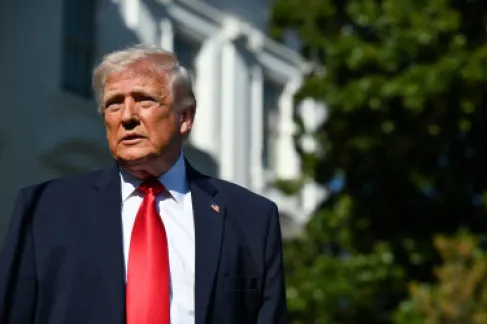
Trump stated during his appearance on "The John Fredericks Show" that Iran would have to come to the negotiating table, warning: "If they don't do it, Iran will face unprecedented problems."
Trump expressed hope that Iran would "strike a fair deal" and that the country would be rebuilt anew, considering the "work we have done is great, and we will be able to resolve the Iran file, and everyone will be happy."
Meanwhile, the White House confirmed that the United States is "closer than ever to striking a good deal with Iran", and considered ongoing military and diplomatic operations against Tehran, alongside Trump's "skill" in negotiating, to be the main reason for Washington's proximity to the deal it aspires to.
The fate of Tehran and Washington's talks remains unclear as the ceasefire nears its end.
A senior Iranian official told Reuters that Tehran is positively considering attending peace talks with the United States in Pakistan, following Islamabad's efforts to end the American blockade on Iranian ports, a major obstacle to Iran's return to peace efforts. This as the ceasefire approaches its end (since April 7, ending at 8 PM Eastern Time on Wednesday, which is 3:30 AM on Thursday in Iran time).
Iran has not yet made a decision, and Foreign Minister Abbas Araghchi sees the American violations of the ceasefire as a major obstacle.
Araghchi informed his Pakistani counterpart, Ishaq Dar, in a phone call that although Iran is taking all aspects of the issue into consideration, it has not yet decided the steps it will take next.
Chief Iranian negotiator Mohammad Baqer Qalibaf accused US President Donald Trump late this Monday via the X platform of increasing pressure on Tehran through the blockade and ceasefire violations, stating that Iran refuses to negotiate under threat. The ceasefire, which lasts two weeks in a conflict that has claimed thousands of lives and caused severe damage to the global economy, particularly the energy markets, is scheduled to end this week.
It appears that the ceasefire is in jeopardy after Washington announced that it had detained an Iranian cargo ship attempting to breach the blockade imposed on the ports of the Islamic Republic, which vowed to respond to that. In Islamabad talks, Trump hopes to reach a deal that might help avoid further escalation in oil prices and a severe downturn in stock markets.
Iran hopes to leverage its control over the Strait of Hormuz, a vital navigational passage for global energy supplies, to reach a deal that prevents the resumption of war and eases the financial burdens resulting from the long-imposed sanctions, providing it some flexibility in its nuclear program.
In the meantime, Pakistan, which plays the role of the main mediator, is preparing for the talks despite the uncertainty surrounding whether they will proceed.
A government and security official reported that about 20,000 security personnel have been deployed around the capital, in anticipation of the new round of talks.