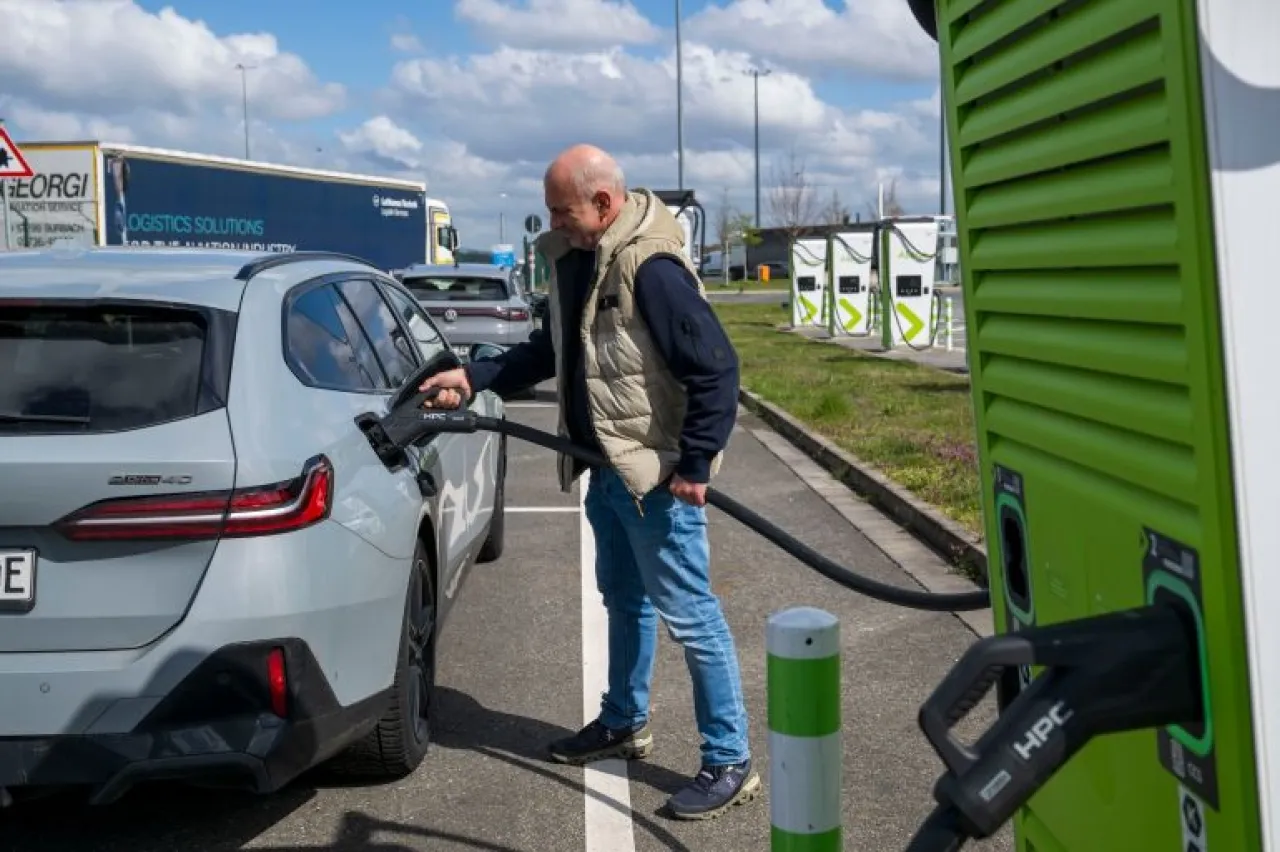
Khaberni - Electric car sales recorded significant growth in major European markets in the first quarter of 2026, amid consumer trends to search for less costly alternatives with rising gasoline prices linked to the war on Iran. Meanwhile, Vietnam extended its tax incentives for electric cars through 2030.
Data from "E Mobility Europe" and "New Automotive" market research companies showed that the registration of new battery-operated electric vehicles increased by 29.4% in the first quarter of this year compared to the same period last year, nearing 560 thousand cars.
March alone saw even bigger jump, as electric car registrations soared by 51.3%, exceeding 240,000 cars across 15 major European markets, indicating a clear acceleration in the adoption of these vehicles.
Energy Security
According to "E Mobility Europe," this increase represents one of the most significant gains for Europe in the field of energy security, especially with the heavy reliance on oil which has become a vulnerability during crisis periods.
Chris Heron, the secretary-general of the association, explained that the growth in electric car sales in Europe reflects a strategic shift towards reducing dependence on fossil fuels.
A joint report between the association and "New Automotive" suggested that registering nearly half a million electric cars in just the first quarter alone is sufficient to reduce oil consumption by about two million barrels annually, which supports emission reduction goals.
Major Markets Lead Growth
The increase was driven by strong performance in the largest European car markets, which are:
Germany
France
Spain
Italy
Poland
Together, these countries recorded growth exceeding 40% in electric car sales since the beginning of the year.
In a separate report published in early April, "New Automotive" stated that the new registrations of electric cars in Britain in the first quarter of 2026 increased by 12.8%, and Britain is the second largest market for electric cars after Germany, representing about 22.5% of total new car sales.
Vietnam Extends Incentives
Vietnam plans to extend its tax incentives on electric car sales until 2030, in a move aimed at encouraging citizens to purchase them and reduce emissions.
According to Reuters, based on a statement from the office of the Vietnamese parliament (published at the end of the weekend, Saturday and Sunday) quoting from a finance ministry document, authorities intend to extend the reduction of the special consumption tax, previously reduced in 2022 to a range of 1% to 3%, after having been between 4% and 11%, which was scheduled to end in 2027.
The tax incentive policy has resulted in a significant jump in Vietnam's electric car market, with annual sales rising from about 7,000 cars in 2022 to nearly 175,000 cars last year.
This move supports Vietnam's ambition to achieve carbon neutrality by 2050 (carbon neutrality means achieving a balance between the amount of carbon emissions released into the atmosphere and the amount absorbed or removed from it), as estimates suggest that each electric car helps reduce carbon dioxide emissions by about 0.85 tons annually compared to traditional combustion engine cars.