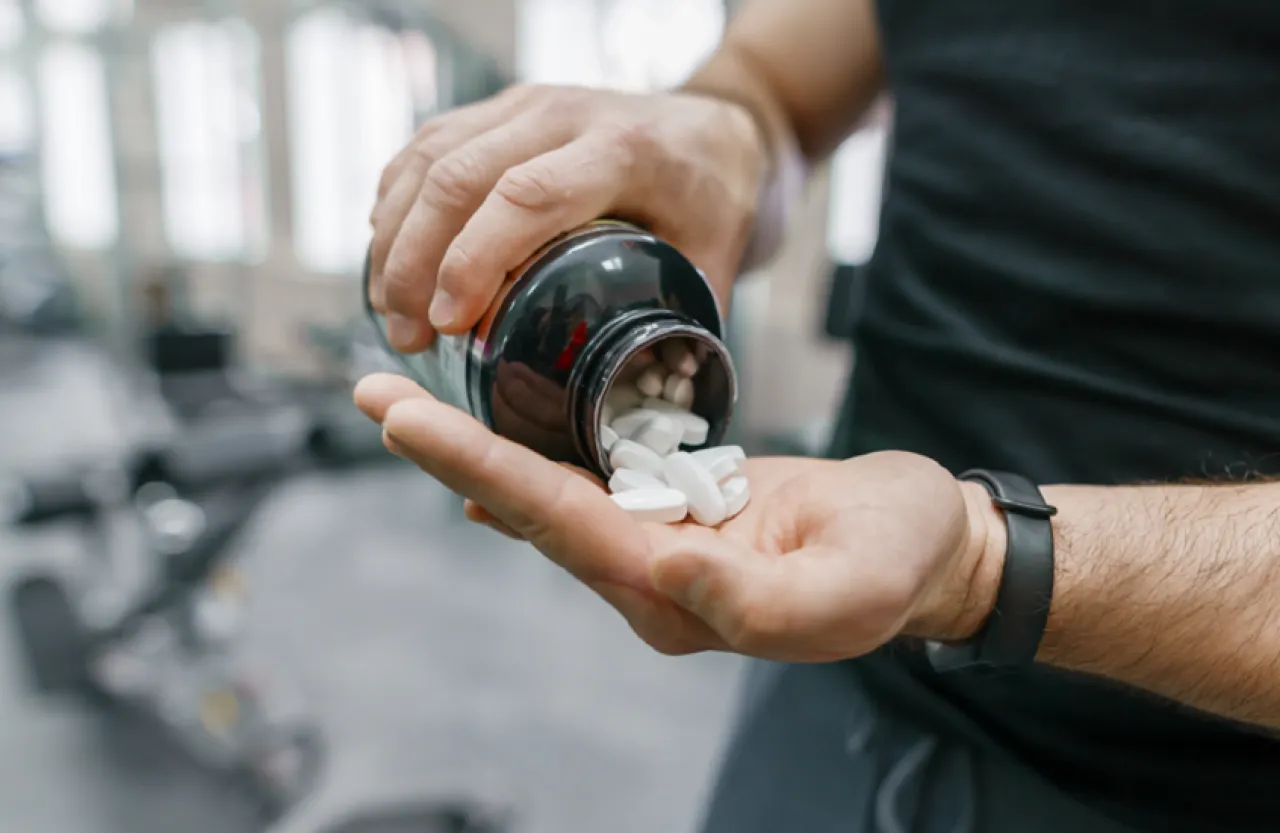
Khaberni - The United States Food and Drug Administration (FDA) has banned the consumption, sale, and distribution of "Addall" supplements, after laboratory tests revealed they contain illegal and unapproved ingredients that pose a public health risk.
The warning includes the "Addall XR" orange-flavored liquid product, and the "Addall XL" capsule product, both marketed by "ZMB Enterprises LLC" and sold at gas stations, small stores, and online.
The company claims that these products enhance focus and provide "mental clarity and high energy"; however, inspections conducted by U.S. authorities on market samples revealed they contain materials not subject to control and prohibited in dietary supplements.
According to the Food and Drug Administration, these substances may increase the risk of addiction and cause serious cardiovascular complications that could be life-threatening.
The agency informed the company of the findings in January, demanding the products be withdrawn from the market. The company agreed to withdraw only the liquid product, while refusing to withdraw the capsules, before later announcing that it would not use the unapproved ingredients in the future.
The liquid product "Addall XR" is marketed as a fast-acting dose to enhance focus and contains a mix of stimulants and mind-boosting substances such as caffeine, para-synephrine, and theobromine, in addition to compounds such as L-theanine, alpha-GPC, and N-acetyl L-tyrosine, which are used to support focus and mental energy.
The capsules "Addall XL" are marketed as caffeine-free and support "prolonged deep focus"; they contain substances like PEA, GABA, and DMHA, which are claimed to enhance mood, energy, and alertness.
However, the investigations also discovered that the liquid product contains the substance phenibut (β-Phenyl-GABA), a central nervous system depressant banned in food products within the United States, associated with addiction risks and severe withdrawal symptoms.
The substance 1,4-DMAA was found in some samples, an unapproved synthetic stimulant linked with increased blood pressure, accelerated heart rate, and higher risk of stroke and heart problems.
In the same context, the Food and Drug Administration warned that substances like DMAA and DMHA could cause serious cardiovascular problems, while phenibut could lead to neurological effects including balance disorders, fatigue, and loss of consciousness, in addition to the risk of addiction even after short-term use.
The agency confirmed that stopping the use of phenibut could lead to severe withdrawal symptoms, and using it with other substances could increase the likelihood of life-threatening complications.
The administration did not specify whether there have been actual cases related to these products so far.
The authorities have urged consumers to immediately stop using these supplements and dispose of them, and have requested retailers and distributors to stop selling and distributing them, while informing customers of the risks.
It also advised anyone who suspects they might have health complications as a result of using these products to consult a doctor immediately.