Khaberni - Recent satellite images reveal drastic transformations in Bint Jbeil and Al-Khiyam, south Lebanon, where temporal comparisons show that entire neighborhoods have disappeared from the urban scene within a few weeks, in a development that reflects a sharp escalation in the pace of military operations.
The comparison with images taken weeks ago shows that large parts of the two cities have lost their urban landscape that existed before the escalation, according to Al Jazeera.
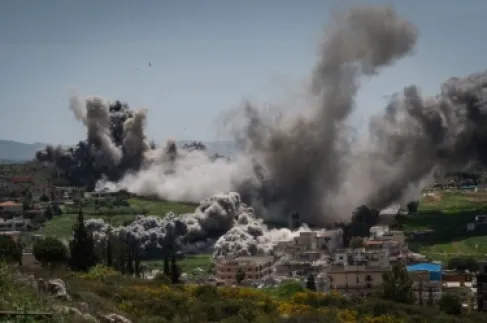
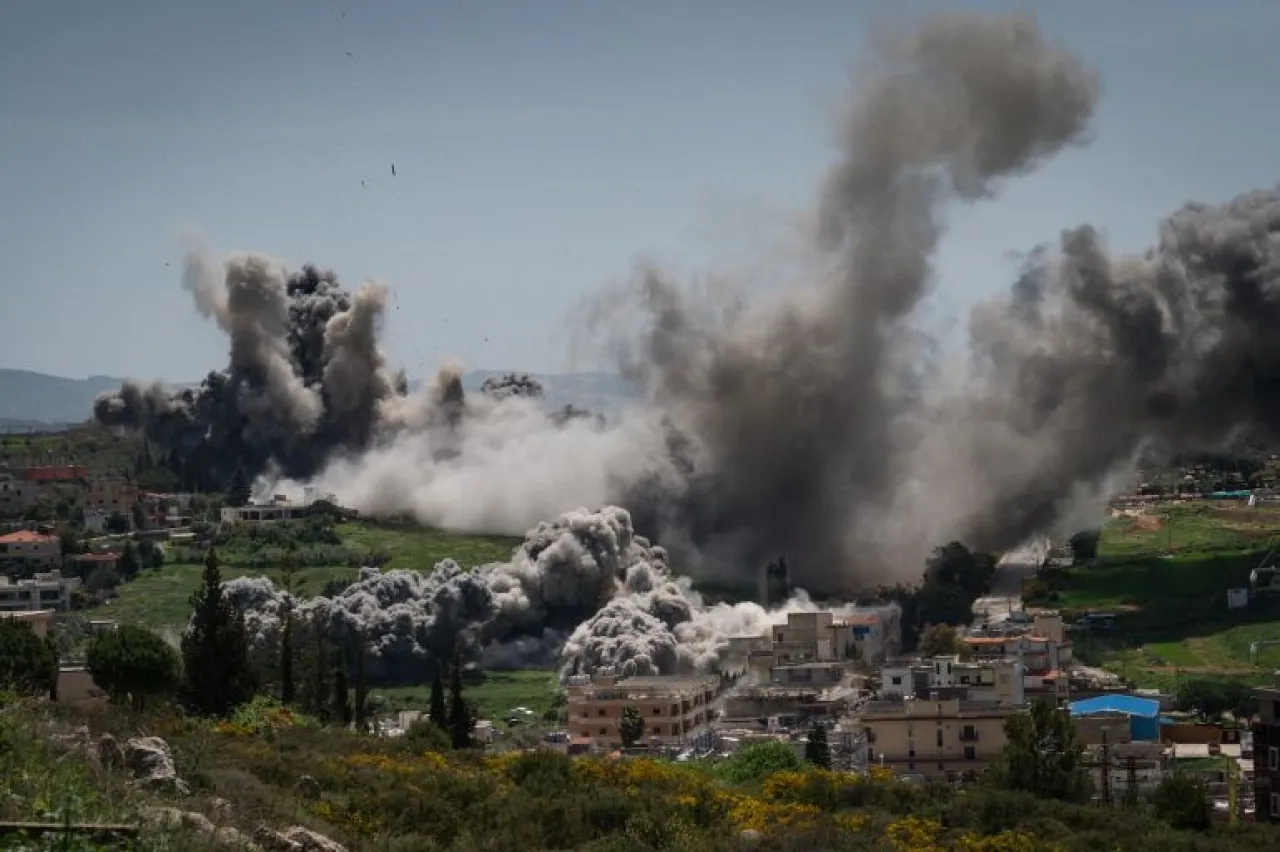
Between buildings that disappeared completely and areas that turned into open voids, the images depict a heavy scene of destruction caused by Israeli raids and military operations in one of the most violent fronts in southern Lebanon.
In Bint Jbeil, which is located just five kilometers from the Israeli border, and has long been a symbolic and strategic flashpoint in confrontations between the Israeli forces and Hezbollah, the images show the disappearance of buildings and facilities that existed on February 20, while the images record widespread targeting in the city, as dozens of facilities suffered varying degrees of damage, ranging from complete erasure to severe partial damage.
The images reveal the disappearance of buildings that were present just weeks ago, along with significant damage to several prominent sites within the city, including Abdul Latif Saad School, Ahl al-Bayt complex, Imam Hussein Mosque, the governmental office of Bint Jbeil district, and Thursday Market, as well as buildings surrounding Bint Jbeil cemetery and Bint Jbeil circular road.
The images also show the complete destruction of Bint Jbeil Stadium, a site that has gained special symbolism since a speech by the former Secretary-General of Hezbollah, Hassan Nasrallah, in 2000. The Israeli military had previously mentioned targeting it in earlier statements.
Al-Khiyam.. Erased Neighborhoods and Disappeared Urban Blocks
In Al-Khiyam, the comparison between images from February 20 and April 14 reveals extensive destruction across residential, commercial, and civic facilities, as populated areas were transformed into large urban voids.
The images show the disappearance of entire residential blocks and the leveling of buildings and facilities, in addition to damages affecting a number of vital sites, including the Al-Khiyam detention center which was completely destroyed, the town stadium, and Imam Khomeini complex, Al-Khiyam public school, as well as main roads inside the town.
The pattern of destruction in the town reflects a shift from limited strikes to what resembles a broad "fire cleansing" strategy, targeting nearly complete removal of the urban fabric in some neighborhoods.
An Analysis of the Targeting Pattern
The images indicate a clear shift in the operational pattern inside Bint Jbeil and Al-Khiyam. While the strikes appeared relatively limited during February, images after February 28 reveal an expansion of targeting to include entire neighborhoods and civic and service facilities more intensely, suggesting that the pace and scale of operations escalated sharply after this date.
This pattern is evident in Al-Khiyam, where targeting has shifted to comprehensive sweeping, no longer confined to scattered points, but extending to wide areas of the urban fabric, suggesting a shift from localized strikes to widespread destruction affecting the urban infrastructure itself.
In Bint Jbeil, the scene not only includes damages to residential buildings but also facilities carrying symbolic and service significance within the city, enhancing the image of widespread targeting of the entire urban area.
The damage to roads, public facilities, religious and educational sites indicates human impacts beyond the direct material losses, as it exacerbates the difficulty of the residents' return and the resumption of essential services in the near future.
This indicates a level of destruction surpassing earlier rounds, within an escalation that began after October 7 and intensified thereafter.
Israeli media revealed details of a new military plan by the Israeli army in southern Lebanon which includes creating a buffer zone with a depth ranging between two and three kilometers, similar to what is known as the "Yellow Line" in Gaza Strip, with the possibility of preventing the return of residents of border villages as part of any future settlement.