The German capital Berlin hosted an international conference on Sudan on Wednesday, April 15, in an attempt to rally international efforts to end the ongoing conflict and halt the continued deterioration of the humanitarian situation in the country.
The conference coincided with the third anniversary of the outbreak of the war in April 2023 and is the third European edition, following the Paris and London conferences in 2024 and 2025, as part of ongoing international efforts to find a way out of the conflict.
The conference was attended by a number of Western countries including Germany, the United Kingdom, France, and the United States, along with prominent Arab countries such as Egypt, Saudi Arabia, and the United Arab Emirates, as well as international and regional organizations, amid the escalating humanitarian situation.
The Berlin conference focused on three main pillars: ceasefire, facilitating the access of humanitarian aid, and establishing a comprehensive political process.
The conference organizers did not invite the main conflict parties: the Sudanese army and the Rapid Support Forces, to attend the conference proceedings.
For its part, the Sudanese Foreign Ministry condemned the holding of the conference "without consultation and coordination with the Sudanese government and their invitation".
In a recorded speech, the United Nations Secretary-General, Antonio Guterres, called for the "end of the nightmare" of the ongoing war, adding that "foreign interventions and the influx of weapons" are fueling the conflict in Sudan.
Guterres demanded that the Sudanese army and the Rapid Support Forces "immediately cease hostilities" and urged the international community to increase humanitarian aid, noting that it is "still insufficient" compared to what was provided last year.
Simultaneously, the UN High Commissioner for Human Rights, Volker Türk, warned of a sharp increase in the use of drones in the Sudanese war, noting that drone attacks are responsible for "three-quarters of civilian deaths" documented by the Commission during the first three months of this year.
Türk added that most of the drones used are not manufactured in Sudan, but "foreign powers supply (the conflict parties) with advanced weapons systems and funding, while seeking to achieve their own interests".
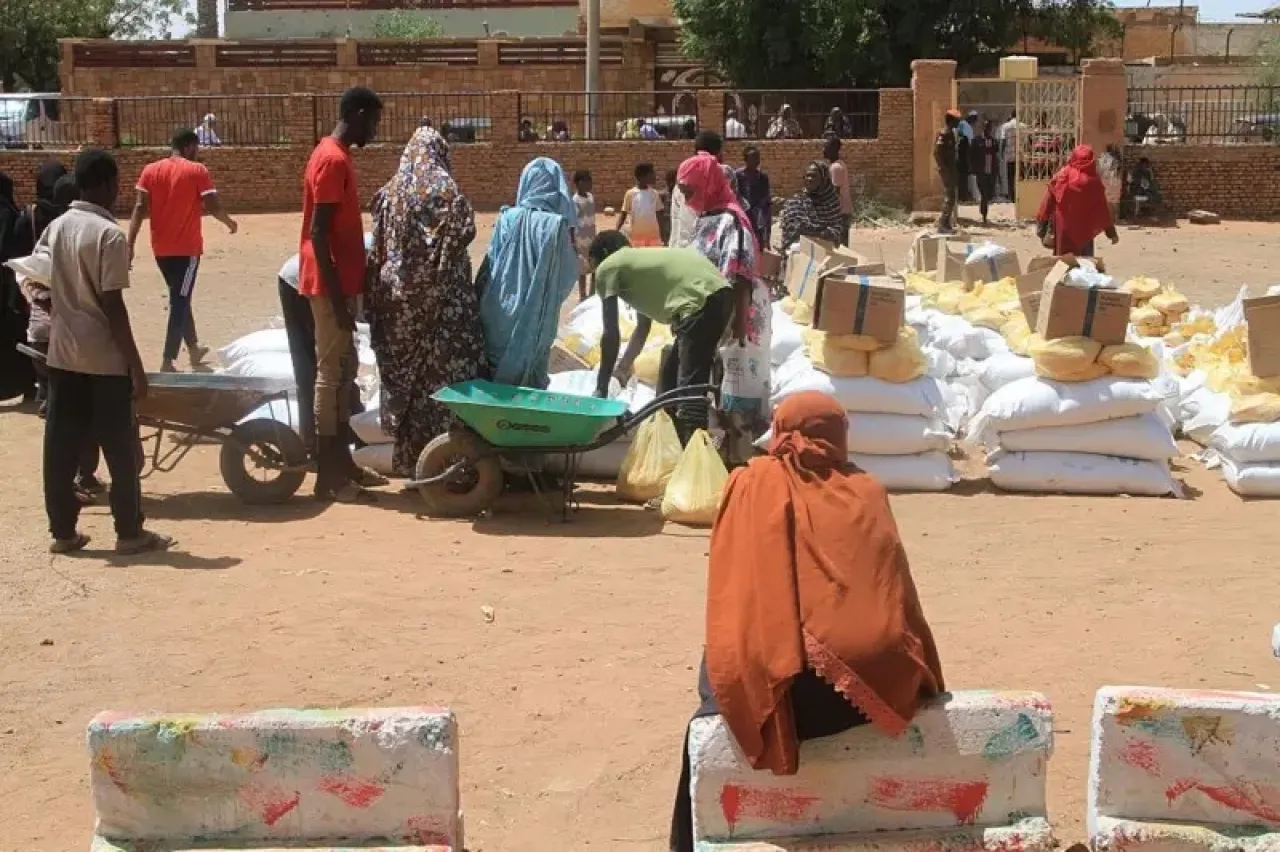
For his part, the German Foreign Minister, Johann Vadivol, reaffirmed that the countries and organizations participating in the conference pledged to provide financial aid exceeding 1.3 billion euros (1.5 billion dollars) to support the Sudanese people, especially in the areas of food, healthcare, and shelter, amid warnings of a famine threatening the lives of millions of civilians.
In the same context, Donald Trump's advisor on African and Arab affairs, Musaad Bulos, mentioned that the US administration "is working with both sides of the conflict to reach a three-month humanitarian truce, which may lead to a permanent ceasefire".
The Berlin conference represents an attempt to refocus attention on the Sudanese crisis, which has relatively fallen down the international priority list due to other crises. However, the success of these efforts remains contingent on the willingness of the Sudanese parties to make concessions, in addition to the existence of a genuine international will to exert effective pressure.
Sudan is facing the world's largest displacement crisis, with over 11 million people forced to flee their homes since the outbreak of war, including nearly 3 million people who have crossed the border into neighboring countries.
UN reports indicate a rapid spread of diseases such as cholera, malaria, dengue fever, and German measles, resulting from the collapse of infrastructure, cessation of vital health systems, transport networks, water and sanitation systems, supply lines, and agricultural production.
The United Nations repeatedly calls on the Sudanese army and the Rapid Support Forces to cease hostilities and agree on a humanitarian truce to create opportunities for dialogue and the entry of humanitarian aid.
It is not possible to accurately verify the number of casualties and war victims in Sudan, but estimates by some humanitarian organizations like the "International Rescue Committee" (an American non-governmental organization) suggest that the death toll could exceed 150,000 people.