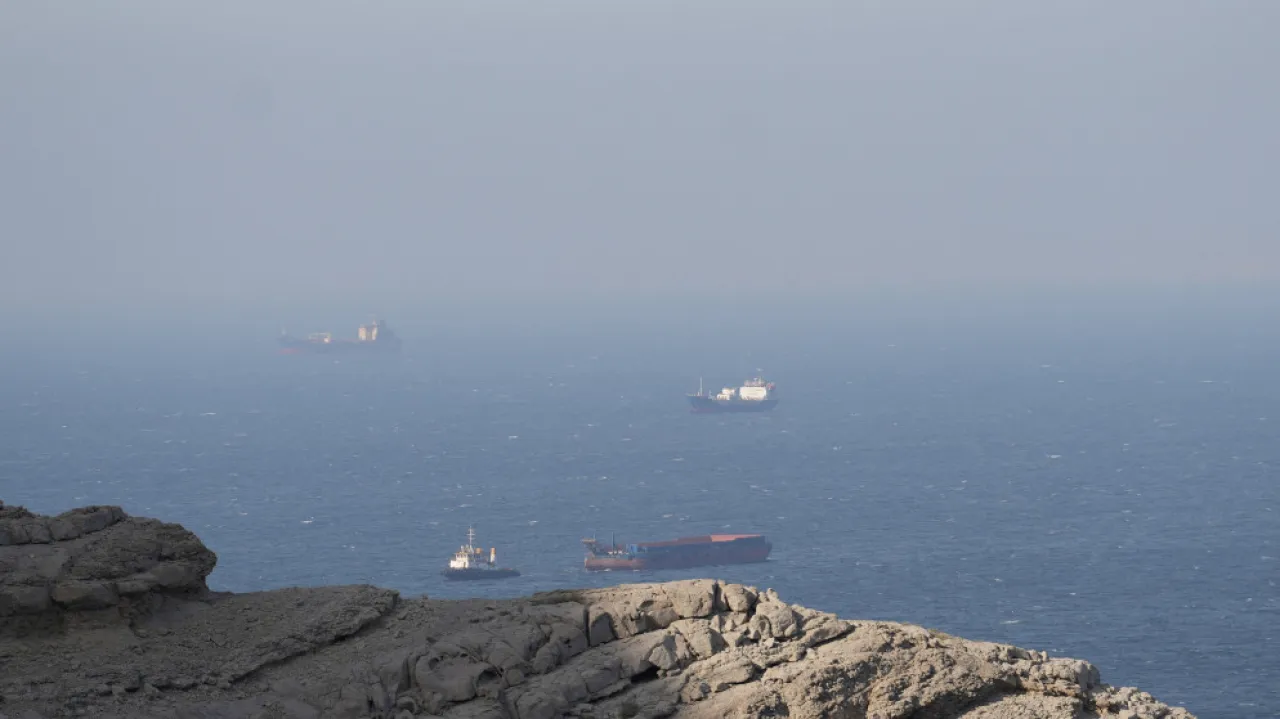
Khaberni - The Strait of Hormuz remained closed, Sunday, amid continuing disputes between Iran and the United States, while the influential Iranian parliament speaker Mohammad Bagher Ghalibaf confirmed that reaching a final peace agreement is still "far away" despite some progress in negotiations.
While mediation efforts continue after high-level talks in Islamabad that have not resulted in any agreement, Iran confirmed that it will not allow the reopening of the strategic maritime passage unless the United States lifts the blockade it imposes on its ports.
Ghalibaf said in televised statements on Saturday that there has been "progress" in the negotiations with Washington, "but there are still significant gaps and some crucial issues remaining."
He added, the head of Iran's Shura Council who participated in the negotiations aiming to end the Israeli-American war on Iran, "We are still far from the final discussion."
The ceasefire deadline of two weeks expires on Wednesday unless it is extended.
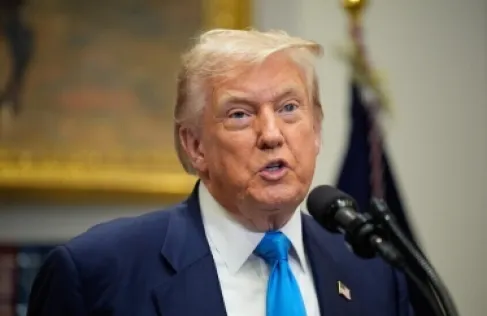
In the meantime, US President Donald Trump mentioned "very good talks" occurring with Iran but warned them against attempting to "blackmail" the United States.
On Friday, Tehran announced the opening of the Strait of Hormuz, which typically sees one-fifth of the global production of oil and liquefied natural gas pass through it, after an agreement was reached on a temporary ceasefire between Israel and Hezbollah in Lebanon.
This revived global markets and led to a drop in oil prices, but Tehran backtracked on its position after Trump insisted that the blockade imposed on Iranian ports will remain until a final agreement is reached.
Ghalibaf stated "Unless America lifts the blockade, movement in the Strait of Hormuz will definitely be limited."
A statement attributed to Iran's Supreme Leader Mojtaba Khamenei, who has not appeared publicly since taking office following his father's assassination by the first Israeli-American strikes on Iran at the onset of the war on February 28, emphasized that the Iranian navy "is fully prepared" to defeat the United States.
Meanwhile, Trump, who was speaking to reporters at the White House, warned Iran against "blackmailing" the United States by changing its stance on the Strait of Hormuz.
He said "very good talks are ongoing," adding that Washington "is taking a firm stance."
- "Targeting" -
The Iranian Revolutionary Guard warned that any attempt to pass through the Strait of Hormuz without permission "will be considered as cooperation with the enemy, and the offending ship will be targeted."
Several oil and gas tankers passed the strait on Saturday morning when it was briefly reopened, according to tracking data, but others turned back while the data showed that no ships were crossing the strait by the afternoon.
A British maritime security agency reported that the Revolutionary Guard fired on a tanker while the security intelligence company "Vanguard Tec" indicated that the Guard threatened to "destroy" an empty cruise ship that was fleeing the Gulf.
In a third incident, the British agency reported that it received a report about a "projectile hitting (a ship) of unknown nature that caused damage" to cargo containers without causing a fire outbreak.
The Indian Ministry of External Affairs announced that it summoned the Iranian ambassador in New Delhi to protest a "shooting incident" related to two ships flying the Indian flag in the strait.
- Killing of a French peacekeeping soldier -
On the diplomatic front, Egypt, which is participating in mediation efforts alongside Pakistan, expressed optimism on Saturday as its Foreign Minister Badr Abdel Aaty indicated that Cairo and Islamabad hope to reach a final agreement between the United States and Iran "in the coming days."
In addition to the situation with the Strait of Hormuz, Iran's stockpile of highly enriched uranium, close to the 90% level required to make a nuclear bomb, represents a major sticking point in the negotiations.
Trump announced on Friday that Iran agreed to hand over its enriched uranium total of approximately 440 kilograms. He said, "We will get it by going to Iran using several drills."
In the meantime, the Iranian Foreign Ministry announced that the stockpile, believed to be buried deep underground under rubble left by American bombing during the 12-day war in June, "will not be moved anywhere," confirming "the issue of transferring enriched uranium to the United States was never raised in negotiations."
The Middle East war erupted on February 28 when the United States and Israel launched a series of attacks on Iran even though Washington and Tehran were negotiating at that time.
The war quickly spread to cover various countries in the region, as Iran targeted its neighbors while Hezbollah Lebanon was drawn into the war by launching rockets towards Israel.
A ceasefire went into effect in Lebanon from midnight Thursday to Friday and is scheduled to last for 10 days.
However, a French soldier was killed on Saturday and three were injured in an attack in southern Lebanon targeting the United Nations Interim Force in Lebanon (UNIFIL), and French President Emmanuel Macron held Hezbollah responsible, which denied any involvement.
Also, the Israeli military reported on Sunday the killing of two of its soldiers during clashes in southern Lebanon since the ceasefire began.