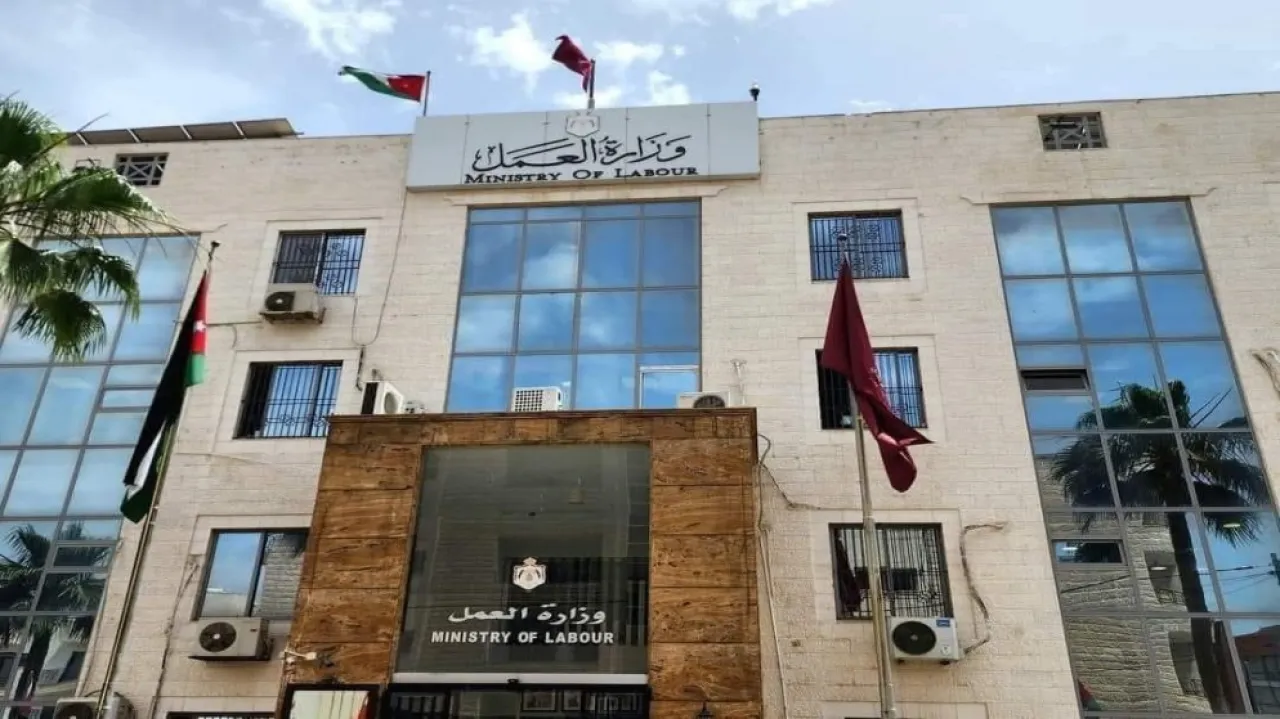
Khaberni - The Ministry of Labor announced that the number of private sector establishments that benefited from the flexible work system, issued under Articles 2 and 140 of Labor Law No. (8) of 1996 and integrated into their internal systems, reached about 145 establishments during the years 2025 and 2026, including 45 establishments in the current year.
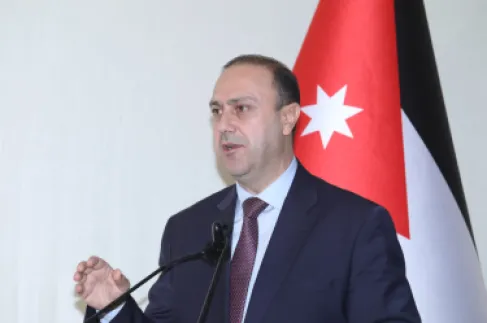
The Secretary General of the Ministry, Abdul Halim Dougan, said that the sectors that benefit the most from this system are information technology, education, and the commercial sector.
He explained that the flexible work system was introduced to increase the employment of Jordanians in the private sector by providing new work patterns that are compatible with workers' family responsibilities and social conditions. It also contributes to increasing the participation of women and persons with disabilities in the labor market, confirming that it serves employers in the private sector by reducing operational costs when employing labor in their establishments under the flexible work system.
He pointed out that the groups allowed to work within one of the forms of flexible work in private sector institutions that apply the flexible work system are full-time academic students, breastfeeding or pregnant women, workers caring for one or more children, workers caring for an elderly or first-degree relative, workers with disabilities, and any worker in the institution whose nature of work aligns with any form of flexible work provided for in this system.
He clarified that the forms of flexible work are defined as follows: remote work, part-time work, work within flexible hours, condensed workweek, flexible year, or any form of work, noting that the flexible work contract signed between the worker and the employer must be in writing, and the worker undertakes therein to work for the employer within one of the forms of flexible work under his supervision, management, and directions in exchange for pay.
Dougan confirmed that the system outlines the mechanism for a worker's transition from non-flexible work to flexible work, explaining that it is permissible for the worker and the employer to switch from flexible to non-flexible work and vice versa after a period of at least 3 months from the date of conversion.
He added, the transfer of a worker to the flexible work system does not diminish his labor rights established under the Labor Law; moreover, in "part-time work," the percentage of agreed-upon work hours between the worker and the employer is considered in calculating annual and sick leaves and other holidays provided by the Labor Law, except for maternity leave and breastfeeding hour, which are not to be amended.
He indicated that an employer who employs 10 or more workers and applies the flexible work system in his establishment is required to modify the establishment's internal system to comply with this system and to have it ratified by the Ministry of Labor.