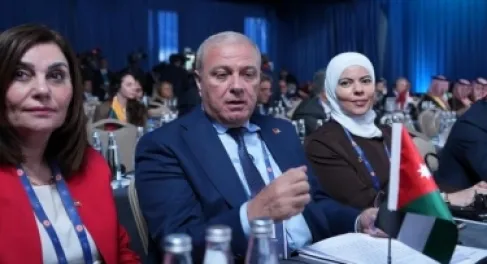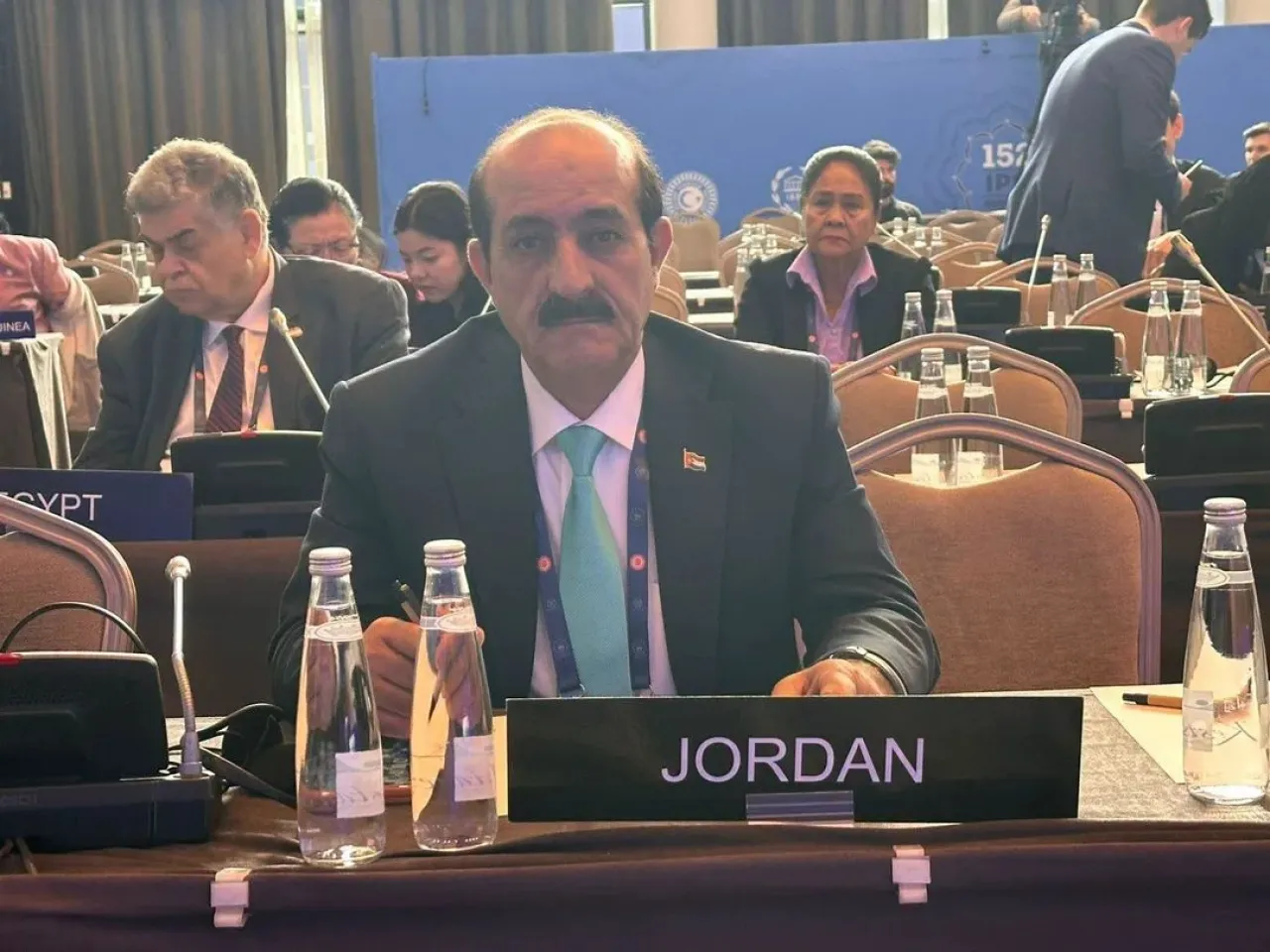
Khaberni - Deputy Mohammed Al-Sabayleh, a member of the Union and Reform parliamentary bloc and a member of the Jordanian National Union Party, said that the world can no longer tolerate the ongoing weakness that has affected the international system, emphasizing that reforming the United Nations is no longer a political luxury, but a historical necessity to protect international peace and security, uphold international law, and achieve justice for the peoples who continue to pay the price for double standards and the paralysis of international will. Al-Sabayleh's remarks came during the participation of the Jordanian parliamentary delegation in the 152nd General Assembly of the Inter-Parliamentary Union held in Istanbul, which brought together parliamentarians from dozens of countries to discuss issues of peace, justice, and the future of international parliamentary work.
Al-Sabayleh added, in remarks addressing the reform of Article 109 of the United Nations Charter, that the international organization was established after the great wars to serve as a supreme reference for dialogue and conflict prevention. However, international practice revealed deep imbalances that have weakened its ability to fulfill its mission, including the paralysis of some of its institutions, the erosion of the effectiveness of its decisions, and the continued use of international mechanisms that hinder justice and perpetuate selectivity in the application of international law. According to what was published about his intervention, he emphasized the importance of achieving genuine reforms in the institutions of the United Nations so that it can perform its actual role away from marginalization and political paralysis.
Al-Sabayleh confirmed that the marginalization of the United Nations not only reflects on the organization alone but also threatens the structure of the entire international system, opening the door to chaos and the predominance of narrow interests over collective security and human rights. He pointed out that the real activation of the United Nations' role begins with serious international political will, which includes reviewing decision-making mechanisms, enhancing justice in implementing UN decisions, and enabling the organization to respond quickly to armed conflicts and humanitarian crises that are escalating around the world. This approach is consistent with official discussions in the corridors of the Inter-Parliamentary Union regarding the reform of the United Nations, including calls for revising the Charter in accordance with Article 109, and enhancing the ability of parliaments to push towards a more representative and effective international system.
He pointed out that the Palestinian issue remains the clearest test of the credibility of the international community, as dozens of UN resolutions issued about it have remained hostage to the absence of implementation, which has undermined the confidence of peoples in international justice institutions, and deepened the sense that international law is applied selectively, in a manner that does not align with the principles of equality and fairness. In this context, his call for the reform of Article 109 and related institutional reviews reflects a political vision that considers the reform of the United Nations as not merely a procedural matter but directly linked to the future of international justice and the effectiveness of the multilateral system.
Al-Sabayleh concluded by affirming that the world today does not need a weak United Nations that merely issues statements, but rather a strong, fair, and effective international organization capable of protecting civilians, preventing wars, and restoring credibility to diplomacy and international law, emphasizing that the responsibility of national parliaments does not stop at monitoring but extends to supporting every reform path that restores the international organization's prestige and its real role in maintaining global peace.