Khaberni - CNN network revealed, quoting Israeli military officials, that Tel Aviv is moving to impose what it calls the "Yellow Line" inside Lebanese territory, preventing the return of residents to 55 towns and villages within this range, and granting the army the authority to continue destroying Hezbollah's infrastructure even during the cease-fire.
According to the same source, these data indicate an Israeli trend to establish a permanent field reality in southern Lebanon, transcending the boundaries of the temporary truce, by creating a zone under military or fire control, restricting any future population return or field activity.
In this context, the director of Al Jazeera's office in Palestine, Walid al-Omari, stated that the Israeli military talks about controlling about 55 towns and villages in southern Lebanon, clarifying that about 20 of them, especially those close to the contact line, have been fully or partially destroyed.
He added that these data intersect with the Israeli proposal regarding the imposition of a border strip free of inhabitants, as the objective is not limited to military deployment, but includes preventing the return of civilians, thus establishing a new demographic reality in those areas.
He continued that this approach is linked to what is known inside Israel as the "anti-tank missile line," which is a security range that Tel Aviv seeks to anchor up to about 10 kilometers inside Lebanese territory.
Al-Omari pointed out that this proposal reflects an attempt to replicate a similar model to what is known as the "Yellow Line" in the Gaza Strip, by keeping large areas under Israeli control for extended periods, whether through direct military presence or fire control.
Until Litani River
Walid Al-Omari, director of Al Jazeera's office in Palestine, clarified that the Israeli vision extends to include the area up to the Litani River, where Israel seeks to prevent any armed presence, or keep it under permanent threat, thereby imposing a long-term deterrence equation on the border.
Al-Omari said that if this reality is fixed, it practically means emptying large areas of their inhabitants, which raises field and demographic implications that exceed the direct military dimension.
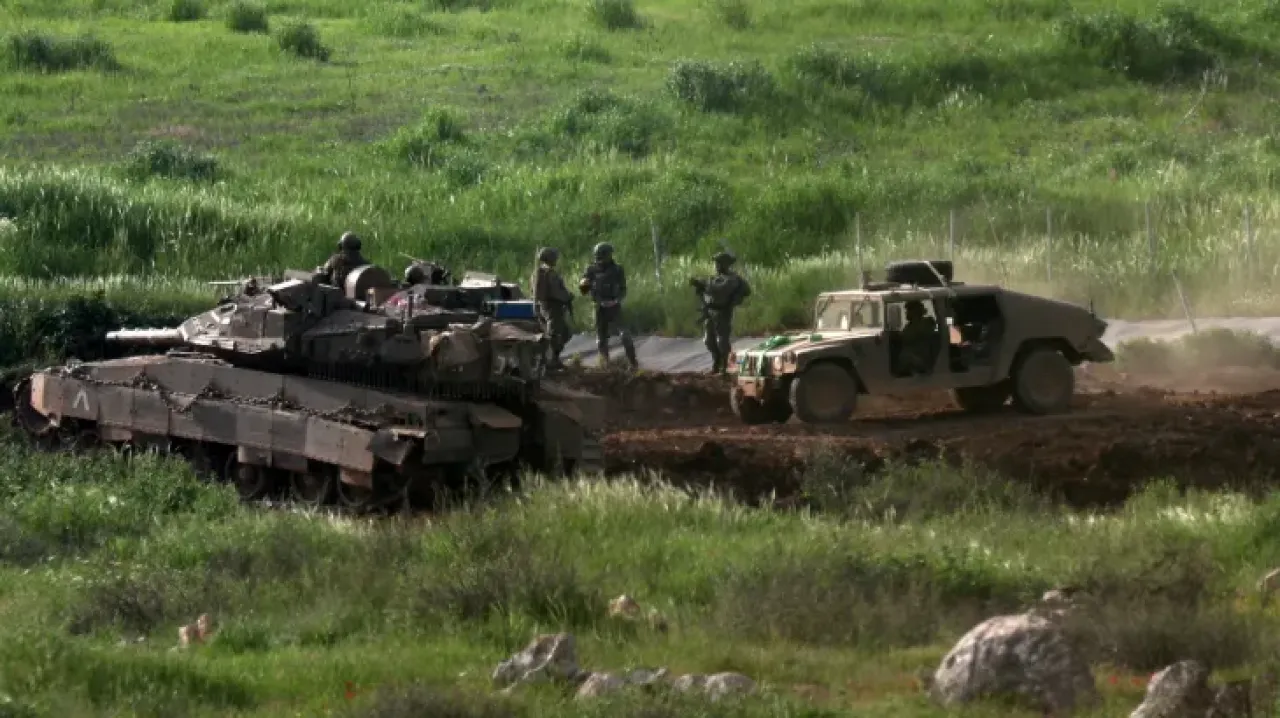
In parallel, he pointed out that the Israeli army is trying to reinforce this image through field operations of a demonstrative nature, including the deployment of elite forces to strategic areas, which were promoted before the ceasefire came into effect.
He explained that these movements come in the context of supporting an official narrative that seeks to present the current control as a field achievement, despite internal discussions in Israel about assessing these results.
Al-Omari also mentioned that this field map is presented in a sensitive political context, where Prime Minister Benjamin Netanyahu seeks to solidify the presence of Israeli forces in these areas for the longest possible duration.
Not viable
In this frame, Al Jazeera's correspondent in Lebanon, Ihab al-Aqtadi, explained that the realities on the ground reflect a parallel direction to the Israeli proposals, characterized by making the border areas not viable, pointing out that the town of Al-Khiam, near the contact line, undergoes systematic destruction.
He added that the Lebanese army has closed the entrances to the town and prevented civilians from reaching it, in the midst of the continued presence of Israeli forces inside, noting that repeated explosion operations have led to the destruction of a large number of houses in the past hours.
He explained that these operations are not limited to Al-Khiam but include large areas of southern Lebanon, where Israeli forces continue to level the land and destroy infrastructure, in a context that seems aimed at emptying the area of living essentials.
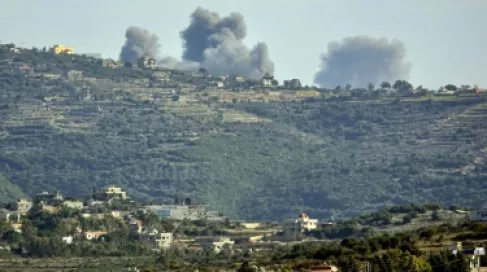
The correspondent of Al Jazeera mentioned that the extent of destruction in the areas affected by air and artillery strikes is very large, with thousands of residential units destroyed and extensive damage to infrastructure, raising concerns about the difficulty of the population's return in the near future.
He noted that more than 35 towns and villages are now beyond reach under the spread of Israeli forces, while the international emergency forces (UNIFIL) move to monitor the situation, amid questions about their role in the next stage.
He emphasized that the areas that witnessed the Israeli incursion have turned into a completely destroyed environment, making reconstruction and population return contingent on political and security developments that have yet to become clear.
On Thursday evening, US President Donald Trump announced a ceasefire in Lebanon for 10 days starting at midnight. This announcement came after the launch of Lebanese-Israeli negotiations in Washington.