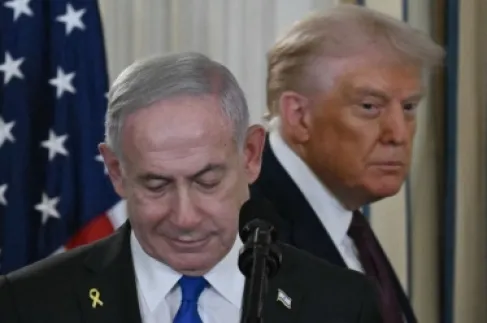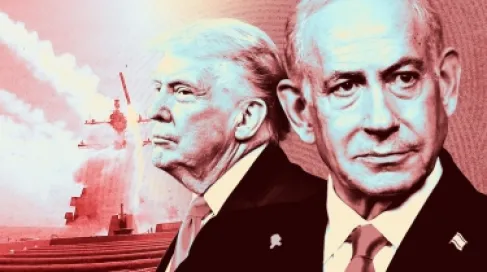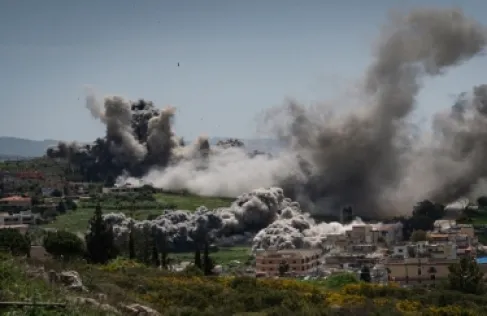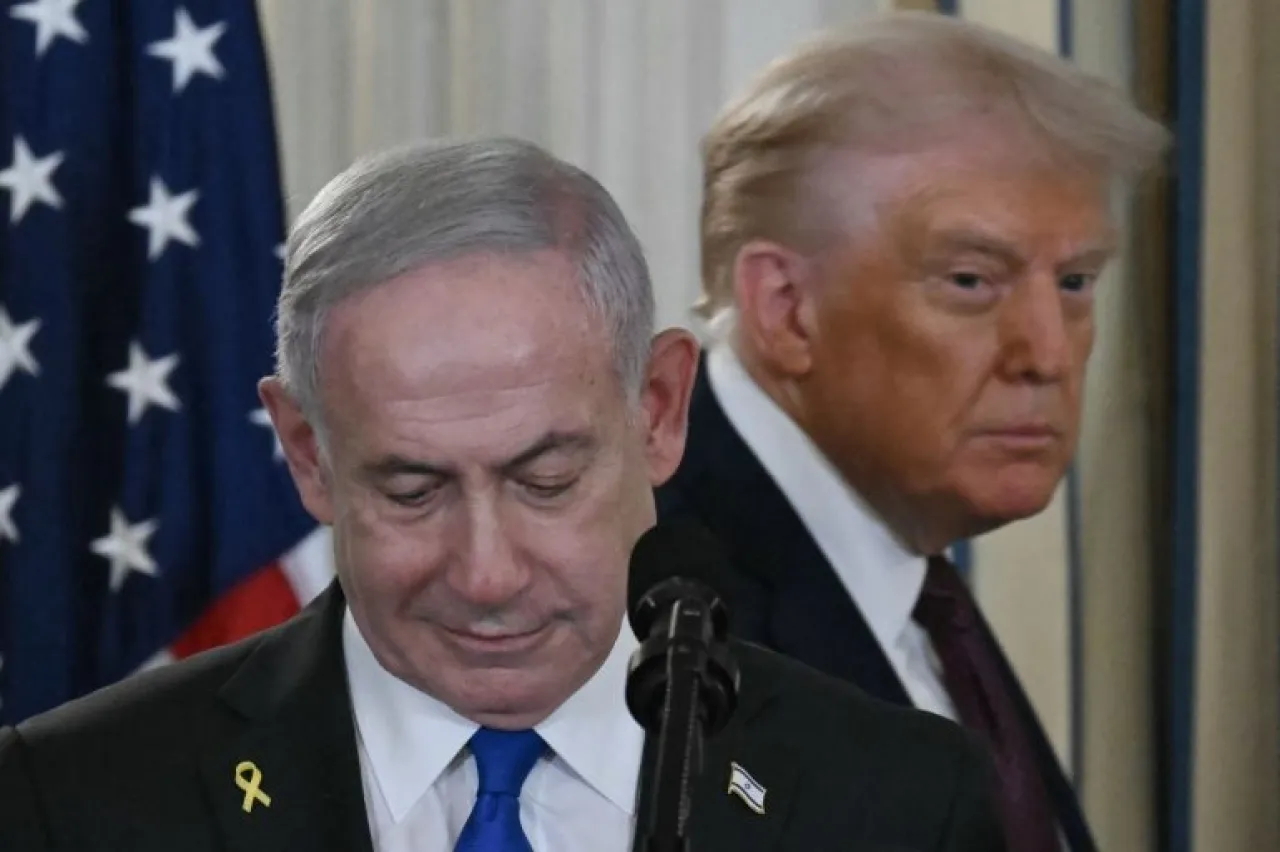
Khaberni - A state of amazement prevailed in the political circles in Israel - led by Prime Minister Benjamin Netanyahu - following staunch statements by US President Donald Trump, where he warned Tel Aviv against continuing its attacks on Lebanon, in a move that appeared as issuing a direct order that Israel had no choice but to comply with, which Israeli officials said is in contradiction with the text of the ceasefire agreement, according to Axios.
Trump announced last Thursday that Israel and Lebanon had agreed to a ceasefire for 10 days. Axios noted that the United States had been pressing for this truce for several days, pointing out that the agreement was "politically very sensitive" for Netanyahu, and that his government assured that it was not restricted in striking Hezbollah when necessary.
Israeli Shock and Demands for Clarification
Axios reported from American and informed sources that Netanyahu and his advisors were shocked by Trump's post and "caught off guard" when they learned about it through the media. The sources said Netanyahu was "personally stunned and concerned" upon reading the post.
This stance led Netanyahu's aides - including the Israeli ambassador to Washington, Yehiel Leiter - to act quickly to understand whether Washington had changed its plans, as Israel requested clarifications from the White House about these statements.
Trump had posted on his "Truth Social" platform on Friday, saying sharply: "Israel shall not bomb Lebanon anymore. It is prohibited by the United States. Enough is enough."
Trump did not stop there but reiterated his stance - in an interview with Axios - saying: "Israel must stop. They cannot continue bombing buildings. I will not allow it."
Axios pointed out that the significance of Trump's post - issuing an order that Israel has no other option but to obey - "would have been considered unimaginable under other US administrations."
Contradiction with the Agreement Text
The Israeli shock arises - according to Axios - from the contradiction between Trump's statements and the text of the ceasefire agreement.
According to Anadolu Agency, the agreement published by the US Department of State consists of 6 clauses, and states that Israel committed to not carrying out offensive military operations against Lebanese targets, including civilian, military, and other state-owned targets, but "reserves the right to take all necessary measures to defend itself at any time against planned, imminent, or ongoing attacks."
Israeli officials confirmed to the White House that Trump's comment contradicts the agreement.
In response to a request for clarification from Axios, a US official stated: "The ceasefire agreement - brokered by the president between Lebanon and Israel - clearly stipulates that Israel will not conduct any offensive military operations, but it preserves their right to defend itself against planned, imminent, or ongoing attacks."
Compliance with Trump and Internal Anger
In an analysis of the internal Israeli scene, the American newspaper New York Times shed light on Netanyahu's predicament. According to polls, Israeli voters did not want to end the fighting but wanted the army "to continue pressing Hezbollah until it is destroyed or forced to disarm," which was what Netanyahu and his military leaders had promised.
However, Netanyahu "complied quickly, albeit reluctantly," when Trump pressed for a ceasefire. This opened the door for sharp criticisms from both his opponents and allies alike.
In this context, the newspaper quoted the former Chief of Staff Gadi Eizenkot as saying: "A ceasefire must come from a position of strength and be an Israeli decision…, there is a pattern emerging where ceasefire agreements are imposed on us in Gaza, in Iran, and now in Lebanon."
The New York Times noted Netanyahu's ability to convince voters that his close relationship with Trump ensures Israel's security is now "far less convincing." And it quoted former American negotiator in the Middle East, Aaron David Miller, saying: "Netanyahu influenced the way the war started, but he will not affect how it ends."
Israeli Assessments: No Return to Fighting
In a related context, the Hebrew newspaper Yedioth Ahronoth quoted an unnamed Israeli source confirming Tel Aviv's surprise at Trump's assurance that he would not allow the continuation of attacks on Lebanon.
The source explained to the newspaper that the prevailing feeling in Israel is that "the likelihood of returning to fighting with Iran is now less than the likelihood of reaching an agreement." Israeli assessments indicate that there will be no return to confrontation and that Trump's message also means no resuming the fighting in Lebanon.
The source added to Yedioth Ahronoth that the American president is determined to push forward the process of reaching an agreement with Iran, and to work on bringing Israel and the Lebanese government closer, noting that Washington is also pressing Israel to resume negotiations with Syria.