Khaberni - With the escalation of the war on Iran, the repercussions have not been limited to energy and navigation markets but have quickly extended to the world's currency markets in the Arab region, where the dollar has returned to dominate the scene as a safe haven, putting pressure on the currencies of several countries at a time when others have succeeded in maintaining their stability. This disparity raises a key question: Has the war redrawn the map of Arab currencies against the dollar?
Market data showed varying changes between the value of Arab currencies the day before the American-Israeli war on Iran and their value after the outbreak of war.
In Egypt, the dollar rose from about 48 pounds before the war to about 55 pounds, reaching its highest level during the war and recording a nearly 15% increase, according to data from the Central Bank of Egypt.
In Tunisia and Morocco, the currencies recorded a limited decline against the dollar, with the Tunisian dinar falling from 2.93 to 2.96 dinar per dollar and the Moroccan dirham falling from 9.16 to 9.45 dirhams per dollar, which is the highest level during the war.
In Algeria, the dinar fell from 130 to 133.4 dinar against the dollar, and in Lebanon, the lira continued its downward trajectory as part of an ongoing crisis for years, with it falling from 89550 to 89725 lira against the dollar.
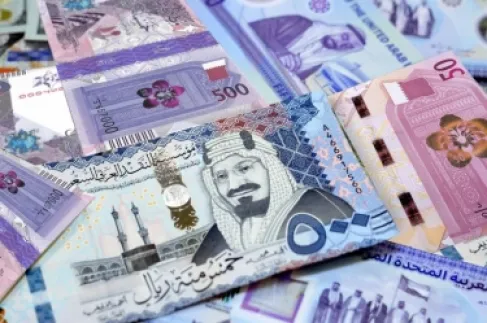
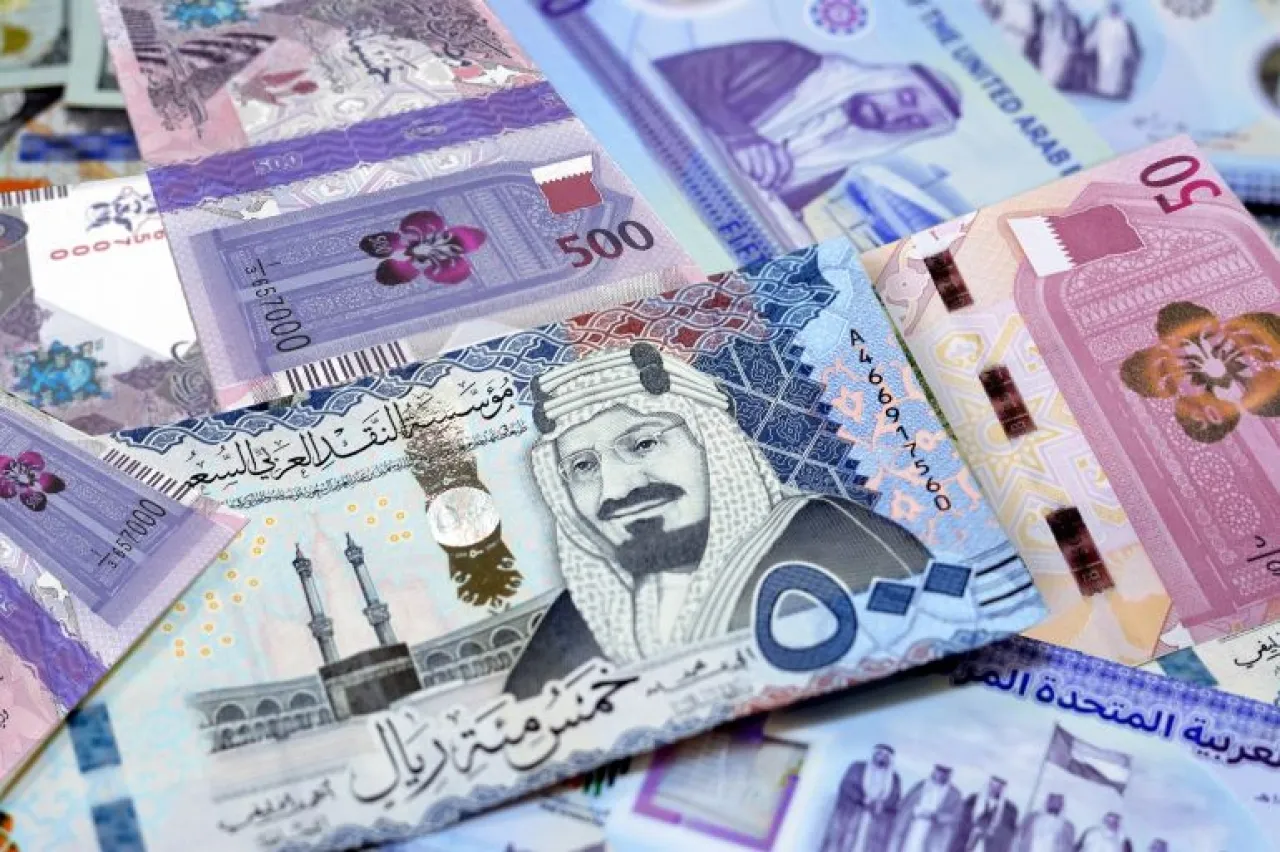
Conversely, the currencies of Gulf countries, such as the Saudi Riyal, Qatari Riyal, and UAE Dirham, maintained their stability at fixed levels, due to their direct peg to the dollar.
Who declined and who remained steady?
Among the most affected countries, Egypt, Tunisia, and Lebanon featured prominently, with their currencies facing direct pressures resulting from:
Rising inflation rates.
- Increased cost of imports, especially energy.
- Outflow of foreign investments (hot money).
This mix led to an increase in demand for the dollar, which reflected in the depreciation of the local currencies.
Conversely, Saudi Arabia, Qatar, the UAE, and Jordan maintained the stability of their currencies, supported by key factors:
- Currency peg to the dollar.
- Strong cash reserves.
- Government interventions when needed.
This monetary framework limited exchange rate fluctuations despite regional tensions.
Why did the responses differ?
In times of crisis, investors globally tend to flock to the dollar, leading to its rise against most currencies, especially in emerging markets. The rise in oil prices led to varied outcomes:
- Supporting the economies of the exporting countries.
- Increasing pressures on importing countries.
Central banks' policies played a crucial role, with some countries preferring exchange rate flexibility to absorb the shocks, while others relied on pegging and direct intervention.
The developments reveal that the war on Iran was not just a geopolitical event, but it also tested the resilience of Arab economies.
While some countries showed clear fragility to external shocks, others confirmed the strength of their monetary models, especially those linked to the dollar or supported by energy revenues.
As tensions continue, Arab currencies remain hostage to three main factors:
- The course of the war.
- Oil prices.
- Capital flows.
Final Outcome
In an analytical overview of the impact of the war on Iran on Arab currencies, economic expert Hossam Aayish suggests that the varied performance of the currencies is due to differences in economic structure and the degree of external exposure, noting that the currencies represent the "final outcome" of the war's repercussions on the economies of the states.
Aayish affirms that Arab countries are divided into two categories, the first directly affected and suffering from a continuous trade deficit and high dependence on imports, especially energy, which increases the demand for the dollar and presses on the local currencies.
Factors such as higher shipping and insurance costs, weak exports, and declining sources of foreign currency like tourism and remittances, deepen this pressure.
He adds that high debt and the cost of servicing it, alongside weak foreign reserves and the outflow of "hot money" during crises, lead to greater monetary instability, especially in economies with low credit ratings.
On the other hand, the second category, like the Gulf states, enjoys relative stability due to their currency peg to the dollar, having financial surpluses and large reserves, along with investment inflows and high credit ratings.
However, Aayish warns that this stability is "contingent upon the duration of the crisis," as these countries could also be affected if the war prolongs and oil exports or investments decrease.
Varying impacts
Meanwhile, writer and economic analyst Jannat Ben Abdullah believes that the war on Iran has cast a heavy shadow on the global economy, with varying effects on Arab countries depending on their position in the energy market.
Oil-exporting countries temporarily benefited from price increases above $100 per barrel, which bolstered their revenues and supported the stability of their currencies linked to the dollar, especially with the improvement in the value of the American currency, the rise in foreign currency reserves, and sovereign wealth funds. However, this improvement remains fragile amid continued geopolitical risks.
Conversely, Arab oil-importing countries face increasing pressures as rising energy prices and the strength of the dollar exacerbate their trade and balance of payments deficits, negatively affecting the value of their local currencies, feeding inflation, and weakening the purchasing power of their citizens.
She points out that this crisis may push towards rethinking reliance on the dollar, with emerging alternatives such as strengthening the role of economic blocs like "BRICS," expanding the use of local currencies in trade, in addition to increased central banks' demand for gold as a safe haven. However, Jannat confirms that the dispersion of Arab economic policies limits the region's ability to effectively address these challenges.