Khaberni - The International Committee of the Red Cross announced that at least 11,000 people have gone missing in Sudan since the outbreak of the war three years ago, pointing to the "deep and ongoing psychological suffering" experienced by families.
In a statement today Tuesday from its headquarters in Geneva, the International Committee said, "Thousands of families are still waiting for news about their loved ones from whom they were separated during the flight from the fighting," adding that "the number of missing persons files has exceeded 11,000 cases, with an increase of over 40% in the past year alone."
The International Committee of the Red Cross pointed out that the destruction of many communication networks “has led to countless families losing contact with their loved ones. The uncertainty about their fate causes deep and ongoing psychological suffering.”
The committee reported that it has assisted hundreds of families in reconnecting with their relatives, and facilitated more than 560,000 phone calls in 2025 by the Red Cross and Red Crescent societies in Sudan and also in Egypt, South Sudan, and Chad.
The International Committee of the Red Cross mentioned that 70-80% of the health infrastructure in conflict zones is either disrupted or suffering from a severe lack of resources.
Regarding the statistics on the missing, James Reynolds, Deputy Regional Director of the International Committee of the Red Cross, told reporters, "These figures, which probably only represent a fraction of the real numbers, show the human cost of prolonged conflicts like this one."
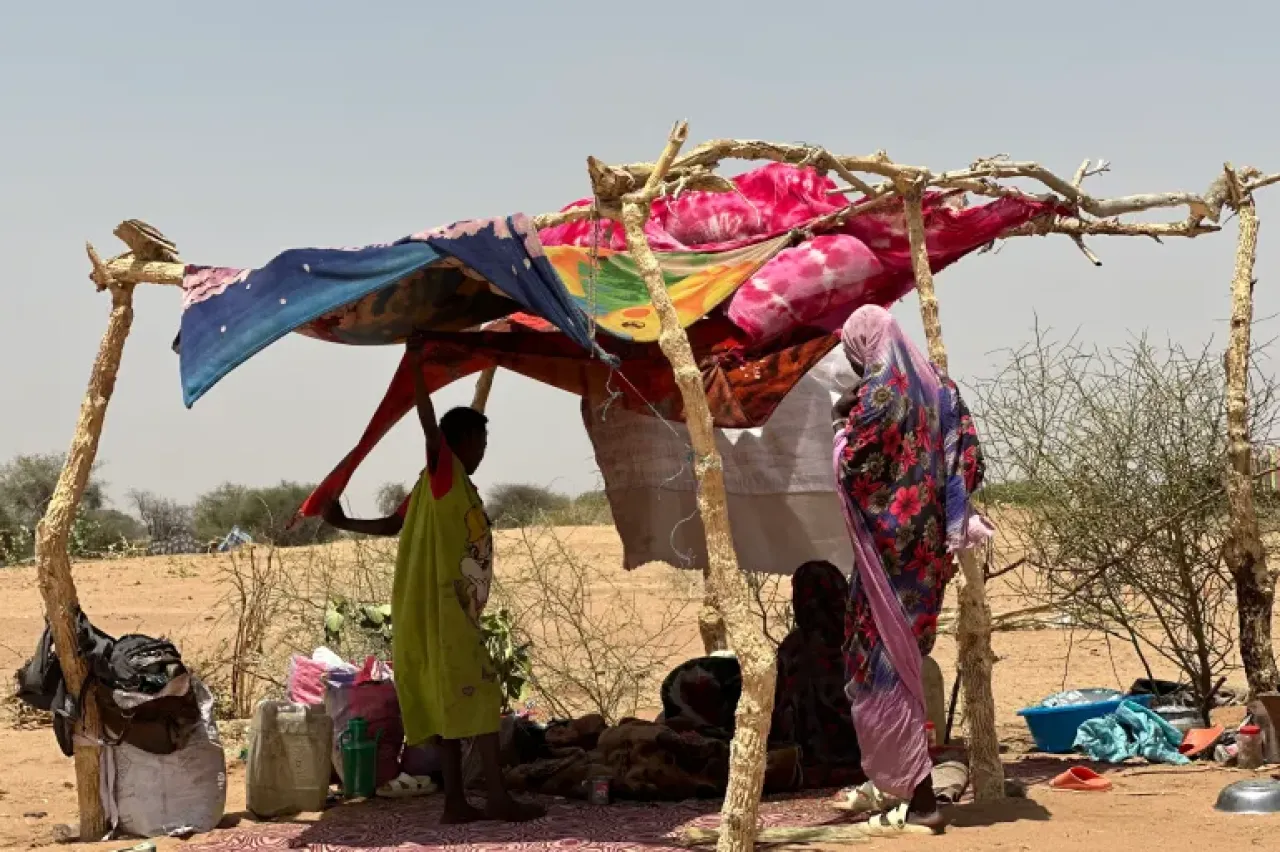
He also warned that shifting front lines "have led to the displacement of more than 11 million people, some of them multiple times. The committee added that among these, 4 million people have fled the country."
Tragic situation
The head of the International Committee of the Red Cross in Sudan, Daniel Omali, said: "The suffering of civilians from the war has reached unprecedented levels, especially due to its impact on basic infrastructure such as markets, hospitals, water treatment stations, and power stations."
He added, "At one point, the entire country was subjected to random attacks," calling on the warring parties and "those who wield direct influence to either end hostilities or facilitate their resolution." He warned that "the cost of inaction today will be exorbitant tomorrow."
More than 19 million people face acute food insecurity as the fighting intensifies in Kordofan in the center and the Blue Nile state in the southeast of the country, according to the World Food Programme.
Earlier yesterday Monday, the United Nations expressed its dismay at the Sudan war turning into a "neglected crisis" in a country "stuck in a vortex of atrocities," ahead of the third anniversary of the war, which is tomorrow Wednesday.
The UN Humanitarian Coordinator in Sudan, Denise Brown, said, "We are indeed in a vortex in Sudan, with recurring acts of sexual violence, repeated displacements, and recurring fatalities, and we believe we are stuck in a vortex."
Brown said, "It is one of the largest and most complex crises, and it is essential to focus on ways to find a solution," and from "funding the minimum basic needs" of the population pending settlement.
She called for not considering the war in Sudan a "forgotten crisis" but rather a "neglected crisis", especially after a call for donations worth 2.9 billion dollars - launched by the United Nations for Sudan in 2026 - only received funding of 16%, amid a global reduction in development aid.
The war that began on April 15, 2023, between the army and the Rapid Support Forces has resulted in more than 20,000 deaths and more than 10 million displaced and refugees, according to the United Nations. It has led to the spread of hunger and famine in many areas.