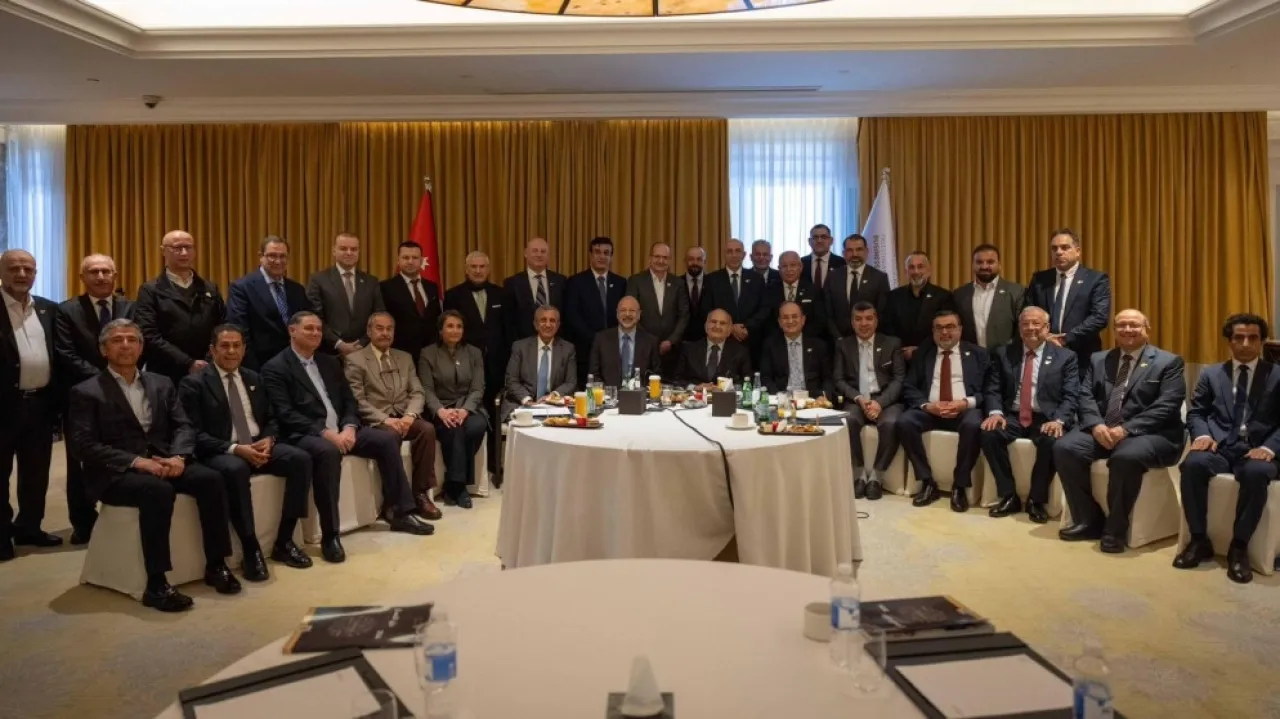
Khaberni - His Highness Prince Hassan bin Talal participated on Tuesday in a dialogue session titled "Jordan in the shadow of regional geopolitical changes", attended by a group of businessmen and economic experts, where the reality and prospects of Jordanian-Palestinian economic relations were discussed in light of current challenges.
His Highness Prince Hassan presented a discussion that addressed the profound transformations happening in the region, warning against the escalation of Israeli extremism and its accompanying fears for the future of Palestinians, in light of talks about annexation plans.
His Highness highlighted the humanitarian aspect of the crisis, recalling that about 2900 children are still missing under the rubble, urging people to consider these numbers as human stories and not just data.
He emphasized that the concept of trade is no longer measured by export volumes alone, but also reflects the degree of justice in market access, amid restrictions on crossings and movement of goods, highlighting Jordan's pivotal role in Arab integration projects.
He stressed that this role should go beyond the descriptive dimension, to become a productive economic value based on developing logistic services, building advanced databases, and working within a multi-corridor network.
In a related context, His Highness indicated that the region is entering a phase of structural instability, where military escalation is no longer an exceptional event, but a permanent factor reshaping economic flows and increasing risk levels, highlighting the importance of Jordan's position as a stable state capable of operating in a turbulent regional environment.
Prince Hassan proposed strategic priorities for economic transformation, including: turning the transit location into economic added value and building an advanced logistic services system supported by data, and working within a network of multiple regional pathways to enhance economic integration with Palestine.
He affirmed that the global system is moving towards multipolarity in economic corridors, but the deeper shift lies in transitioning towards a sustainable economy based on justice in access, human dignity preservation, and identity protection, aligned with the "human-first" approach in development.
In his interventions, he emphasized the importance of concepts he has long advocated for, including comprehensive human security that links economic, water, and social security, and the necessity of "humanizing the numbers" so that development policies remain connected to human dignity and actual needs.
He also highlighted the importance of anticipating crises and predicting them before managing them, through an approach based on deep analysis and precise data.
The chairman of the forum, Nazmi Atmeh, reviewed the main challenges facing the business sector, especially disruptions in supply chains and energy shortages, emphasizing the importance of enhancing economic cooperation and trade exchange between Jordan and Palestine.
He also provided a digital overview of the trade exchange reality, affirming that there are promising growth opportunities despite restrictions imposed by the Israeli side.
In turn, Saleh Marqa, the vice president of the Jordanian-Palestinian Business Forum, discussed the reality of trade exchange between the two sides, noting that the available potential far exceeds the current exchange volume, but logistical and political challenges, especially after the war, have led to a decline in the number of trucks and movement of goods.
Marqa suggested a package of practical initiatives to increase the volume of exchange, focusing on strategic sectors such as the pharmaceutical and food industries, alongside enhancing awareness of the Jordanian market and addressing existing obstacles.
The session included extensive discussions by the attendees, addressing the importance of developing tools for sustainable financing, particularly developmental waqf as an alternative to traditional waqf, and its role in supporting the resilience of communities and economic stability. Initiatives were also proposed to empower youth and enhance their role in achieving economic integration, alongside emphasizing the necessity of following up on the proposals and initiatives presented during the meeting and turning them into executable programs.
The session concluded with an emphasis on the importance of building on these dialogues to enhance the Jordanian-Palestinian partnership, achieving economic integration, and supporting regional stability in a stage characterized by unprecedented challenges.