Khaberni - Algeria is experiencing momentum in the energy sector on various fronts, through the expansion of its trade consultations with Jordan, and exploring broader partnership opportunities with South Korea, in parallel with granting British company "British Petroleum" a new exploration license in the Eastern Basin, at a time when the importance of Algeria in the international energy market is increasing due to supply disruptions linked to the Israeli-American war on Iran, and the closure of the Strait of Hormuz.
The steps come as Algeria returns to the forefront of international demand for oil and gas as a stable supplier, amid European and Asian efforts to diversify supply sources, and enhance partnerships with producers less susceptible to geopolitical shocks.
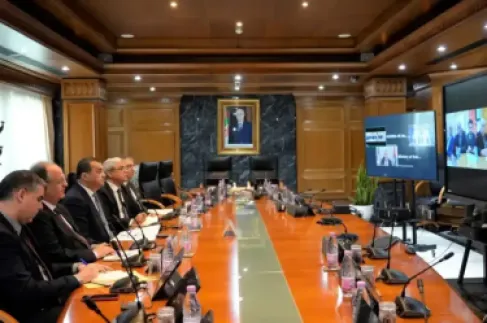
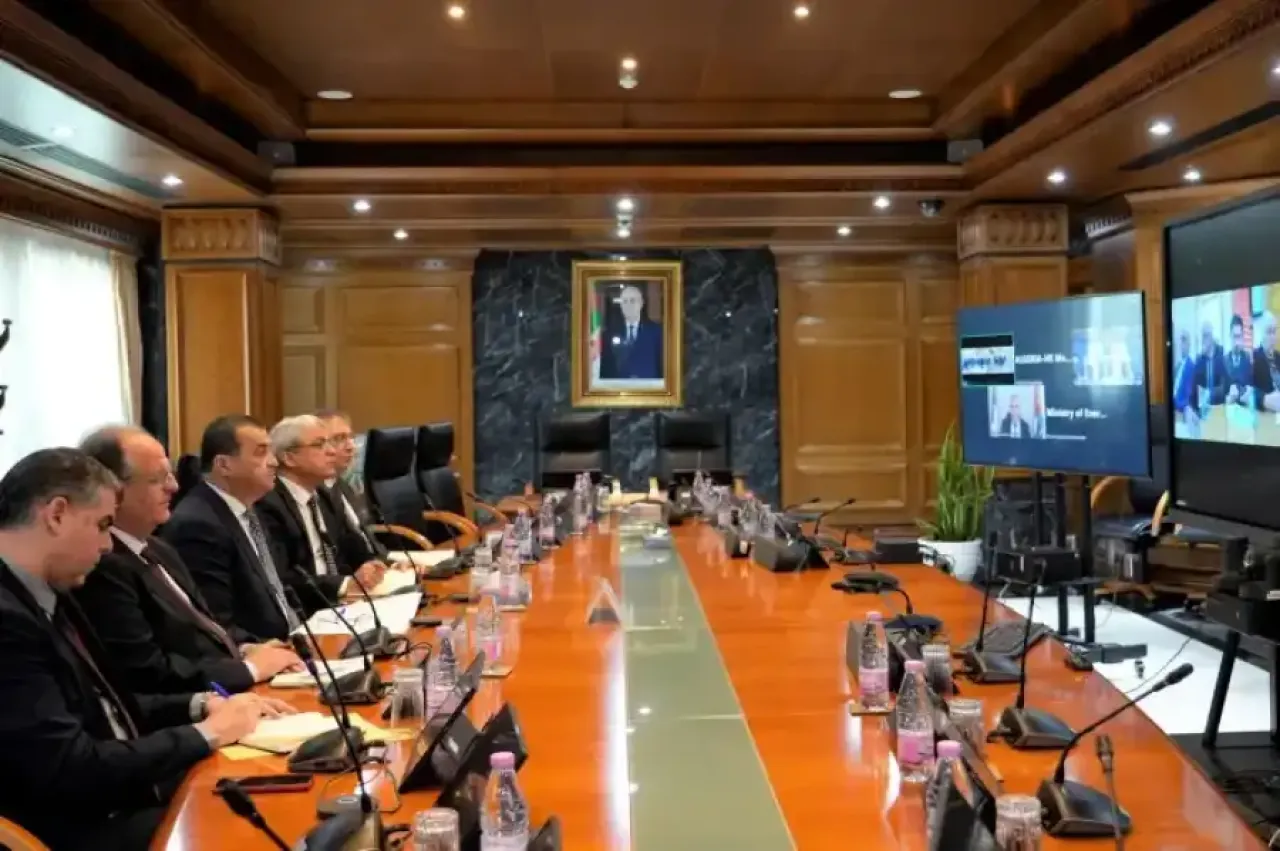
According to the official Algerian Press Service, the Algerian Minister of State and Minister of Hydrocarbons Mohamed Arkab, today, Tuesday, discussed with the Jordanian Minister of Energy and Mineral Resources Saleh Al-Kharabsheh, ways to enhance bilateral cooperation in the field of hydrocarbons, during a meeting via remote visual communication technology, with the participation of the Jordanian ambassador to Algeria and officials in the Ministry of Hydrocarbons.
The Algerian Ministry of Hydrocarbons stated that both sides reviewed opportunities to enhance the partnership between the institutions of the two countries and develop trade exchanges, especially in the fields of exporting crude oil, liquefied petroleum gas, and liquefied natural gas, in addition to exploring the possibilities for Jordan to supply these resources, alongside cooperation in the areas of distribution and storage of petroleum products.
Broader Partnerships
On the same track, the Algerian minister received Park Young-an, the South Korean Deputy Minister for Economic Affairs, accompanied by a delegation from the Korean Ministry of Foreign Affairs, where the two sides discussed ways to enhance bilateral cooperation, particularly in the fields of hydrocarbons and the oil and gas industry.
The Algerian Ministry of Hydrocarbons stated that the talks included ongoing projects and prospects for developing the partnership between the two countries, in addition to investment opportunities with the Sonatrach company across various stages of the value chain, from exploration and production to processing and conversion, as well as enhancing trade exchanges, especially in exporting crude oil, liquefied petroleum gas, and naphtha (a petroleum derivative), and cooperating on seawater desalination projects.
The statement emphasized that Algeria and South Korea stressed the importance of developing mutually beneficial partnerships based on knowledge and expertise transfer, training, and enhancing national integration in energy projects, encouraging projects that support sustainable development and technology transfer.
The South Korean official stated that his visit to Algeria reflects a joint will to consolidate relations between the two countries and expand the horizons of cooperation in strategic sectors.
It is noted that Algeria has returned to the forefront of the global energy markets amid ongoing tensions related to Iran, accompanied by supply disruptions, especially with the closure of the Strait of Hormuz, prompting several countries to seek more stable alternatives.
The increased interest in Algeria is not limited to Europe but extends to Asian markets, amidst rising demand for Algerian gas and a 41% increase in the exports of liquefied natural gas in March, month-over-month, to 938,000 tons.
Return of British Petroleum
On the other hand, the National Agency for the Valorization of Hydrocarbon Resources announced the granting of an exploration license in Algeria in the Eastern Basin to the British company "British Petroleum" (BP), in a step described by the agency as part of a strategy aiming to enhance the attractiveness of the national mining area and promote new exploration opportunities.
The agency stated that the return of "BP" to Algeria represents a "strong signal" of the renewed confidence of international companies in the potential of the Algerian mining area, pointing out that the new license is part of a dynamic targeting the mobilization of advanced technologies in exploration operations, and deepening knowledge of the energy potential in the area.
The agency, known simply as "Alnaft," added that the Algerian mining area, which extends over more than 1.7 million square kilometers, offers vast areas with significant potential, in a context characterized by the rapid development of exploration technologies, confirming that it is pushing towards a "new dynamic" based on innovation and the integration of advanced technologies with the goal of improving knowledge of the subsurface, and opening new prospects for valorizing hydrocarbon resources.
Algeria possesses an integrated infrastructure that combines pipelines to Europe and liquefied natural gas facilities, giving it greater flexibility to meet global demand, at a time observers see the country facing a "golden window" to enhance its position as a reliable energy supplier if it succeeds in accelerating investment and expanding international partnerships.
Algeria has an annual export capacity of more than 40 billion cubic meters of natural gas, and aims to increase its production from 132 billion cubic meters to 200 billion cubic meters by 2027.