Khaberni - The global job crisis is moving to the forefront of long-term economic risks, even as markets and governments are preoccupied with the consequences of the war in the Middle East, demonstrating a widening gap between new workforce entrants and available jobs.
Data reveals, according to Reuters, that the global economy faces a structural challenge that exceeds temporary crises, with warnings of widespread repercussions on economic and social stability in the coming years.
A Huge Job Gap is Forming
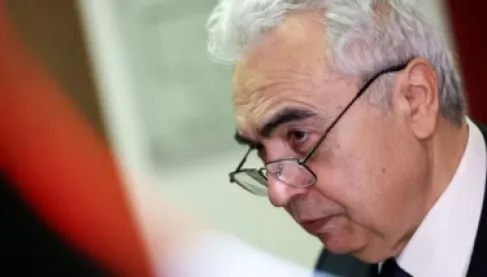
World Bank President Ajay Banga warns that about 1.2 billion people will enter working age in developing countries over the next 10 to 15 years, while the global economy, on its current path, will only be able to generate just over 400 million jobs.
This means a job gap of about 800 million, which, according to Ajay Banga, constitutes a latent crisis that may exceed the impact of many current economic shocks, including the war on Iran.
Spring Meetings
These warnings come at a time when thousands of financial delegations are preparing to meet in Washington as part of the Spring Meetings of the World Bank and the International Monetary Fund, under the influence of the war between America and Iran, threatening to slow global economic growth and raise inflation rates.
Although a temporary ceasefire for two weeks has eased the severity of the confrontation, the repercussions of the war remain, especially with the continued disruption of navigation in the Strait of Hormuz, leading to "the largest disruption in global energy supplies".
The World Bank president affirms that focusing on short-term crises should not come at the expense of long-term challenges, saying "we have to walk and chew gum at the same time... What we are going through now is fast, but the job issue is long-term".
Risks that Surpass the Economy
Banga indicates that failing to address the job gap could lead to widespread consequences, including increased irregular migration and rising instability.
He says, "I don’t think we will reach an ideal state where jobs are available for everyone within 15 years… but if we do not, the repercussions will be severe," referencing the social risks associated with unemployment.
UN data supports these concerns, indicating that there are more than 117 million displaced people around the world by 2025, reflecting increasing pressures on economies and societies.
Reforms Required
According to Reuters, the World Bank is working on pushing developing countries to improve the business environment through reforms that include facilitating business licensing, fighting corruption, modernizing labor and land laws, and improving trade systems and logistics services.
Efforts also focus on attracting private sector investments, particularly in sectors such as infrastructure, agriculture, healthcare, tourism, and manufacturing, which are viewed as being less affected by global fluctuations and technological developments.
Banga emphasizes that governments cannot address this crisis alone, saying "the problem is that we cannot do it alone… we need the snowball to roll and gather more along the way to reach this enormous number".
In light of these data, global discussions are geared towards balancing immediate crises like the war on Iran and global inflation, without neglecting deeper challenges related to job creation and ensuring sustainable growth in developing economies.