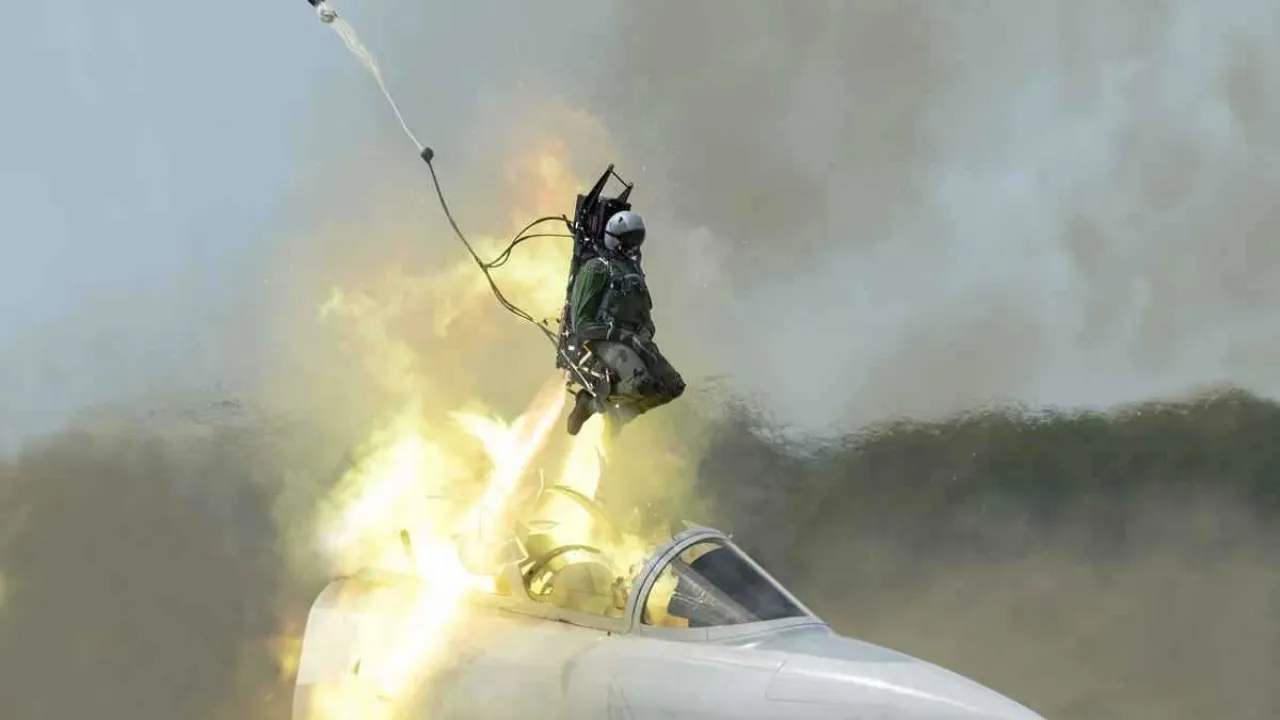
Khaberni - In the world of military aviation, where decisions are measured in seconds and the limits of the human body are tested to their extreme, the ejection seat is not just a means of escaping death, but a pivotal turning point in a pilot's professional life, where surviving an imminent accident, begins a new phase imposed by strict medical considerations, permanently distancing them from the combat cockpit.
Recent reports in science and technology confirm that the medical leave granted to fighter pilots after an emergency ejection is not in any way a form of punishment, but rather a precautionary measure based on the complex physical effects produced by the ejection process itself.
In less than one second, a pilot transitions from stillness to a speed exceeding 600 kilometers per hour vertically, in a process that causes immense pressure on the spine and intense pulling on the neck, leading to a stress on the vertebrae and intervertebral discs that exceed their natural limits.
According to the data, this violent shock can result in direct injuries such as compression fractures, disc herniation, and cervical vertebrae injuries, and its effects may appear later, months or even years after, especially when re-exposed to the harsh conditions of combat flying.
Enduring high gravitational forces is one of the most significant challenges faced by pilots, as it can reach up to 9 times the body weight during some maneuvers, which may lead, in case of a previous injury, to loss of consciousness, sudden pain, or restricted movement, representing an operational risk that is unacceptable in combat missions.
Field Example
In an incident reflecting these risks, an F5M training aircraft belonging to the Brazilian Air Force crashed on October 22, 2024, near the Baramirim Base, following suspicions of a technical fault in the engine and a fire before the fall.
The pilot managed to eject successfully, before being transported to the hospital with a dislocated shoulder, in an incident that confirms survival does not necessarily mean a return to combat flying.
Alternative Career Paths
Although returning to fighter jet piloting after ejection is rare, pilots do not lose their roles within the military institution, as they are directed to other vital tasks, including training, operational planning, tactical analysis, or piloting less physically demanding aircraft.
These facts reflect a reality often absent from common perceptions, indicating that an ejection is not so much a tragic end as it is the beginning of a different stage imposed by the limits of the human body, in an operational environment that allows no margin for error.