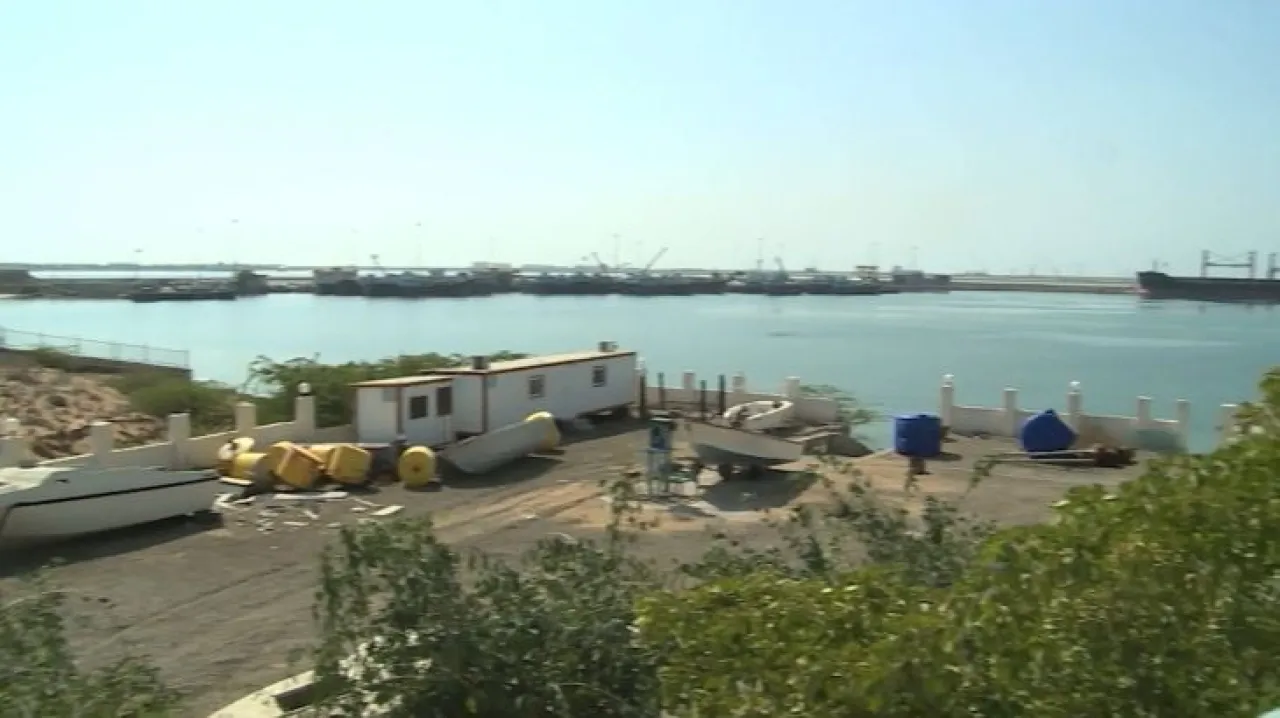
Khaberni - Pressure on the vital arteries of the Iranian economy increases after the US imposed a maritime blockade on all ships entering and leaving Iranian ports following the end of negotiations between the two countries in Islamabad, Pakistan, without reaching an agreement to end the war.
The threat by US President Donald Trump to blockade all ships entering and leaving Iranian ports came into effect on Monday, and The Wall Street Journal quotes a US official as saying that more than 15 US warships have been deployed to blockade Iran at sea.
A report by Ahmed Marzouk on Al Jazeera defines the most important ports upon which Iran relies to export its oil products and import basic goods from various countries around the world.
Iran benefits from its geography to enhance its trade with the outside world, primarily relying on its ports whether on the Caspian Sea to the north or on the Gulf coast, spanning approximately 1700 kilometers.
Among a large number of Iranian ports on the Gulf, 6 ports play a greater role in enhancing Iran's trade with the world, and they are:
- Port of Bandar Abbas: the largest contributor to maritime trade at about 55%.
- Port of Bandar Imam Khomeini: contributes 53% of imports of basic goods.
- Khark Island: the backbone for exporting crude oil, from which 90% of exports are shipped.
- Asaluyeh Port: dominates the largest percentage of gas exports and petrochemical derivatives.
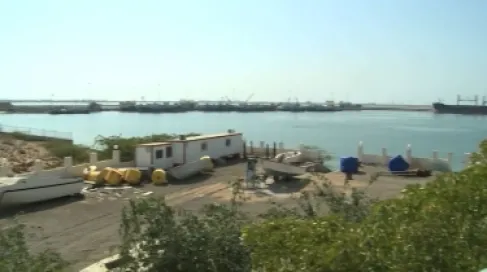
- Jask Port: participates with its advanced equipment in the loading and unloading of grain ships and bulk goods quickly, and it is located outside the Strait of Hormuz.
- Chabahar Port: serves as a pivotal point for connecting part of India’s trade and other Asian countries with Russia and Europe via Iran.
Iran's options
Overall, 90% of Iran's trade passes through the Strait of Hormuz, with annual revenue estimated at $110 billion, which is about $280 million daily.
The Al Jazeera report indicates that the blockade announced by the American president on the Iranian ports located on the Gulf and the Arabian Sea makes Tehran's options limited, whether through the Caspian Sea or the land borders with 8 countries, to find quick and viable alternatives for exporting its oil products and maintaining trade flow.
The military headquarters of Khatam al-Anbiya had announced that Tehran will firmly implement a permanent mechanism to control the Strait of Hormuz, warning that the security of ports in the Gulf and the Sea of Oman will either be for everyone or for no one.