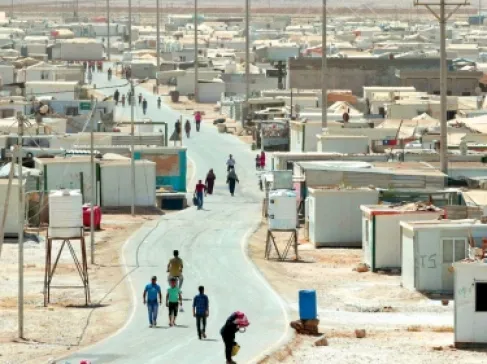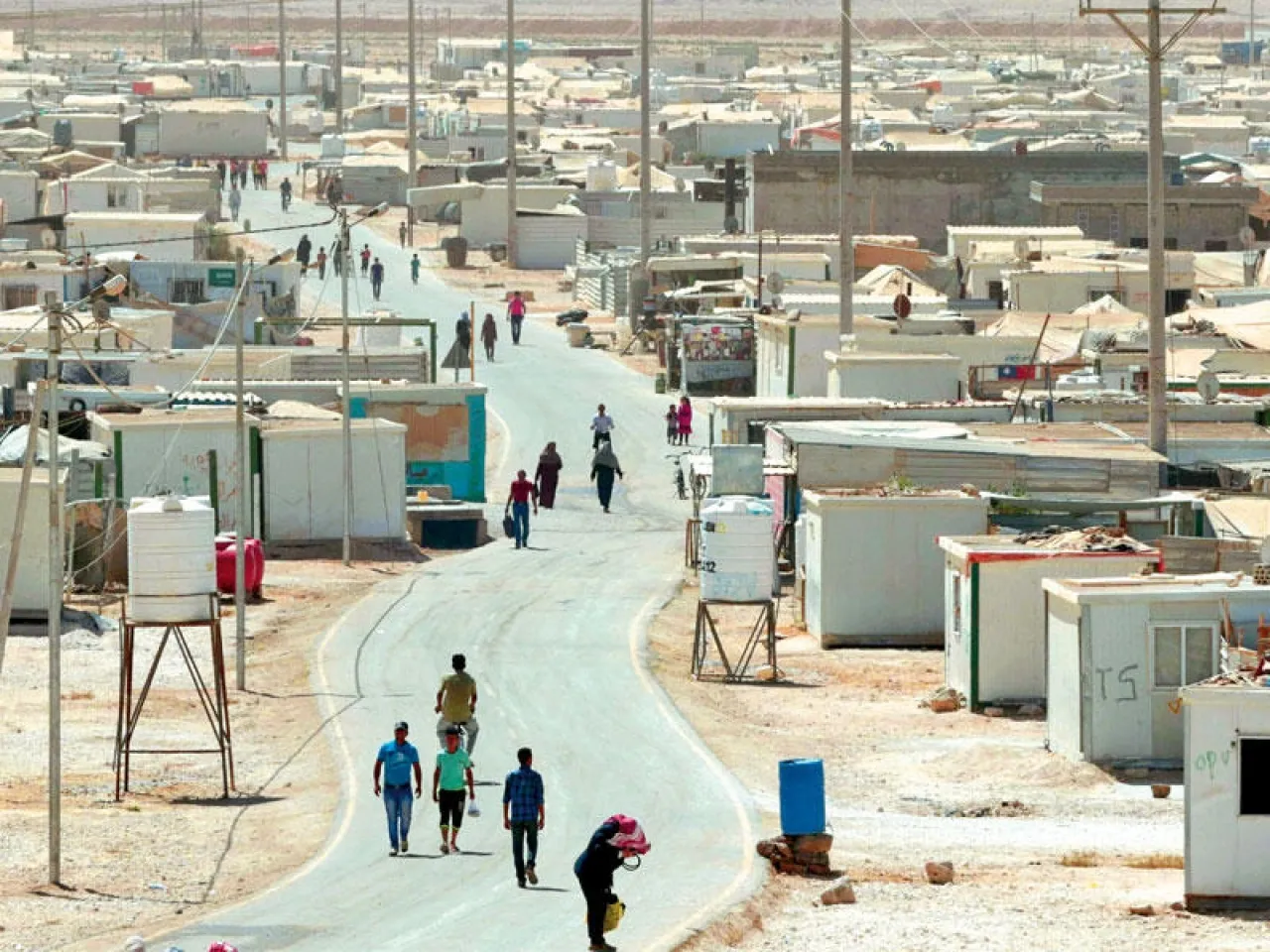
Khaberni - Recent data from the High Commission for Refugee Affairs indicates that the resettlement of refugees in Jordan is still considered a low-impact pathway compared to the size of the actual needs, although it is one of the three permanent solutions to refugee crises.
According to the Commission, about 32,000 refugees need resettlement, which is about 7% of the total number of refugees in Jordan. However, given the limited number of places available globally, ultimately no more than 1% of them can be considered for resettlement, according to Al-Ghad.
These figures reveal a clear gap between the international discourse that emphasizes the principle of shared responsibility and the practical reality where host countries, led by Jordan, bear the brunt of hosting refugees.
Recent data for March 2026 show that the number of resettlement applications reached 241, slightly exceeding the actual number of departures which stood at 236 people, reflecting the limited international response to resettlement applications.
At the level of beneficiary groups, the data shows that resettlement is primarily used as a tool for humanitarian protection targeting the most vulnerable cases, with the category of those with legal and physical protection needs constituting about 49%, followed by the category of survivors of violence and torture at 32%. This reflects the strict selective nature of this mechanism, which does not rely on the criterion of poverty or economic need as much as it relies on criteria of maximum protection.
According to cumulative data since 2014, about 119,792 resettlement applications were recorded, compared to 78,860 actual departures, reflecting a continuous gap between nomination and implementation.
The Commission defines resettlement as the process of transferring refugees from the first country of asylum to a third country that agrees to accept them and grant them permanent residence, ensuring their legal protection and opportunities for integration and stability.
This mechanism is one of the three sustainable solutions, alongside voluntary return to the country of origin when safe conditions are available, or local integration in the country of asylum where possible.
The selection process follows strict criteria focusing on the most vulnerable cases, which include individuals facing direct threats to their lives or freedom, those who have suffered serious human rights violations, or those experiencing critical health or psychological conditions that cannot be adequately addressed in the country of asylum.
Additional factors are also taken into account, including maintaining family unity, access to healthcare, educational opportunities, and the level of legal protection in the country of asylum.
After completing the assessment, recommendations for resettlement are raised to the receiving countries, which then undertake the review of files and conduct interviews and security and medical checks before making the final decision. Refugees who are accepted typically obtain permanent residence, with the right to work and access to education, healthcare, and social services, enabling them to start a new life and integrate into the receiving communities, and may later open the door to obtaining citizenship according to the national legislation of each country.
Despite the humanitarian importance of resettlement, the Commission notes that this process can take years, due to lengthy administrative and security procedures, in addition to the limited number of quotas available globally.
At present, the Commission does not expect a significant increase in the number of departures through resettlement in the next three years, nor does it anticipate large refugee inflows into Jordan, despite ongoing instability in several regional hotspots.