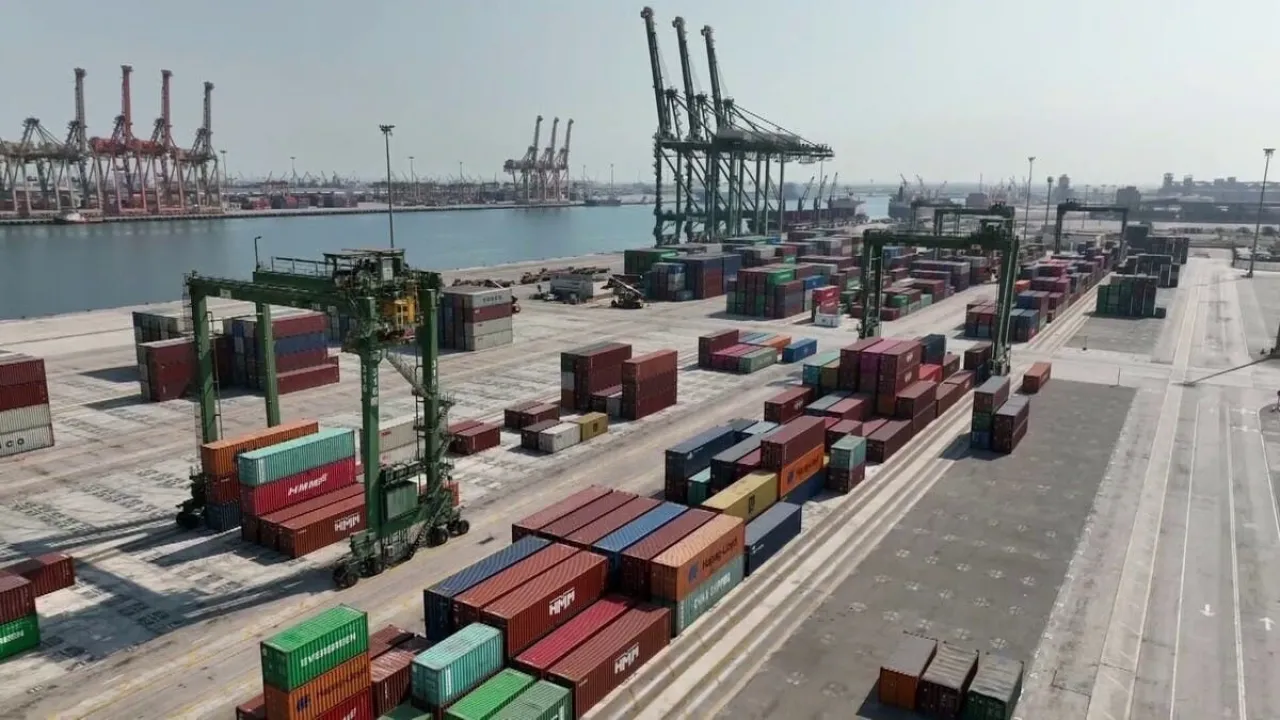
Khaberni - As Saudi Arabia intensifies its support for the logistics sector's resilience amid Hormuz tensions, the Saudi Ports Authority continues to offer its services to support the ships stuck in the Arabian Gulf, thereby enhancing the efficiency of operational processes and ensuring the continuity of supply chains in the Eastern region.
Saudi Ports revealed that they offer more than 14 key services for provisioning the ships stuck on the east coast, mentioning that the number of ships that have been serviced exceeds 111.
In a related context, the total number of crew boarding operations reached about 40, while the number of crew disembarking operations reached 104, according to the Saudi Ports Authority.
Saudi Ports provide their provisioning services to ships in the Arabian Gulf, including operational supplies, provisioning, daily supplies, technical services, and special materials, in addition to changing and supporting crews.
As part of Saudi Arabia's efforts to enhance the role of ports, the kingdom launched an international logistical corridor via freight trains, connecting the Eastern Province ports to the Haditha border crossing located in the north of Saudi Arabia in Al-Jouf Province, to bolster direct connectivity towards Jordan and the northern countries of the kingdom, amid the current conditions in the region.
The Saudi Railways organization SAR states that the corridor links King Abdulaziz Port in Dammam, King Fahd Industrial Port in Jubail, and Jubail Commercial Port to the Haditha border crossing, which is one of Saudi Arabia's largest crossings, explaining that the route allows customers to transport their products from the Eastern Province ports to the Haditha crossing reaching Jordan and northern parts of the kingdom, in addition to transporting in the opposite direction to the Eastern Province ports via the same route.
SAR confirmed that this step contributes to a direct logistical impact, reflected in shortening travel times and removing thousands of trucks from the roads, which positively affects the preservation of infrastructure quality and enhances safety levels, in addition to contributing to the reduction of carbon emissions.