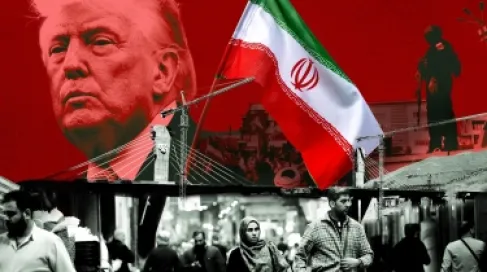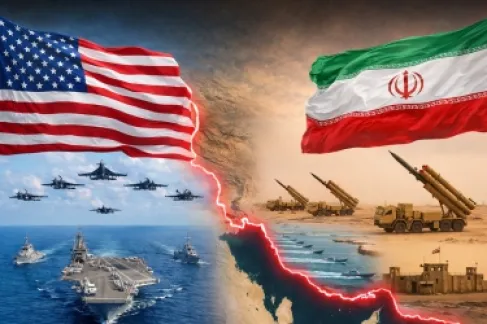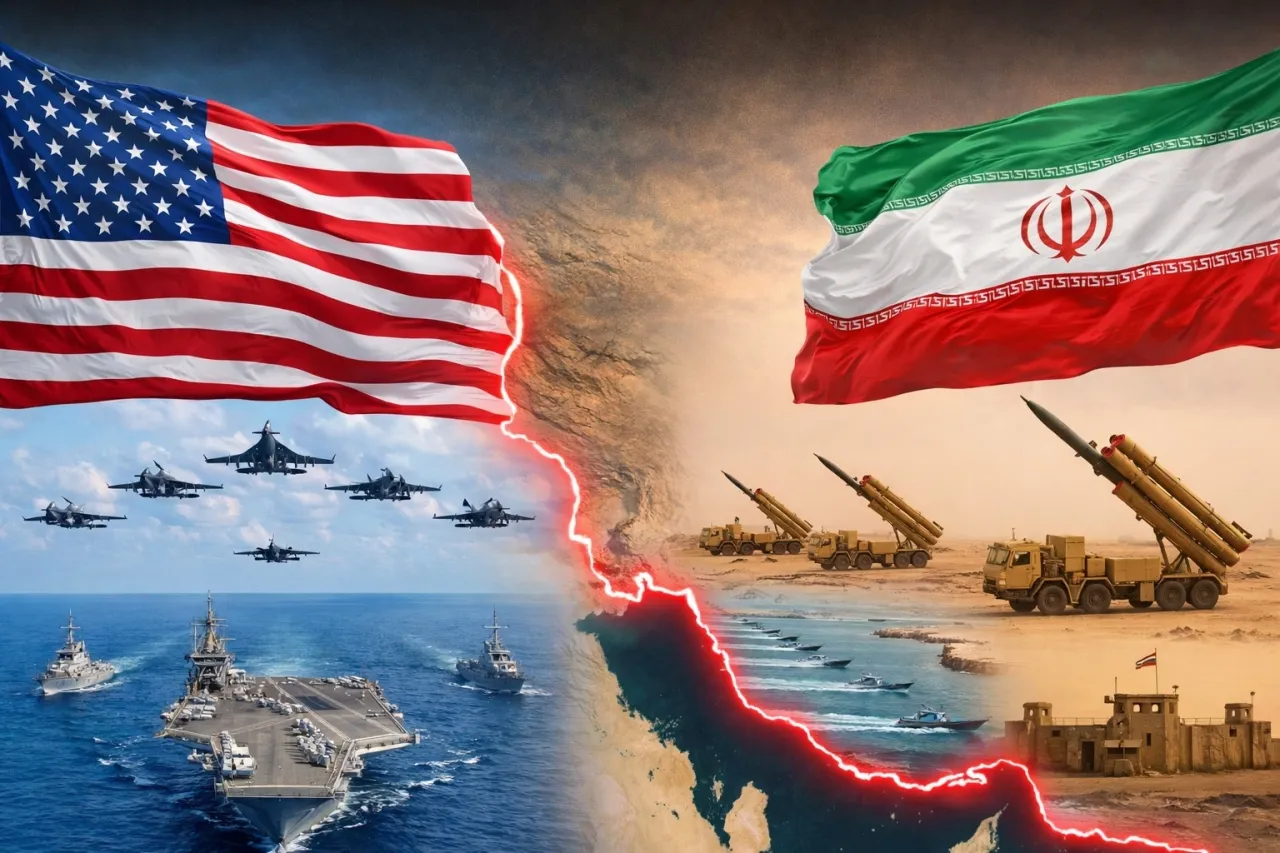
Khaberni - The 21 hours spent by the Iranian and American negotiators in Islamabad were not enough to bridge the deep gaps between the two countries, as the direct and historic negotiations ended without an agreement, and the delegations of both countries left Pakistan.
As the world awaited an imminent breakthrough following a war initiated by America and Israel against Iran that lasted 40 days, resulting in thousands dead and injured and extending to several countries in the Middle East, before a fragile ceasefire was announced for two weeks, everyone is now wondering about the points of disagreement that led to the failure of the talks.
In this report, we monitor the reasons for the failure of the negotiations, according to Iranian and American statements and leaks.
"Confirmed Commitment"
JD Vance, the Vice President of the United States who led his country's delegation in the negotiations said, "The simple truth is that we need to see a confirmed commitment that they will not seek to acquire nuclear weapons, nor will they seek to obtain the tools that would enable them to develop nuclear weapons quickly, and this is the fundamental goal of the President of the United States, which we tried to achieve through these negotiations."
Vance added to journalists after concluding the negotiations in Islamabad, "The bad news is that we did not reach an agreement. And I believe this bad news is much worse for Iran than it is for the United States. So we return to America without reaching an agreement."
He added that the United States did not see a "substantial commitment" from the Iranians not to develop nuclear weapons in the long-term.
Vance said, "I believe we have been very flexible and very cooperative. We informed the president that we must come here in good faith and do our best to reach an agreement."
"Did not gain Tehran's trust"
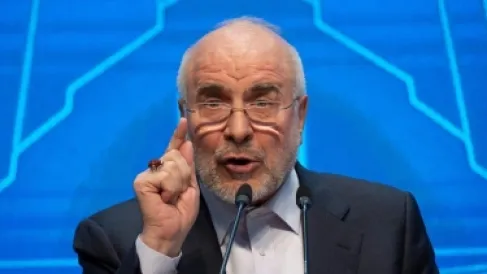
In contrast, Mohammad Baqer Qalibaf, the head of the Iranian parliament who led his country's delegation in the negotiations, stated that Washington did not gain Tehran’s trust in the negotiations.
Qalibaf said in a statement hours after the end of the negotiations in Pakistan, "My colleagues in the Iranian delegation proposed constructive initiatives but ultimately, the other party was not able to gain the trust of the Iranian delegation in this round of negotiation."
After returning to Iran, Qalibaf told journalists, as reported by Mehr agency: "We announced from the beginning that we do not trust the Americans, the wall of distrust between us is 77 years old, and they attacked us twice during the negotiations in less than a year, therefore it is they who must earn our trust."
He added: "Of course, earning our trust is difficult and takes time due to their breaking of vows, but it is up to them to decide whether they are willing to earn this trust or not. And this is what we saw less of from them in this round."
He continued: "The only way out for the United States is to decide to gain our people's trust.. the United States owes the Iranian people and still has much to compensate for."
Key Disagreements in the Negotiations
On the other hand, Axios's correspondent reported from an American official that the main disagreements in the negotiations with Iran included:
• Halting all uranium enrichment activities.
• Dismantling all major nuclear enrichment facilities (most of which have already been destroyed).
• Removing highly enriched uranium from Iran.
• Accepting a broad framework for peace and security and de-escalation involving regional allies.
• Ceasing funding of "proxies": Hamas, Hezbollah, and the Houthis.
• Fully opening the Strait of Hormuz, and imposing no charges on transit.
An informed source told Axios's correspondent that one of the disagreements in the negotiations was regarding the amount of Iranian assets frozen abroad that would be released.
"Taking away Iran's right"
In contrast, Mahmoud Nabavian, Tehran's deputy in the Iranian parliament and who was participating in the negotiations within his country's negotiating delegation in Pakistan, stated the reasons for not reaching an agreement with the United States were as follows:
• America's demand for a joint share with Iran in the revenues from the Strait of Hormuz.
• America's demand for the removal of 60% enriched uranium from Iran.
• America's demand to deprive Iran's right to enrichment for 20 years.
Nabavian added on his X platform account: Thanks be to God, Iran's soldiers in the negotiation team stood firm defending the country's interests.
"Double Standards"
For his part, Iranian President Masoud Pezeshkian stated that the "double standards" of the United States were the main obstacle to reaching an agreement to end the war, according to a statement from the presidency today, Sunday.
The Iranian Presidential Office reported that Pezeshkian said in a phone call with Russian President Vladimir Putin: "During the negotiations in Islamabad, the continuous adherence of the United States to double standards and their political ambitions related to power were the biggest obstacles."
Pezeshkian added that Iran is still ready to reach a fair agreement to achieve lasting peace in the region.
According to the statement, he said, "It is certainly possible to reach an agreement, but the United States must comply with internationally recognized rules and international law."
Tehran's Nuclear Ambitions
In contrast, US President Donald Trump stated today, Sunday, that Tehran's nuclear ambitions were the main reason for the failure of the negotiations.
He added on his Truth Social platform: "Most points were agreed upon but the really important point which is the nuclear file was not agreed upon." Indicating that most of Iran's leaders including the former Supreme Leader (Ali Khamenei) were killed due to their nuclear ambitions, according to him.
He continued: Iran promised to open the Strait of Hormuz but deliberately did not keep its promise, causing concern and unrest in many countries.
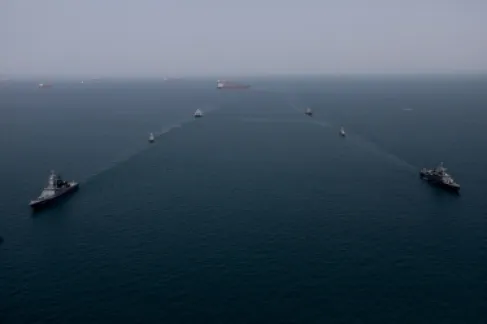
Trump announced that the US Navy would begin "immediately" to impose a blockade on the Strait of Hormuz, noting that the blockade would prevent ships from entering or leaving the strait.
He stated that the United States is ready "to eliminate Iran at the right moment," repeating the threat he made before the ceasefire came into effect last Tuesday.
"Exaggerated Demands"
In turn, the Iranian state television, on Sunday, stated that the failure to reach an agreement between Tehran and Washington in the Pakistan negotiations was due to "the exaggerated demands" of the United States.
It pointed out that the negotiations did not result in an agreement, especially concerning issues such as the Strait of Hormuz and the transfer of nuclear materials out of the country.
In this context, Ismail Baqaee, the spokesman for the Iranian Foreign Ministry, stated that the Islamabad negotiations focused on several main axes, most notably the Strait of Hormuz, the nuclear file, war reparations, lifting sanctions, and ending the war completely against his country and the region.
He added in a post on his X, that his country "has not forgotten the United States' failure to keep its promises and its malicious behavior."
Releasing Frozen Assets
Before the start of the negotiations, a high-level Iranian source told Reuters that the United States had agreed to release Iranian funds and assets frozen abroad. However, an American official denied to the agency the agreement to release those funds.
The official Iranian television and Iranian officials stated that in addition to the release of assets abroad, Iran demands control over the Strait of Hormuz, and compensation for war losses, and a ceasefire throughout the region, including Lebanon. Iran also wants to collect transit fees through the Strait of Hormuz.
A Positive First Step
In a related context, the Associated Press reported from officials familiar with the negotiations that the talks in Islamabad were "a positive first step," despite ending without a formal agreement.
They warned against considering the outcome of the negotiations a failure, describing diplomacy as a gradual process. They said that the dialogue "reopened the diplomatic channel."
The officials, who refused to be named to the agency, said that the Pakistani Foreign Minister Ishaq Dar, the National Security Advisor General Asim Malik, and Army Chief Marshal Asim Munir facilitated the talks to keep them on track.
One of the officials told the agency, "Pakistan has played its part by facilitating the contact," adding that the responsibility for any final agreement rests with Washington and Tehran.