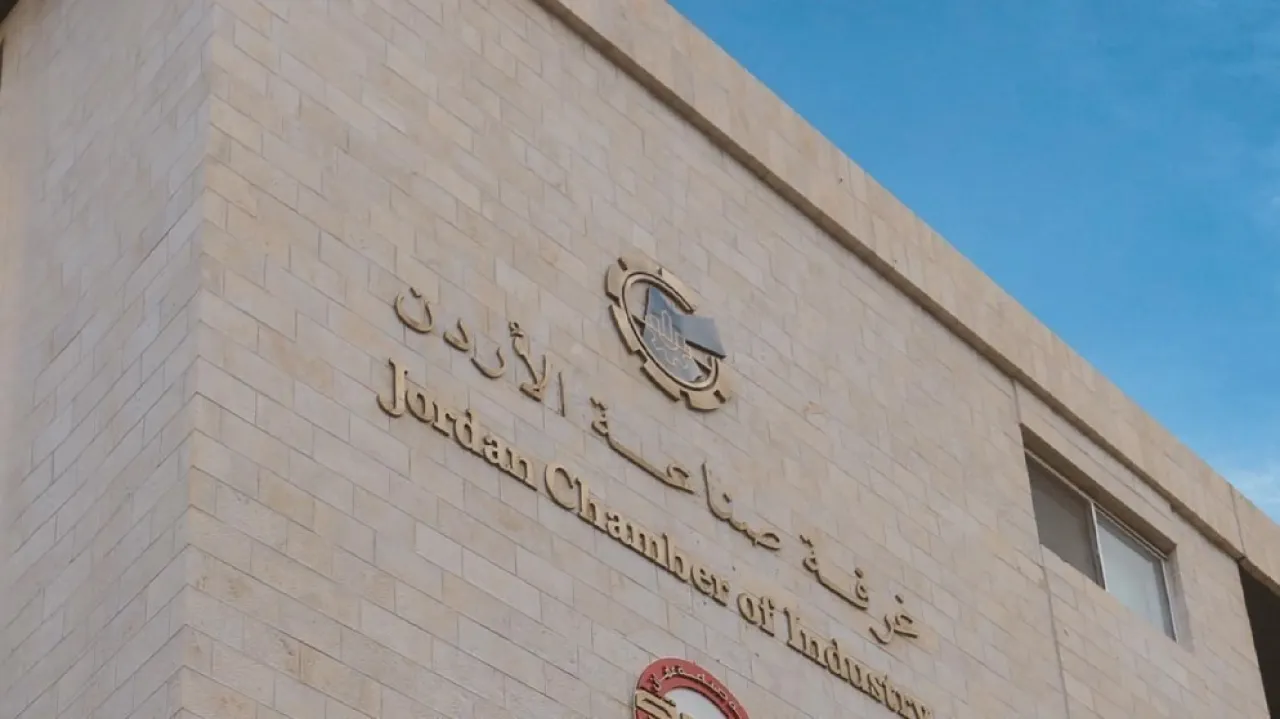
Khaberni - Mohammad Jeitan, representing the food, supply, agricultural, and animal resource sectors at the Jordan Chamber of Industry, confirmed on Sunday that the trade agreements between Jordan and Syria are an important step towards boosting economic cooperation between the two countries, which serves mutual interests based on a "win-win" principle, adding that the chamber demanded the application of the principle of reciprocity with Syria.
Jeitan explained in statements to "Al Mamlaka" channel that the industrial and private sectors demanded the application of the principle of reciprocity with Syria, especially in light of restrictions and customs imposed by the Syrian side, emphasizing the importance of protecting the national industry, both for large factories and small and medium enterprises.
He pointed out that some industrial sectors might be affected if the balance in the entry of goods into the markets is not achieved, due to the similarity of products and the proximity of markets between the two countries.
Regarding the trilateral Memorandum of Understanding between Jordan, Syria, and Turkey to activate land corridors, Jeitan noted that this step would facilitate the access of Jordanian exports to European markets, especially in light of the challenges facing maritime shipping due to the geopolitical situation in the region.
He added that land corridors would contribute to reducing shipping and insurance costs, thus enhancing the competitiveness of Jordanian products in foreign markets, and ensuring the continuity of export flows, especially given the rise in maritime transportation costs recently.
About the opportunities for reconstructing Syria, Jeitan affirmed that the Jordanian private sector aims to play an effective role in this process, particularly in the construction, engineering, and electrical industries, benefiting from the geographical proximity and the production capabilities that the Jordanian industry enjoys.
He mentioned that the Jordanian industry is distinguished by the quality and diversity of its products, qualifying it to meet the needs of the Syrian market, whether in the reconstruction phase or in the framework of trade exchange between the two countries.
Jeitan confirmed the readiness of the Jordanian industrial sector to enter the Syrian market, noting that local factories have reached advanced levels of quality and competitiveness, enabling them to compete in several sectors, including the food and chemical industries, as well as engineering and construction industries.
Regarding attracting investments, he explained that Jordan enjoys an attractive investment environment, supported by factors of stability and security, in addition to a network of trade agreements with global markets, such as the European Union, the United States, and Canada, which enhances the opportunities for growth of the industrial sector and increases its investments.
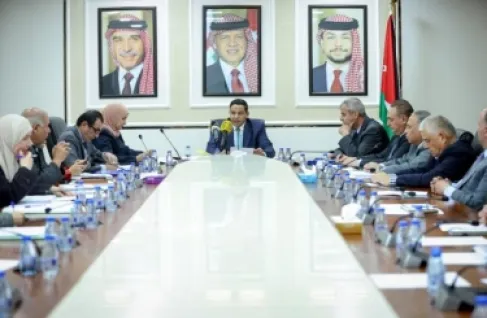
The capital Amman hosted, on Sunday, the proceedings of the second session of the Supreme Coordination Council between the Hashemite Kingdom of Jordan and the Syrian Arab Republic, with broad participation from both sides, in a step that reflects a joint orientation towards enhancing bilateral relations and building a comprehensive strategic partnership between the two brotherly countries.
The meetings were chaired by Deputy Prime Minister and Minister of Foreign Affairs and Expatriates Ayman Safadi, and his Syrian counterpart, Minister of Foreign Affairs and Expatriates Asaad Shiban, with the participation of over 30 ministers, in the largest meeting of its kind between the two countries, highlighting the political interest in developing paths of joint cooperation.
The two sides confirmed during the meetings their intent to expand areas of cooperation in various vital sectors, including economy, energy, transportation, water, health, and education, as well as enhancing political and security coordination, to serve common interests and reinforce stability in the region.
The meetings led to the conclusion of several agreements and memorandums of understanding that aim to institutionalize cooperation between institutions in both countries, in addition to agreeing on launching joint strategic projects, which would support economic integration and open broader prospects for regional cooperation.
The full text of the statement follows:
The Hashemite Kingdom of Jordan hosted the proceedings of the second session of the Supreme Coordination Council between the Hashemite Kingdom of Jordan and the Syrian Arab Republic, in the Jordanian capital, Amman, on 12/4/2026, chaired by Deputy Prime Minister and Minister of Foreign Affairs and Expatriates Ayman Safadi, and the Syrian Minister of Foreign Affairs and Expatriates Asaad Shiban, with the participation of 30 ministers from both brotherly countries.
The Council was honored by a meeting with His Majesty King Abdullah II Ibn Al Hussein, the reigning King of the Hashemite Kingdom of Jordan, attended by His Royal Highness Prince Hussein bin Abdullah II, the Crown Prince. The Syrian Minister of Foreign Affairs and Expatriates conveyed the greetings of His Excellency President Ahmed Al Shar` to His Majesty, and His Majesty requested that his greetings be conveyed to His Excellency.
The Council reaffirmed the determination of both countries to maintain sectoral coordination and consultation, and to dedicate and deepen bilateral cooperation as a comprehensive strategic partnership, translating the visions and directives of His Majesty King Abdullah II Ibn Al Hussein, the reigning King of the Hashemite Kingdom of Jordan, and his brother, His Excellency President Mr. Ahmed Al Shar`, the President of the Syrian Arab Republic.
The Council reviewed the progress made during the period following its first session on 20/5/2025 in the Syrian capital Damascus, which saw bilateral interactions and reciprocal visits, leading to the expansion of cooperation across strategic, vital sectors, beneficial to both countries. The Council expressed satisfaction with the continuous development of bilateral relations and the mutual commitment to broaden their scope.
During the current session, the Council discussed existing and desired cooperation pathways in sectors such as foreign affairs, energy, water, transportation, industry, trade, customs, agriculture, health, investment, media, international cooperation, tourism, information technology, justice, education, higher education and scientific research, religious endowments, social development, labor, public sector development, and youth.
The Council reviewed the deliberations of the preparatory, high-level sectoral sessions held on 11/4/2026 in the form of simultaneous, specialized dialogue sessions, welcoming the agreements and understandings that emerged from them, which would enhance the strategic partnership between the two brotherly countries in all sectors.
The Council praised the continuous development of relations between the two countries and the high levels of coordination and effective consultation between the foreign ministries of the two brotherly countries.
The Council welcomed the agreement to hold a diplomatic interaction week between the foreign ministries of the two countries, including dialogues, meetings, and joint workshops, within the framework of exchanging experiences and knowledge between the various directorates and administrations of the two foreign ministries, and enhancing coordination between the diplomatic missions of the two countries abroad.
The Council reviewed the outcomes of the specialized session meetings held during the preparatory meeting on 11/4/2026 as part of the proceedings of the second session of the Council.
The Council agreed on institutionalizing this cooperation by forming a working team representing the relevant sectors, tasked with identifying joint strategic projects discussed during the session, which would benefit both countries and serve as a starting point for broader regional cooperation, wherever possible, in areas such as regional interconnection of communications, food security, railway connectivity, water security, energy security, and development of infrastructure for Jaber-Naseeb border crossing, infrastructure serving transit transport, air transport, and industrial integration.
In the economic sector, the Council reaffirmed its commitment to elevating the level of economic, trade, and investment cooperation, to achieve economic integration that positively reflects on both brotherly countries. The Council welcomed the new trade exchange mechanism to be implemented starting from 1/5/2026, based on the principle of reciprocity, including matching customs duties.
The Council welcomed the resumption of transit trade (transshipment) between the two countries.
The Council emphasized the importance of activating mechanisms for mutual benefit from the maritime ports in both countries to enhance the flow of trade through them.
In the field of international cooperation, the Council agreed on institutionalizing a joint communication mechanism with international and regional donor and financing institutions and specialized agencies to fund institutional development programs and develop and support projects for vital sectors and development integration agreed upon by both parties according to Syrian side's needs and priorities.
The Council agreed on continuing cooperation in the field of capacity development and human resources development in the Syrian public sector, extending it to include specialized training in multiple sectors.
In the field of transportation, both parties confirmed their continued bilateral cooperation in all transportation modes: air, land, sea, and rail.
The Council discussed the development of targeted land transport procedures to achieve the highest levels of ease and flexibility in transportation operations, and the return to the system of direct transportation.
The Council also welcomed the outcomes of the trilateral transportation ministers' meeting (Jordanian-Syrian-Turkish), held on 7/4/2026, during which a trilateral memorandum of understanding regarding transportation cooperation among the three countries was signed, emphasizing the importance of implementing its provisions.
The Council agreed on implementing a comprehensive joint development plan for the Jaber/Naseeb border crossing, aimed at making the crossing a border model of international standards.
In the field of water, the Council welcomed the reactivation of the joint water committee, which convened twice, the last of which was in Damascus on 4/8/2025, emphasizing the importance of implementing its outcomes and ensuring a fair distribution of water between the two brotherly countries.
The Council also emphasized the importance of holding joint committee meetings during the current month, discussing mechanisms for sustaining water flow in the Yarmouk Basin resulting from recent rainfall, activating the digital sharing platform and data exchange through the designated link, and developing the Yarmouk Basin and the joint cloud-seeding project.
In the field of energy, the Council welcomed the signing of the natural gas supply agreement between the two sides on 26/1/2026, and an agreement was reached on a mechanism to resume supplying the Syrian side with natural gas within two days after the end of the session.
The Council also reviewed the progress of work on repairing the electrical linkage line within Syrian territories and discussed the possibility of supplying the Syrian side with electricity from the Jordanian grid according to Syrian needs.
The Council reviewed cooperation in the field of the digital economy and information technology, including the tripartite Jordanian-Syrian-Saudi cooperation regarding regional linkage among them.
During its current session, the Council discussed several memorandums of understanding, agreements, and executive programs that open prospects for cooperation between the various ministries in the two brotherly countries. The discussions led to the signing of nine memorandums of understanding and agreement in the fields of media, development and social affairs, labor, company monitoring, health, higher education and scientific research, religious endowments, tourism, postal services, and justice.
The Council reviewed a draft executive program for educational cooperation for the years 2026-2028 and another in the field of higher education, as well as memorandums of understanding in the fields of youth and sports, agriculture, investment, air transportation, and specialized health care. The concerned parties were tasked with completing the necessary procedures for signing them later.
The Jordanian side praised the confident national steps accomplished by the Syrian government during the past year 2025, in the context of the process of rebuilding a safe, stable, and prosperous Syrian nation, founded on justice, equality, and the rule of law, safeguarding the rights of all Syrians, and preserving the unity, sovereignty, independence of decision, and territorial integrity of Syria, including the preparatory measures for the comprehensive constitutional process according to the Syrian national vision.
The Syrian side expressed its appreciation for Jordan's continuous support for the Syrian government's efforts aimed at reconstruction on foundations that ensure Syria's unity, security, stability, sovereignty, and the preservation of its territory and citizens' rights, and safeguard the rights of all Syrians.
The Council emphasized the necessity to stop all ongoing Israeli interventions and repeated attacks on Syrian territories, condemned them as a blatant violation of international law, and as an attack on Syria's sovereignty that aims to undermine its security, stability, and the safety of its citizens and threatens regional security and stability. It is a violation of the 1974 Disengagement Agreement between Syria and Israel, and demanded Israel's immediate withdrawal to the disengagement lines, affirming that these attacks undermine the Syrian government's efforts towards recovery and threaten the security and stability of the region.
The Council emphasized the importance of fully implementing the roadmap for ending the crisis in Sweida and stabilizing southern Syria, announced by Syria, Jordan, and the United States, which was welcomed and adopted by numerous countries and international and regional organizations, and emphasized the continued efforts of both countries firmly rejecting any divisive or separatist plans.
The Council discussed the latest developments on the regional and international scenes, stressing the importance of enhancing security and stability in the region, and supporting efforts aimed at reducing regional tensions, and facing common challenges.
The Council warned of the serious escalation and Israel's unilateral, illegitimate actions in the occupied West Bank, and the necessity to stop all actions that undermine the two-state solution and push towards more tension and conflict.
It also warned against exploiting the regional situations as a pretext to impose a new reality in the occupied Palestinian territories.
The Council emphasized the importance of the Hashemite historical custodianship of the Islamic and Christian holy sites in Jerusalem, undertaken by His Majesty King Abdullah II Ibn Al Hussein, in protecting their Arab, Islamic, and Christian identity, and preserving the existing historical and legal status in Jerusalem and its holy sites.
The Council also affirmed that the Al-Aqsa Mosque /Al-Haram Al-Sharif, with its entire area of 144 dunams, is a place of worship exclusively for Muslims, and that the administration of the Jerusalem Waqf and Islamic Affairs and Holy Places, under the Jordanian Ministry of Awqaf and Islamic Affairs, is the sole legal entity authorized to manage all affairs of Al-Haram Al-Sharif and regulate entry into it.
The Council condemned the Israeli aggression on the brotherly Lebanese Republic, affirming the necessity to stop it, and supporting the Lebanese government's efforts to extend its sovereignty over all its territories, activate its institutions, and monopolize the possession of arms by the state.
The Council welcomed the ceasefire agreement between the United States and Iran, affirming the necessity for negotiations to produce a comprehensive and permanent calm based on the principles that ensure respect for international law, state sovereignty, freedom of navigation, and addressing all the causes of tension over the past decades, enhancing security and stability in the region.
The Council affirmed the absolute solidarity of both countries in facing common challenges, supporting their efforts to maintain Arab national security, the importance of strengthening joint Arab action, and supporting initiatives that contribute to achieving security, stability, and development in the region.
The Council agreed to hold its next session in Damascus at a time to be determined later.