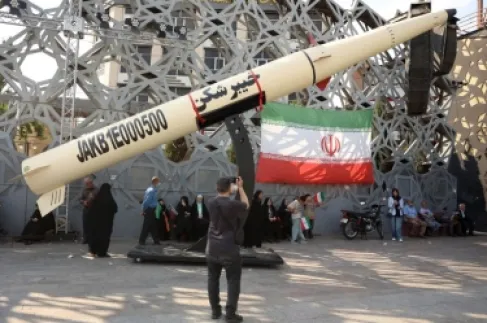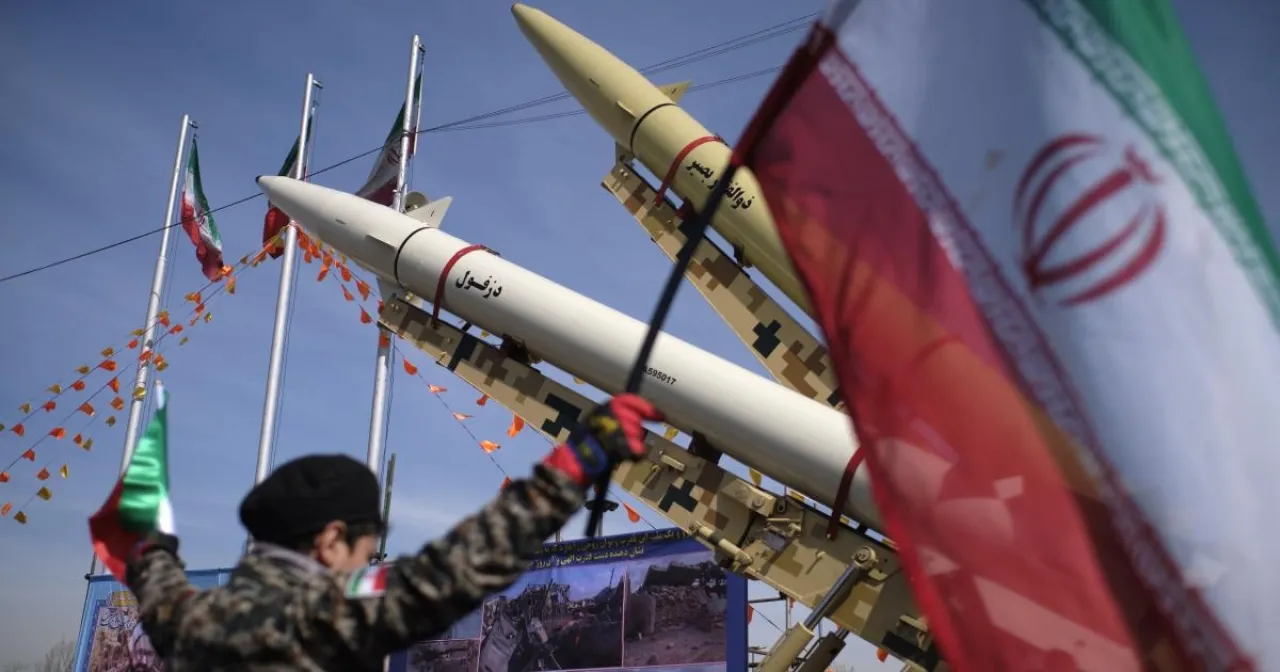
Khaberni - US officials said today, Saturday, that intelligence assessments indicate that Iran still possesses thousands of ballistic missiles despite Washington and Tel Aviv's strikes targeting its arsenal, raising concerns about its ability to rebuild its military power and resume attacks in the region.
According to the "Wall Street Journal," intelligence assessments showed that Iran could use these missiles by retrieving launch platforms from underground storage sites, at a time when the United States seeks to establish a ceasefire, fully open the Strait of Hormuz, and prevent further attacks on Iran and US forces and other regional countries.
Some US officials expressed concern that Iran might exploit the ceasefire period with the United States to rebuild part of its missile arsenal.
On the other hand, US War Secretary "Pete Hegseth" told reporters earlier this week that the Iranian missile program was "practically destroyed," and that the launch platforms and missiles had been "depleted, destroyed and became nearly ineffective."
The US intelligence assessments showed that Iran is capable of reshaping part of its missile force, as US officials said that more than half of the Iranian launch platforms were destroyed, damaged, or suspended underground, but many of the remaining platforms could be repaired or extracted from underground complexes.
US and Israeli officials added that Iran's stockpile of missiles has decreased to about half during the war, but it still retains thousands of short and medium-range ballistic missiles that can be pulled from its stores or retrieved from underground sites.
US officials pointed out that Iran now has far fewer than 50% of the attack suicide drones it had at the start of the war, as a result of their use during the fighting and the targeting of weapon production sites by the United States and Israel.
They noted that Tehran could obtain similar systems from Russia for use against countries in the region.
The officials also added that Iran still also has a limited stock of cruise missiles, which could be used to target ships in the Strait of Hormuz or American forces in case the negotiations collapse.
American analysts do not expect a quick return to Iran's pre-war missile and drone capabilities, in light of the strikes that targeted the defense industry sector, but they see that Iran has proven its resilience, and some estimate that it could redeploy part of the launch platforms, according to the "Wall Street Journal."
Israeli officials mentioned that about two-thirds of Iran's ballistic missile launch platforms were put out of service during the war, but they noted that Iran could recover many of them from underground sites that were damaged by American and Israeli strikes.
They added that Iran still possesses more than a thousand medium-range missiles out of about 2500 missiles it had at the start of the war, while the rest were launched or destroyed.