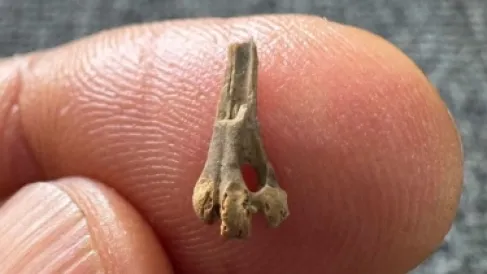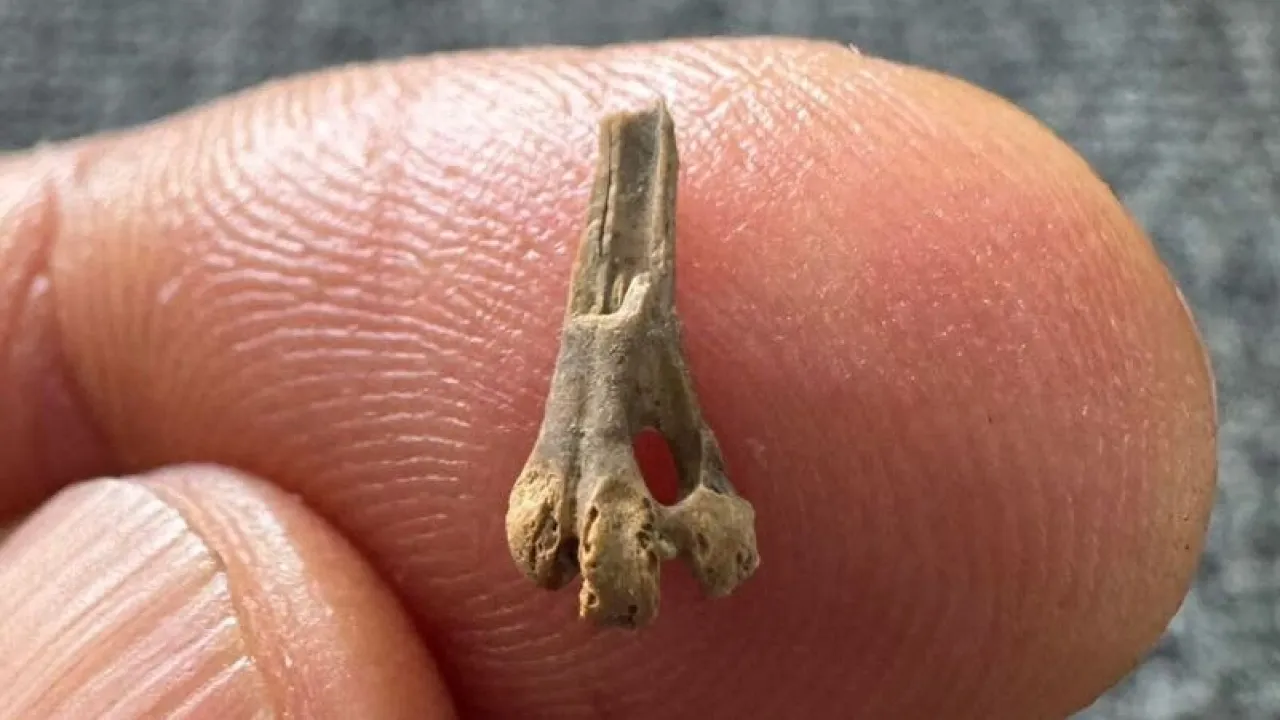
Khaberni - An Egyptian student found a tiny bone fragment in the Faiyum Desert in the southwest of the country, unaware that it could be the prelude to a thrilling scientific study about a bird that lived in Egypt 40 million years ago.
Aya Ibrahim, a freshman at the Faculty of Science, Mansoura University, discovered the bone piece among the sands and deposits of the Faiyum Desert, and presented it to the university's Center for Vertebrate Paleontology for analysis and identification.
Global Geological Maps
In his turn, Egyptian paleontologist and founder of Mansoura University's Center for Paleontology, Hesham Salam, announced that his team successfully identified the piece, confirming it is part of a "bird foot" that lived in ancient geological ages.
Salama, in statements to "Al-Arabiya.net", confirmed that initial anatomical examinations proved the bone belonged to a bird, based on its tripartite joint characteristics and the light nature of bird bones, explaining that it was extracted from rocks dating back to about 40 million years.
He also clarified that determining the age of the fossil was not coincidental, but was based on global geological maps that accurately define the ages of rock layers, placing this bird in a timeline following the extinction of the dinosaurs by millions of years.