Khaberni - Goldman Sachs warned that the average price of Brent crude could exceed $100 per barrel by 2026 if the Strait of Hormuz remains closed for an additional month, at a time when the oil market is still anxiously watching how durable the ceasefire between America and Iran is, and how quickly this agreement is translated into an actual resumption of crude and gas flows through one of the most important sea passages in the world.
Bloomberg conveyed that Goldman Sachs analysts, including Dan Struyven, said that "the situation remains volatile," and the risks to their price forecasts "still tend to rise," especially after US Vice President JD Vance described the ceasefire as fragile, and many details of the reopening of the strait remain unclear despite Washington and Tehran announcing a ceasefire in exchange for resuming passage through it.
At the time of writing, Brent crude has risen 3.31% to $97.89 a barrel, and West Texas Intermediate US crude climbed 3.21% to $97.44 a barrel.
Goldman Scenario
According to Goldman Sachs' base scenario, the institution expects flows through the Strait of Hormuz to start improving this week, followed by a gradual recovery of exports from the Arabian Gulf to pre-war levels within one month. In this case, the average Brent crude is expected to reach $82 per barrel in the third quarter and $80 in the last quarter of the year.
In a negative scenario, which assumes a delay in reopening by another full month, the bank estimates that the average Brent could exceed $100 per barrel in the second half of the year, while a longer closure scenario with a loss of some regional production is pushing prices to $120 in the third quarter and $115 in the fourth quarter, according to what Bloomberg reported in its report on the bank's forecasts.
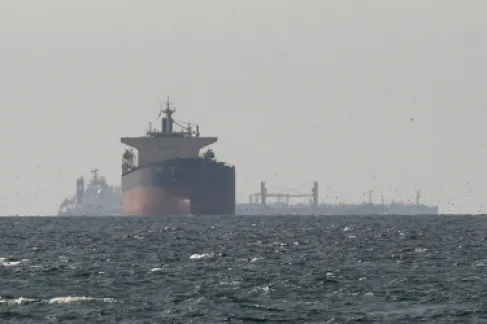
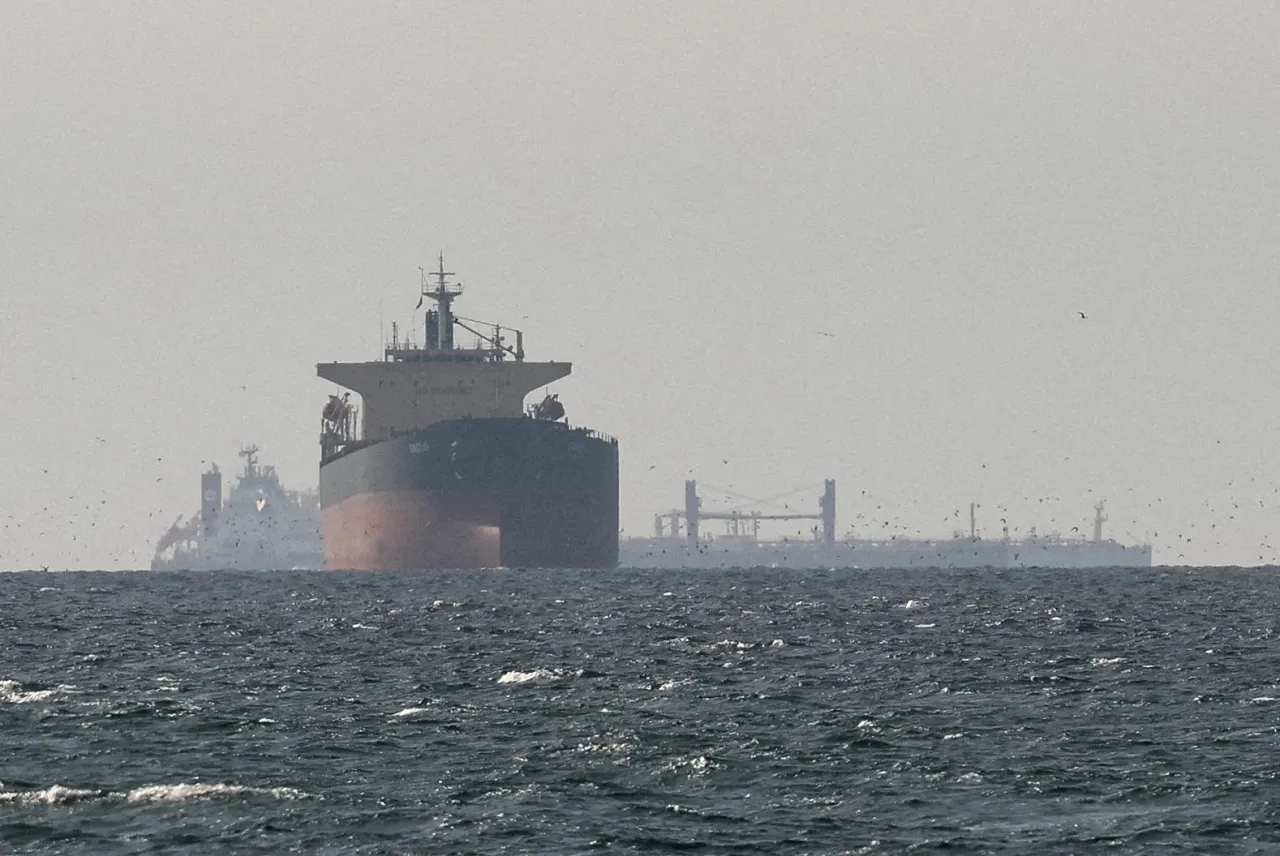
The warning reflects the extraordinary importance of the strait for the global energy market, and Bloomberg points out that the Strait of Hormuz, which connects the Gulf with international markets, traditionally carries about a quarter of the world's sea-borne oil trade, while US President Donald Trump said in a social media post that the opening and security of the strait "had been agreed upon long ago," threatening at the same time to resume military operations against Iran if the agreement is not fully implemented.
In contrast, Bloomberg reported that the Iranian Ports and Maritime Organization declared two safe lanes for ships entering and exiting the strait, and cited the official "Nour News" agency stating that the modified crossing pattern focuses around Larak Island, located about 30 kilometers from the Iranian coast near Bandar Abbas, indicating that Tehran seeks to control the passage mechanism even after the ceasefire announcement.
Western Movement
The concern does not only pertain to the oil market itself but extends to Western security arrangements for protecting navigation, as the United States asked its European allies to provide specific commitments and plans within days to help secure the Strait of Hormuz after the cessation of fighting, according to the report from a senior NATO official.
The request came during discussions between US officials and NATO officials at the White House, Pentagon, and State Department while Washington was pressing to turn allies' pledges into practical measures ensuring freedom of navigation in the strait.
A coalition led by Britain and including more than 40 countries, among them a significant number of European nations, Japan, and Canada, made commitments to assist in reopening the strait after the cessation of fighting, which sees about 20% of the world's oil and natural gas flows, but the report also noted that strikes between Iran and Israel continued after the ceasefire announcement, and the strait remained effectively closed since that time, raising doubts about the realism of the American timeline.
Shipping Caution
In the midst of this uncertainty, major shipping companies are not rushing, as Bloomberg cited Jutaro Tamura, the new president of the Japanese company "Mitsui O.S.K. Lines," stating that the company needs to scrutinize the details of the American-Iranian ceasefire agreement and its implementation on the waters before allowing its ships to attempt crossing the Strait of Hormuz.
Bloomberg also quoted Tamura saying the company prioritizes the safety of every ship, and understanding how the agreement is implemented on the waters is essential before making any decision.
"Mitsui O.S.K." operates over 900 ships, some of which have been stuck in the Gulf since the onset of American-Israeli strikes on Iran more than a month ago.
Tamura mentioned that it is "difficult to determine" the exact conditions that would suffice to consider the strait safe, and decisions will be made on a case-by-case basis. He also explained that a partially owned liquefied natural gas carrier managed to cross Hormuz last week, but continuing to send ships requires "sustained stability" rather than just individual crossings.
According to Bloomberg, the Japanese company sees the post-war period possibly beginning the rebuilding of depleted inventories across various sectors, which could naturally increase the demand for maritime transport, but this will also coincide with a broader trend towards diversifying supply sources and resorting to further or more costly suppliers, which may reconfigure supply chains linked to energy and raw materials in the coming period.