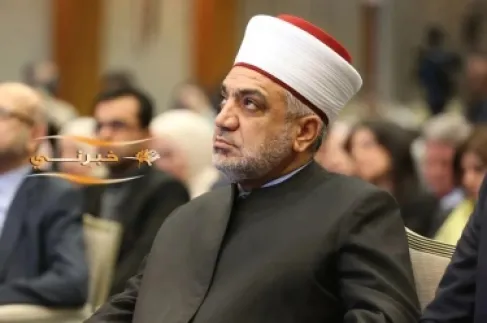
Khaberni - Azam Al-Khatib, the head of the Jerusalem Waqf Council and the General Director of the Islamic Waqf Department and Al-Aqsa Mosque Affairs, stated that Al-Aqsa Mosque was reopened to worshippers after a forced closure of 40 days, describing this period as "the hardest" in the mosque's history since 1967.
Al-Khatib clarified on Thursday that with the reopening of Al-Aqsa Mosque, more than 6,000 worshippers flocked to its courtyards despite the presence of barriers and security restrictions, expressing his hope for the mosque to be vibrant with worshippers and the establishment of the five daily prayers in a normal manner, according to the kingdom.
He mentioned that the closure of the mosque was a result of decisions imposed by the occupation, confirming that the Waqf Department adhered to these decisions despite their difficulty, and continued to perform its duties inside the mosque throughout the closure period.
He added that the Waqf employees maintained the continuation of raising the call to prayer and conducting the prayers, while preventing the entry of worshippers, even from the residents of the Old City.
Al-Khatib explained that Al-Aqsa is considered one of the "holiest sanctities of Muslims", and that denying worshippers access to it was a painful matter, emphasizing that the mosque "does not accept division or partnership and is owned by all Muslims".
He pointed out that the Old City in Jerusalem experienced difficult conditions during the closure, as commercial establishments were closed and entry was restricted to residents only, which negatively affected the economic movement.
He noted that life gradually began to return as religious and commercial places were reopened.