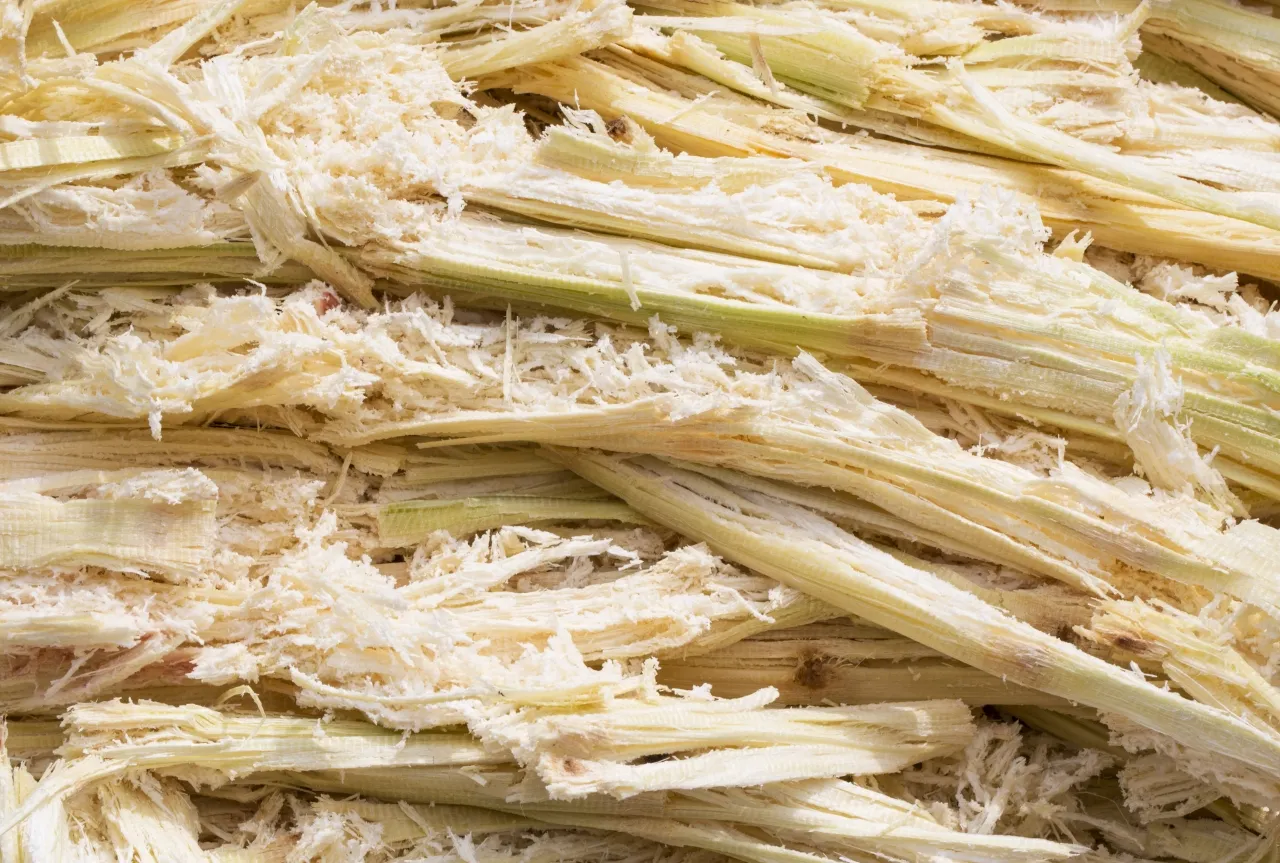
Khaberni - A joint research team from the University of Queensland in Australia and the Indian Institute of Technology Delhi, has developed a new way to convert sugarcane waste into a more eco-friendly and less expensive biofuel for aircraft.
The study, published in the journal "Biofuels, Bioproducts and Biorefining", demonstrated the feasibility of simplifying the processing of sugarcane residues, or "bagasse," using a biodegradable solvent known as "deep eutectic solvents," instead of costly and polluting traditional acids.
These solvents are eco-friendly liquids made by mixing two solid substances to form a liquid at a low temperature, which allows for interaction with agricultural waste without the need for toxic acids or large amounts of water.
A major advantage of these solvents is that they do not destroy the enzymes and yeast needed to convert sugars into biofuel, facilitating the process in a single step, saving time and energy. Thanks to this technology, sugarcane waste can be converted into sustainable biofuel used in aircraft, reducing the environmental impact of traditionally burning waste in fields.
Addressing Key Challenges
This technology addresses one of the key challenges in biofuel production, the presence of lignin, which impedes access to fermentable sugars.
Unlike traditional methods, the new method allows the entire conversion process to be conducted in a single step, without the need for separation or the use of large amounts of water, thus reducing energy consumption and time.
Results also show that selecting sugarcane varieties with high cellulose content and low lignin boosts the efficiency of producing ethanol biofuel. Models suggest that integrating this technology with sugar factories could make biofuel production more economically viable and environmentally sustainable.
Researchers hope these results will lead to better uses for agricultural waste, especially in countries suffering from its burning and the resulting air pollution, thereby enhancing global efforts to combat climate change and accelerate the transition to alternative energy sources.