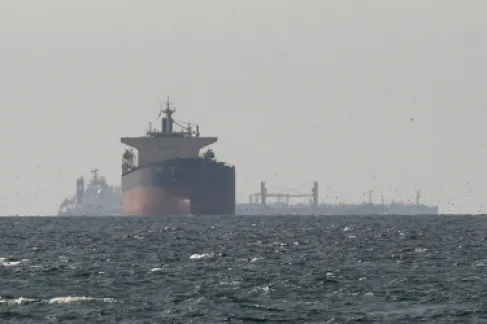
Khaberni - Oil prices rose on Thursday amid investor concerns about the full resumption of Middle East supplies, amid doubts about the durability of a two-week ceasefire between the United States and Iran and continued restrictions on the vital Strait of Hormuz.
By 00:48 GMT, Brent crude futures climbed $2.6 or 2.74 percent to $97.35 a barrel. U.S. West Texas Intermediate crude rose $3.02 or 3.2 percent to $97.43 a barrel.
The price of both benchmark crudes had dropped below $100 a barrel in the previous session and West Texas Intermediate recorded its biggest drop since April 2020 on expectations that the ceasefire would lead to the reopening of the Strait of Hormuz.
This waterway links supplies from Gulf producers such as Iraq, Saudi Arabia, Kuwait, and Qatar to global markets, and typically sees about 20 percent of oil supplies pass through.
However, doubts remain about the ceasefire as Israel continued its attack on Lebanon on Wednesday, prompting Iran to say it would be "unreasonable" to proceed with talks to reach a permanent peace agreement.
Shipping companies said on Wednesday that they need more clarity on the ceasefire terms before resuming passage through the Strait of Hormuz. Iranian media reported that Iran has published maps to guide ships to avoid mines in the waterway and determined safe routes for crossing in coordination with the Iranian Revolutionary Guard.
Analysts at Standard Chartered Bank wrote in a note, "Passage through the Strait of Hormuz has not suddenly become risk-free. It remains under Iran's influence."
They added, "Logistical disruptions, security concerns, higher insurance premiums, and operational restrictions mean that very little additional energy is likely to be supplied through the Strait of Hormuz in the next two weeks."
Oil facilities in the region also remain threatened as Iran bombed sites in neighboring countries after the ceasefire, including a pipeline in Saudi Arabia used to bypass the Strait of Hormuz, according to a source in the oil sector.