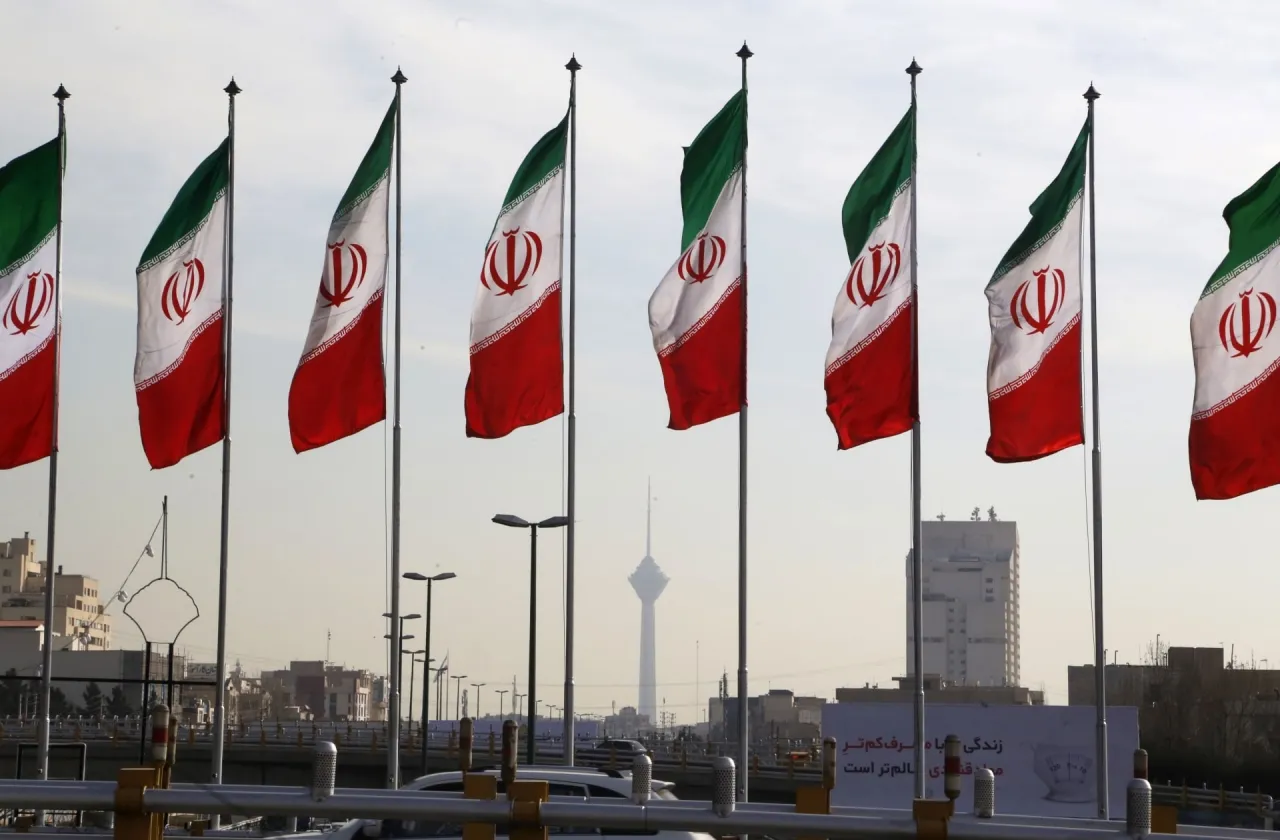
Khaberni - Pakistani Prime Minister Shahbaz Sharif announced today, Wednesday, that Iran has confirmed its attendance at talks with the United States on Friday in Islamabad.
This coincided with a Pakistani-mediated deal between the United States and Iran that agreed on a ceasefire for only two weeks, provided Tehran fully and immediately opens the Strait of Hormuz to international navigation safely.
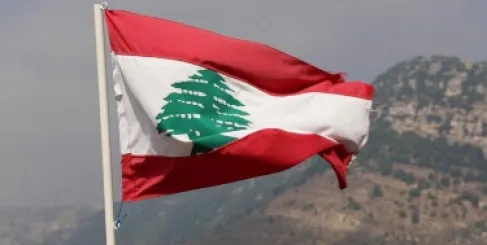
Pakistan's Prime Minister wrote on his X account: "With all humility, I am pleased to announce that Iran and the United States, along with their allies, have agreed on an immediate ceasefire everywhere, including Lebanon and other areas, effective immediately."
Later, the office of the Prime Minister of Pakistan reported that he spoke for more than 45 minutes with Iranian President Masoud Pezeshkian.
In his announcement of the temporary ceasefire, US President Donald Trump said on "Truth Social" that the United States had "achieved and exceeded" all its military objectives.
The announcement of the deal came late on Tuesday evening US time, just two hours before the deadline set by Trump for Iran to open the blocked Strait of Hormuz, or it would face the destruction of "its entire civilization".
Who will represent Iran in the negotiations?
It has not yet been officially clarified who will represent Tehran in these negotiations.
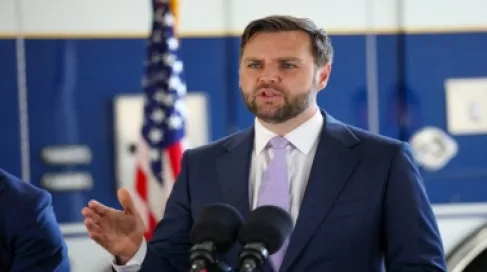
However, Iranian media including the Iranian Students' News Agency (ISNA), reported that Parliament Speaker Mohammad Bagher Ghalibaf will lead his country's delegation against the American team headed by Vice President J.D. Vance.
At the same time, other sources reported that the Iranian Foreign Minister Abbas Araghchi will also arrive in Islamabad to participate in the talks.
Araghchi played a pivotal role as the head of the Iranian negotiating team in talks preceding the war.
As for Ghalibaf, who has been long close to the late Supreme Leader Ali Khamenei, and close to his son Mojtaba who succeeded him, he was one of the most prominent voices opposed to Israel and the United States.
Alongside Supreme Leader Ali Khamenei, the American-Israeli strikes on Iran since they began in late February have killed a number of top military and political leaders, creating a significant power vacuum.
America skeptical
While visiting Hungary, in a speech at an event in Budapest, U.S. Vice President J.D. Vance said that a deal is "possible if Iran negotiates sincerely."
However, he warned that some elements within the Iranian regime are not dealing with the talks constructively. He described the situation as a "fragile truce".
He added, "The President of the United States told me, and told the entire negotiation team, and the Secretary of State, and the special envoy Steve Witkoff, to work in good faith to reach an agreement," indicating that "it's up to the Iranians on how they negotiate. I hope they make the right decision."