Khaberni - The Family Health Care Institute (from the King Hussein Foundation Institutes) released the results of three specialized studies in the field of eye health, one of which was national, implemented under the supervision of the Ministry of Health, in collaboration with experts from the Fred Hollows Foundation, the Ministry of Education and academic consultants, while the second and third were conducted at the institute level targeting children benefiting from the vision screening project.
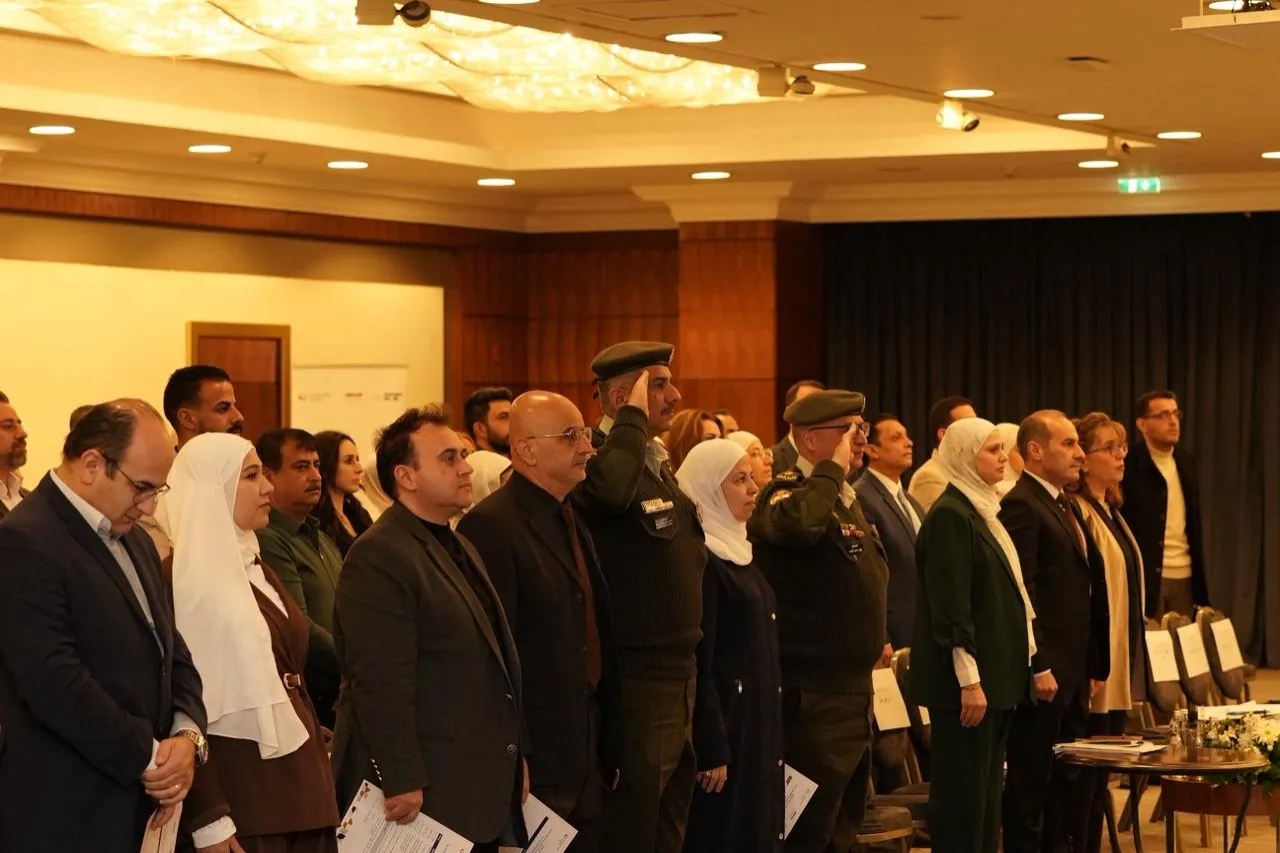
The three studies, whose results were released today, Wednesday, under the patronage of His Highness Prince Mired bin Ra'ad, Chief of the Secretariat and President of the Higher Council for the Rights of Persons with Disabilities, addressed the reality of eye health services in Jordan, the challenges related to early detection programs, and the assessment of the economic impact of the school eye health program, aiming to support the development of evidence-based health policies and improving the quality of services in this field.
The results of the national study for the current situation analysis of eye health services in Jordan showed that the health system has a solid foundation in terms of the availability of specialized personnel and infrastructure. However, it faces challenges related to weak governance and strategic leadership, limited primary and community care services, and gaps in health information systems.
It was revealed that Jordan faces an increasing burden of eye diseases, with the prevalence rate of total blindness at 0.4%, moderate and severe vision impairment at 3.7%, and 34.1% of diabetic patients suffering from retinopathy, while only 55% undergo regular eye examinations.
The study results confirmed the need to develop a national strategy for eye health, integrate services into primary health care, and improve referral systems and fair access to services.
Regarding the eye health program in schools, the second study (commitment to wearing spectacles) showed that the actual compliance rate within schools reached 66.1%, compared to a higher reported rate by parents, which reached 77.1% and 80.2% in some cases, indicating a gap between reality and self-assessment.
It was explained that compliance positively correlates with improved vision and teacher encouragement, while negatively affected by factors such as discomfort while wearing glasses or exposure to bullying.
The study recommended enhancing the roles of schools and teachers, intensifying community awareness, and providing maintenance services for glasses to ensure their continued use.
The third study, related to the cost-effectiveness of the school eye health program, confirmed that this program is among the most viable health interventions, as it achieves significant improvements in the quality of life of children at a cost of about 55.7 dinars per child.
The results showed that the program achieves additional health gains estimated at 1.23 quality-adjusted life years, with a cost-effectiveness rate of 68.4 dinars per quality-adjusted life year, making it an effective investment according to international standards.
The study indicated that expanding the scope of the program and integrating it within the health and education systems would contribute to achieving a sustainable health impact at the national level.
The director of the Family Health Care Institute, Dr. Ibrahim Aql, stated that we are proud of our leadership role in the institute, which harnesses scientific research, in collaboration with the Ministry of Health and national and international partner institutions, to serve the community, making the outputs of these important studies a scientific reference for decision-makers towards developing sustainable eye health programs.
Aql mentioned that these pioneering scientific studies embody the commitment to support and enhance the national health sector, noting that the institute's goal is not only to provide service but also to build comprehensive national scientific strategies and policies capable of improving the quality of eye health services for school students and communities, according to the highest global standards.
He highlighted that the institute's use of the latest global research tools stems from a deep understanding of the importance of eye health in academic achievement and psychological and social well-being, confirming that early intervention and treatment sustainability protect generations from visual challenges, play a pivotal role in reducing economic burdens, and achieve the highest degrees of efficiency in this field.
Meanwhile, the executive director of the Fred Hollows Foundation, Mr. Ross Piper, stated that this event marks an important step in our partnership to enhance eye health in Jordan, noting that the three studies provide a clear, evidence-based picture of the efficiency of the eye care system and identify areas through which targeted interventions can achieve the greatest health gains and promote equity and tangible economic returns.
He pointed out that the studies clearly demonstrate that eye health is a fundamental driver of social and economic development, confirming that the analysis of the current status of eye health services issued by the World Health Organization highlights the strong clinical capabilities alongside existing gaps in areas of leadership, data, and integration of services at the primary care level, which must be addressed to achieve comprehensive coverage of eye health services.
Mr. Ross Piper noted that the economic feasibility study confirms that school eye health programs are among the smartest investments any health system can embrace, as they yield significant benefits in improving children's learning, quality of life, and long-term productivity, at low cost.
He mentioned that research on compliance with using spectacles reaffirms what has been noticed in many contexts, that providing spectacles alone is not enough; involving teachers, families, and schools is essential for children to commit more to wearing spectacles and benefiting from them.
According to Mr. Ross Piper, these studies reflect the strength of the partnership with the Family Health Care Institute, which is a leading and trusted entity in transforming evidence into practical solutions applicable and scalable, aligned with national priorities, affirming Fred Hollows Foundation's commitment to continuing close cooperation with the institute, the Royal Medical Services, and government partners, to turn these results into practical actions that enhance primary health care services.