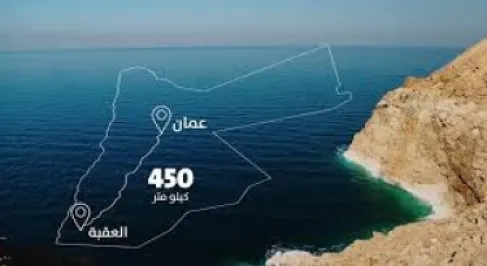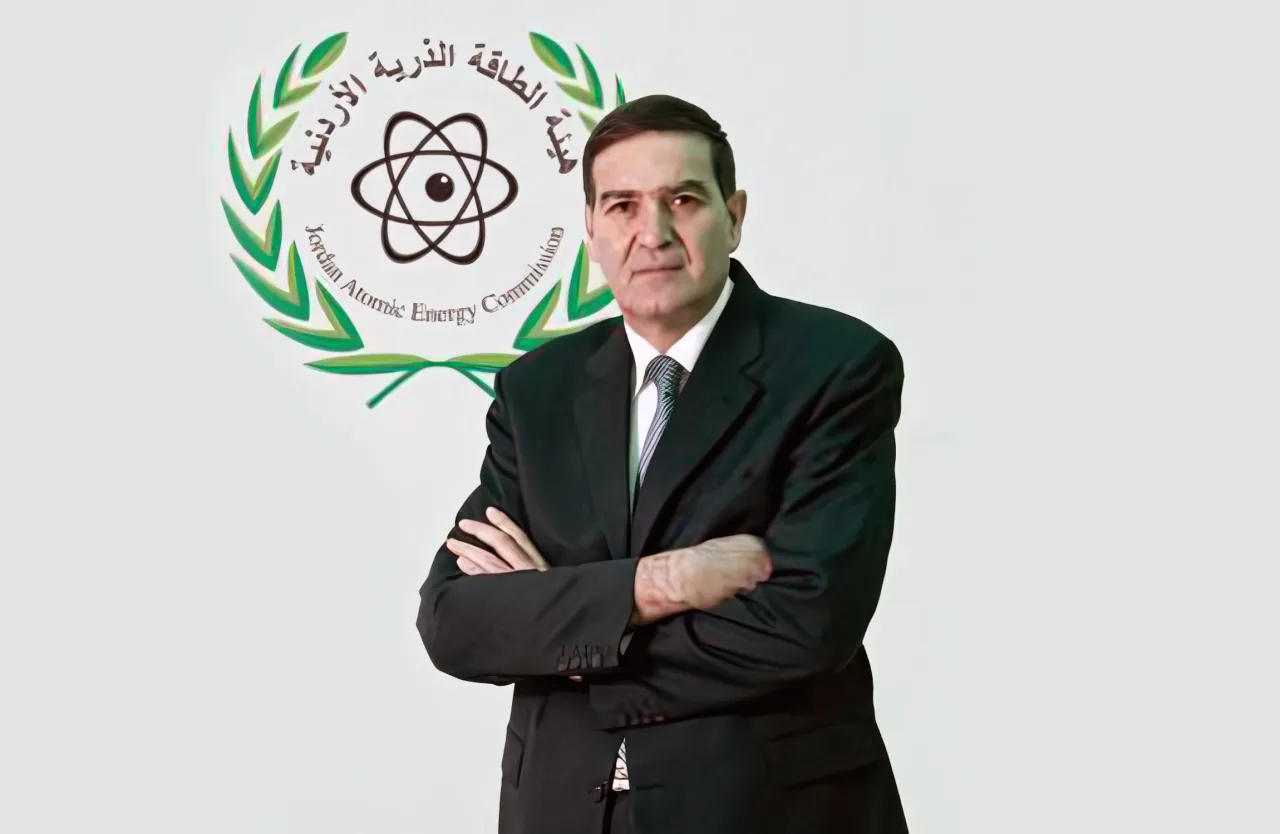
Khaberni - Dr. Khaled Toukan, the head of the Jordan Atomic Energy Commission, confirmed that the Kingdom has a comprehensive radiation monitoring system that includes 26 stations spread throughout different regions of the Kingdom, from north to south, operating around the clock to monitor any changes in radiation levels.
Toukan explained in his talk to the Public Security Radio that these stations measure what is known as "background radiation," which consists of cosmic radiations and some naturally occurring radioactive sources present in the environment.
He mentioned that any change in these readings is immediately recorded and sent to the monitoring and emergency center in the Energy and Mineral Regulatory Commission.
He also noted that the Commission also owns about 23 additional stations distributed around the Kingdom in addition to stations monitoring the surroundings of the Jordanian nuclear reactor in the northern region, and others around the Atomic Energy Commission, ensuring comprehensive coverage of the entire territory of the Kingdom.
Regarding the Dimona reactor in the Negev, Toukan clarified that Jordan closely follows the situation, pointing out the presence of radiation monitoring stations in the elevated areas opposite the reactor to detect any potential radiation cloud in case it is targeted, where detection happens immediately and the data is sent to the monitoring and emergency center at the Energy and Mineral Regulatory Commission.
He affirmed that the Dimona reactor, according to the last update announced in 1992, has a capacity of 86 megawatts, and operates with fuel enriched to a low level of 1.5%, and may contain about 16 tons of uranium at full operation.
He added that the reactor was built underground and at great depths of about 30 meters or more, with high fortifications designed to withstand military attacks, making targeting the reactor core (the site of danger) with conventional surface missiles extremely difficult.
Toukan pointed out that the Jordan Atomic Energy Commission has conducted hypothetical studies for the worst-case scenarios that assume a complete radiation leak – although this is unlikely – showing that the spread of radioactive materials would not exceed about 30 kilometers from the reactor site and might have a limited impact about 5 kilometers inside the Jordanian border in sparsely populated areas.
He emphasized that the Kingdom has clear protocols to deal with any radiation emergency, overseen by the National Center for Crisis Management, in coordination with the Atomic Energy Commission, the Energy and Mineral Regulatory Commission, the Ministry of Health, the Royal Medical Services, and Public Security, where procedures start with monitoring, then move to protection phases such as distributing iodine tablets, and up to evacuation in extreme cases.
Toukan explained that targeting Iranian nuclear facilities – whether related to uranium enrichment or power stations – would not have a significant impact on Jordan, given the distance of at least 1000 to 1500 kilometers.
Toukan confirmed that all national entities operate within a system of continuous coordination and around the clock led by the National Center for Crisis Management, which manages any emergency event, pointing out that regular training exercises are conducted to ensure readiness and immediate response to any potential emergency.