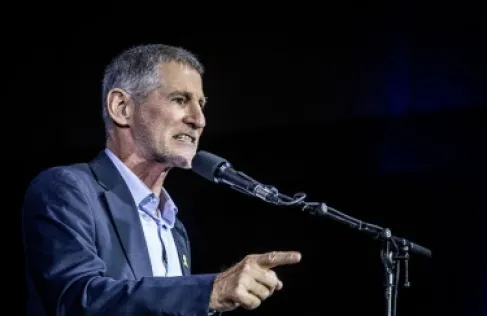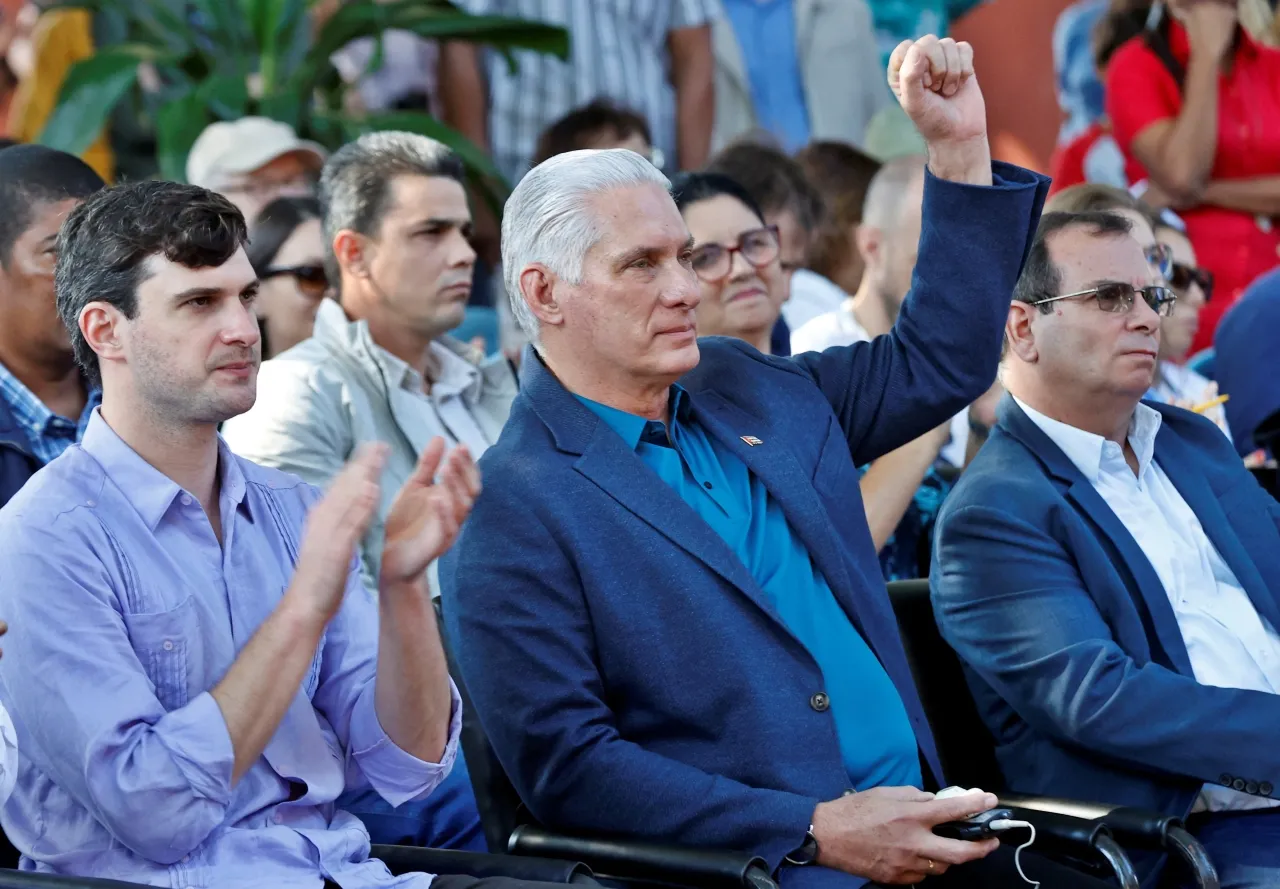
Khaberni - Cuban President Miguel Diaz-Canel said his country will respond with a campaign resembling guerrilla warfare if the United States launches a military attack, warning Washington that any operation would result in “severe losses” for both countries.
The Cuban leader's remarks came in an exclusive interview with Newsweek in Havana on Friday, published today, his first interview with an American media outlet since 2023, in response to President Donald Trump's threats to annex the "communist island," which is only about 145 kilometers from Florida.
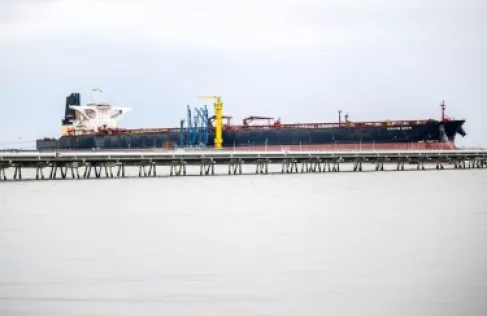
Trump’s threats come at a time when Cuba is suffering from a severe economic crisis, with 10 million citizens experiencing daily power outages amidst a severe energy crisis exacerbated by an American blockade imposed on oil shipments to the island since January.
The White House justified its actions by stating that Cuba poses an “extraordinary and unusual threat” to American national security, citing Havana's communist policies, its relations with Russia, China, and Iran, and its alleged links to Hamas and Hezbollah. Cuban officials deny any links to “organizations classified as terrorist” by the United States.
The U.S. blockade on the island has led to rising food prices, a shortage of medicines, and rare anti-government protests. The Trump administration has publicly hinted at the possibility of U.S. intervention.
“The Next Target”
After military operations in Venezuela and Iran this year, Trump has stated on separate occasions that Cuba will be "the next target," and he expects "the honor of controlling Cuba in some way or another."
However, Diaz-Canel said on Friday that his country, while preferring dialogue, will defend itself with full strength “with the participation of all its people” if the United States launches an attack.
He added to the newspaper, "We will always seek to avoid war, and we will always work for peace. But if a military aggression occurs, we will defend ourselves, we will fight the battles, and we will defend ourselves."
He continued, “And if we fall in battle, then dying for the homeland is to live,” evoking a motto commonly used by the late leader Fidel Castro, and the guerrilla warfare waged by Cuban revolutionaries.
The Cuban President acknowledged the situation of his country as a small state undergoing historic tensions with a great power. However, he relied on the Cuban doctrine of "people's war," stating that any U.S. military attack “will result in severe losses for both countries and their people."
He warned that “the losses in lives and material destruction would be countless. Such aggression would be very costly in every respect, and it is not what our people deserve."
During his interview with Newsweek, Diaz-Canel referred to the "maximum pressure" exerted by U.S. officials. However, he added that given Cuba’s earnest pursuit of talks, “there is no justification or excuse for the United States to resort to military aggression as a means to resolve our differences.”
He said, “Cuba does not pose a threat to the United States, much less an "extraordinary and unusual threat" as claimed,” referring to a Trump order issued in January to impose tariffs on any country exporting oil to Cuba.
This decree, condemned by the United Nations, practically halted shipments from countries like Mexico to Havana.
Cuba previously relied on its historical ally Venezuela for most of its oil imports, but it lost this vital lifeline in January after a U.S. military operation ousted Venezuelan President Nicolas Maduro and Washington took control over Venezuelan oil production.