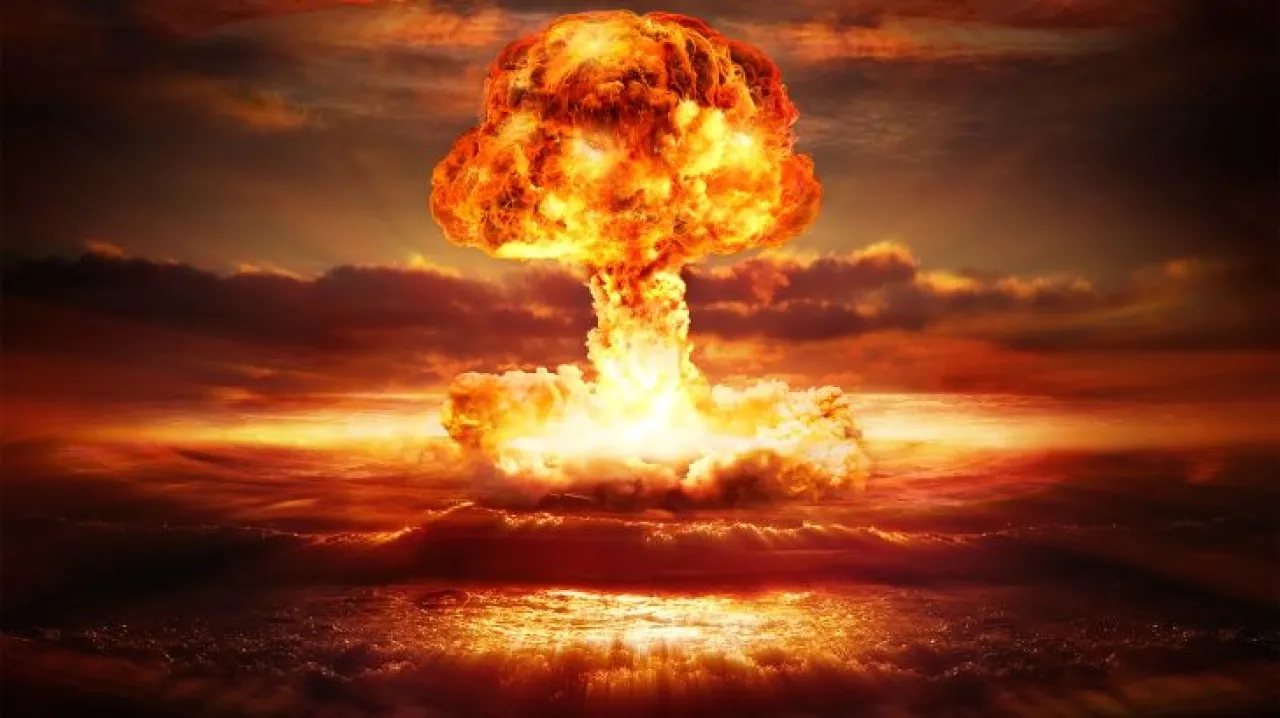
Khaberni - The Family Health Care Institute (an institute of the King Hussein Foundation), in its health education awareness bulletin, today, on Tuesday, provides important information about the effects and health risks of nuclear explosions, which extend for years due to ionizing radiations causing genetic mutations and diseases, and includes its damage environmental pollution and food chains.
The institute's newsletter provides the readers with the main components of a nuclear blast that affect human injuries, the accepted clinical classifications according to the distance from the center of the explosion, the risks and measures to be taken for each classification, in addition to necessary prevention steps, and the challenges of the health system.
A nuclear explosion typically has four main components that influence human injuries:
- Blast wave, leading to blunt trauma and building collapses.
- Thermal radiation, resulting in severe burns.
- Direct ionizing radiation, leading to acute radiation syndrome.
- Fallout, causing delayed and chronic long-term contamination.
The impact of these mechanisms on human health depends on a number of factors including the distance from the explosion site, bomb strength (kiloton or megaton), elevation of the explosion (in air or on the ground), wind direction, population density, geographic and urban composition, response speed, and others.
Several types of clinical classifications are adopted depending on the distance from the center of the explosion:
1- The very near zone to the explosion, called the annihilation zone (0 – 1 km):
Expected injuries:
- Complete destruction.
- Immediate fatalities (90%).
- Severe tear injuries, amputations, fatal brain injuries.
- Inclusive third-degree burns.
- Lethal radiation doses within minutes (over 10 Gray).
** Measures: No realistic chance for field treatment nor a real role for medical intervention, but the focus is on disaster management and directing resources to salvageable areas.
2- The severe / catastrophic zone (1 – 3 km):
Expected injuries:
- Explosive injuries (blast lung, internal bleeding).
- Severe burns (30- 80% of body surface).
- High radiation doses (2–8 Gray), leading to the risk of acute radiation syndrome.
- Compound / multiple injuries: burns, traumas, and radiations (Burn + Trauma + Radiation) being the most challenging in handling.
** Early radiation symptoms: nausea/vomiting within hours and rapid decrease in white blood cells.
** Measures: Precise triage: treatable cases require intensive support, whereas untreatable ones require palliative care.
** Treatment: Administration of IV fluids, broad-spectrum antibiotics, bone marrow support, and burn treatment.
3- The intermediate zone (3 – 8 km):
Expected injuries:
- First/second-degree burns.
- Blunt traumas (glass, partial collapses).
- Moderate radiation doses (1–2 Gray).
The risks: mild to moderate radiation syndrome and increased risk of infections over weeks.
Measures: Burn treatment, blood count monitoring, immune support when needed, and early psychological treatment (PTSD).
4- The distant zone (8-20km) and beyond, exposed to radioactive fallout (nuclear dust):
Expected injuries:
- Generally, no direct destruction.
- Thus, injuries tend to be minor.
- Primary exposure through radioactive fallout (nuclear dust).
** Long-term risks: such as increased risk of cancer (particularly leukemia and thyroid cancer), and collective psychological disorders.
5- The indirect impact zone (50 – 100 km):
Expected injuries:
- No noticeable blast effect, thus very low or intermittent exposure occurs.
** Clinically: no acute injuries, but presence of psychological and community health effects.
As for prevention, which is practically most important, it goes according to the stages of the explosion:
1- Before / at the onset of the explosion:
Taking shelter inside concrete buildings or underground, lying flat on the ground, and staying away from windows to avoid injuries from flying glass.
2- After the explosion (Fallout protection):
The golden rule: Time – Distance – Shielding, symbolizing: reducing exposure time, increasing distance from radiation and dust, and using protective shields such as (concrete walls and underground shelters).
3- Decontamination:
Removing contaminated clothing, reducing contamination by 90%, washing the skin with water and soap, and isolating contaminated injured persons.
4- Medicinal prevention:
As administering potassium iodide (KI), which should be given early to protect the thyroid gland from radioactive iodine.
There are overall challenges to the health system which include:
- Infrastructure collapse, shortage of staff (injured workers), scarcity of resources such as hospital beds, burn units, resuscitation units, blood units, electricity availability, medications, communication means, and transportation...
- The need to make difficult ethical triage decisions, and the existence of crisis standards of care.