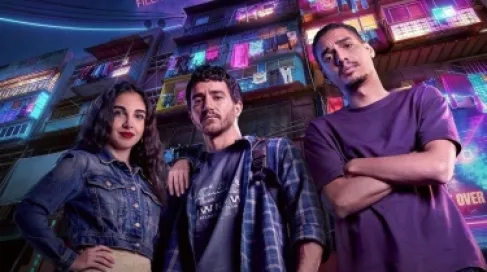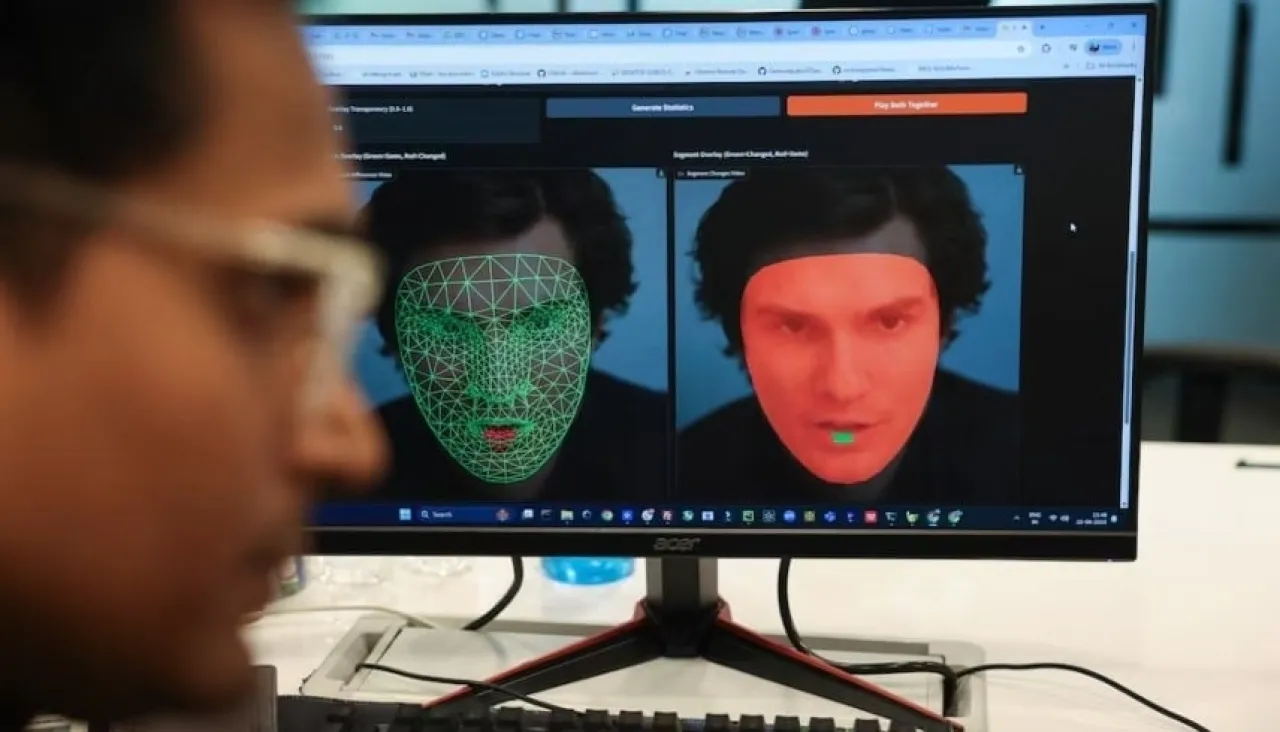
Khaberni - Artificial intelligence has invaded the corridors of the Indian film industry "Bollywood," transforming traditional filming locations bustling with directors and "clapperboards" into quiet rooms dominated by the hum of computers and coding scripts.
While money and legal constraints limit Hollywood's ambitions in using this technology, India is in a frantic race to reshape the economics of the seventh art, betting on efficiency and speed in the face of questions about creative authenticity.
The Revolution in Costs and Time
According to "Reuters," data from "Galleri5" studios of the "Collective Artists Network" confirm that artificial intelligence has succeeded in reducing production costs to a fifth (20%) in complex categories such as mythology and fantasy films, and decreased the execution time to only a quarter.
This transition comes at a critical time for the Indian film industry; as the number of cinema-goers dropped from 1.03 billion in 2019 to 832 million in 2025, prompting studios to look for radical solutions to squeeze budgets and offset fluctuating revenues.
Ancient Myths with Modern Technologies
In Bangalore, programmers and artists are working on content inspired by Hindu mythology, such as "Ramayana" and "Mahabharata." The platform "JioStar" has already launched an AI-generated version of the epic "Mahabharata," which has garnered 26.5 million views since its launch in October last year.
Despite this digital success, the audience has not been lenient in its ratings; the work received a rating of 1.4 out of 10 on IMDb, amid criticisms that targeted the quality of visual synchronization and the feeling of losing the "soul" of the art.
Changing the Endings
It didn't stop at producing new films, but extended to the cinema archives, as "Eros Media World" re-released the film "Raanjhanaa" (produced in 2013) with a completely different ending through artificial intelligence, where the ending was changed to one where the protagonist survives.
This move angered the film's star "Dhanush," who considered that the technology "stripped the film of its soul," but the numbers spoke differently; ticket sales increased by 12% above the general average, prompting the company to review its catalog of 3000 titles for potential modifications.
A "Reuters" report highlights a sharp contrast between India and the United States; in Hollywood, actors' guild (SAG-AFTRA) and directors' guild contracts prohibit digital manipulation of performances without explicit consent, fearing job loss. In India, however, the approach is heading toward full automation.
Researcher "Dominic Les" from the University of Reading in the UK believes that "the center of gravity for the film industry through artificial intelligence will shift to India if it succeeds in delivering what it promises."
Major Alliances and Hybrid Technologies
This shift has caught the attention of global technology giants:
- Google: has entered into a partnership with director "Shakun Batra" to produce a series using "Veo 3" tools.
- Microsoft: provides cloud computing capabilities for the "Collective" network.
- Nvidia: is striving to reduce computing costs to enable independent creators to produce large-scale works with tiny budgets.
To overcome the flaws of content entirely generated by computers, Indian studios follow a "hybrid system" that relies on motion capture suits worn by real actors, and then the data is processed by artificial intelligence algorithms to give digital characters realistic human expressions and movements.
Cinema as a "Business"
Indian director "Anurag Kashyap" sums up the scene by saying: "In India, cinema is not just an art, it is purely business."
Despite his concerns about the lack of controls, he acknowledges that studios will continue in this approach as long as the audience is drawn to these works, especially since estimates by "EY" indicate that artificial intelligence may increase the revenues of Indian entertainment companies by 10% and reduce costs by 15% in the medium term.