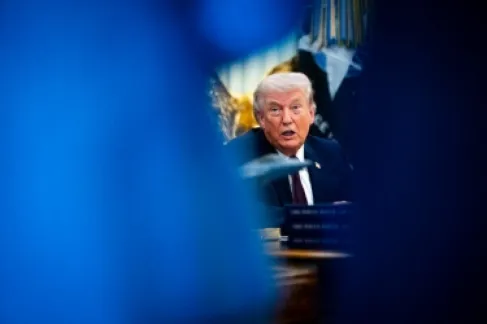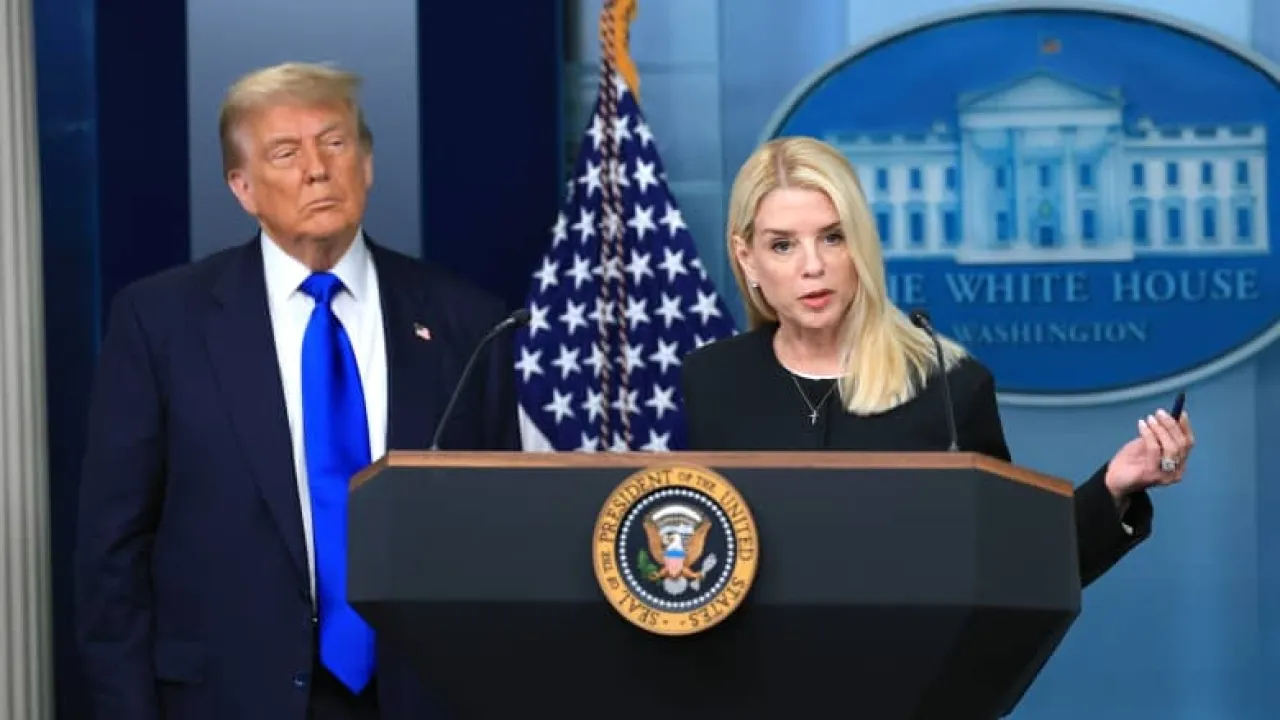
Khaberni - Five sources familiar with the internal discussions in the White House said that President Donald Trump is considering a broader cabinet reshuffle following the dismissal of Justice Minister Pam Bondi last week, with increasing frustration from the political fallout of the war on Iran.
Any potential reshuffle could represent a reset for the White House as it faces an extended political challenge, as the ongoing war for 5 weeks has led to rising gas prices, declining Trump popularity, and increased concerns about the consequences for Republicans as the midterm elections approach in November.
Reuters and Politico, quoting officials in the Trump administration, reported that the President is extremely angry with the performance of some of his ministers and is seriously considering a more expansive cabinet reshuffle due to the pressures of the Iran war.
The sources did not specify which government member would definitely lose their position in the near term, but they indicated that many officials face some degree of risk.
Several sources said that U.S. Director of National Intelligence Tulsi Gabbard and Commerce Secretary Howard Lutnick are among those who might be on the dismissal list, after Trump ousted Bondi and Homeland Security Minister Kristi Noem in recent weeks.
A senior White House official mentioned that Trump has expressed discontent with Gabbard in recent months. Another source directly familiar with the matter said Trump sought opinions from his allies about a possible replacement for the director of intelligence.
Meanwhile, some of Trump's senior allies are privately pushing for the dismissal of Lutnick, a close personal friend of the President who faced recent scrutiny due to his relationship with the late businessman convicted of committing sex crimes, Jeffrey Epstein.
Newly released files earlier this year revealed that Lutnick had lunch with Epstein on his private Caribbean island in 2012. Lutnick said he "hardly had a relationship" with Epstein and that the lunch occurred only because he was on a boat near the island.
The Rhetoric Crisis
Meanwhile, some of Trump's allies said that his televised national address on Wednesday—which a senior White House official described as an attempt to project a sense of control and confidence about the course of the war—frustrated many and increased the sentiment that changes in messaging or personnel were necessary.
However, a White House official said that after the disappointing speech on Wednesday, hesitating to make adjustments could carry political risks and making significant changes, for better or worse, would dominate the headlines.
During his address, the President refrained from presenting a clear plan to end the war that began on February 28, leaving the impression that the conflict has no end. Instead of offering solutions to calm voters' economic concerns, he said the suffering would be short-term, blaming it on Tehran.
The official said, "The speech did not achieve what it was supposed to accomplish," adding that while Trump's core supporters still back him in the war, they generally suffer from economic pressures.
Sources reported that the likelihood of radical changes has significantly increased in recent weeks.
A senior White House source said Trump is eager to make significant changes now, well before the midterm elections.
Another White House official said, "It can be said, based on what I've heard, Bondi is not the last one."
A recent Reuters/Ipsos poll showed that only 36% of Americans are satisfied with Trump's overall performance, the lowest rate during his current presidency. The war with Iran also does not enjoy wide support, as 60% of survey participants expressed their rejection of the United States and Israel starting the conflict.
Two White House officials said that Trump is extremely angry about what he considers unfair media coverage of the Iran war, and he made it clear to his team that he wants more positive news coverage, though he has not shown interest in adjusting his media strategy.