Data revealed detailed information about an Iranian missile targeting an Israeli factory specializing in the production of security drones on Friday, in Petah Tikva, central Israel, only two days after its sale, according to Al Jazeera.
The exact location of the target was identified through coordinates (32°06'25.2"N 34°53'03.9"E) in the city of Petah Tikva, which is the second largest industrial city in Israel.
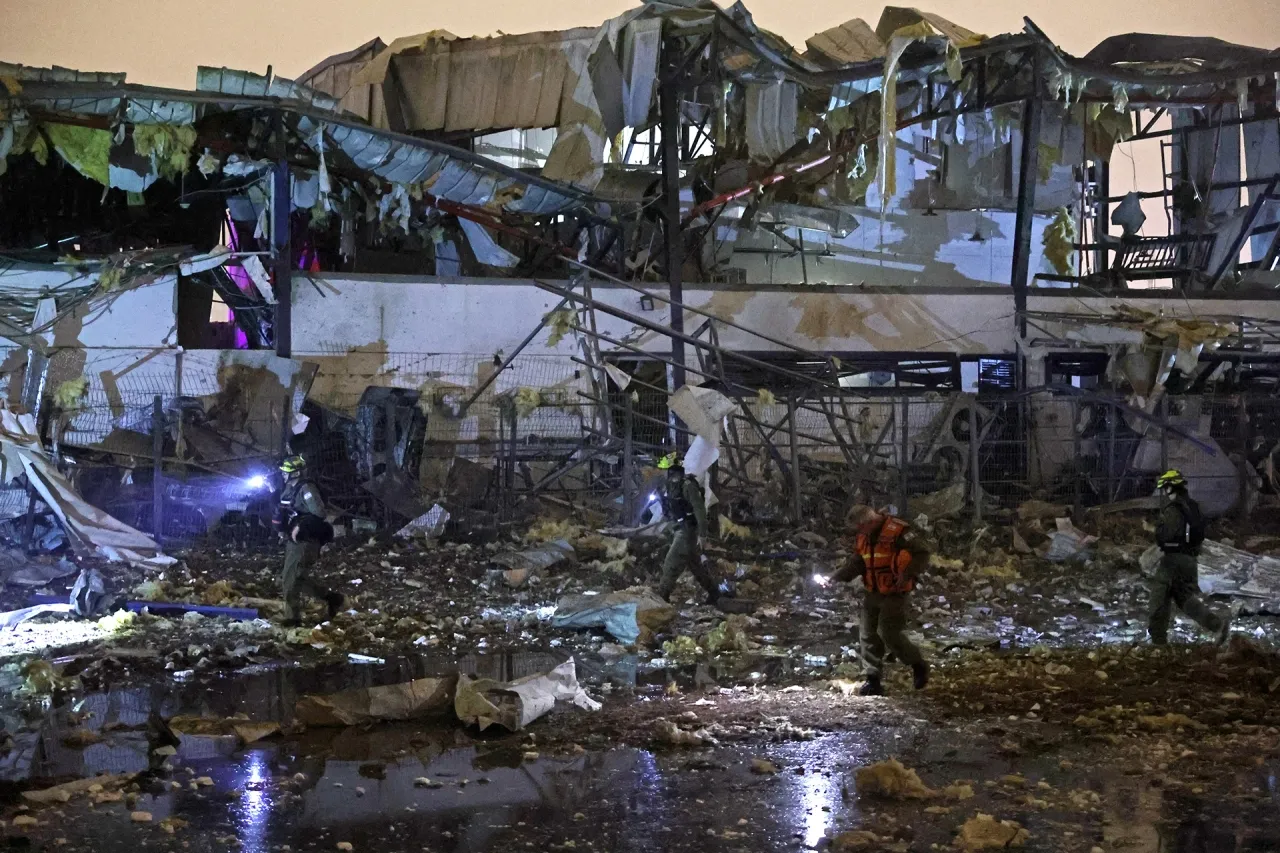
An inspection of the scenes broadcasted by Israeli accounts with military censorship approval, and other images captured by news agencies, revealed extensive damage at the factory after it was hit by the strike. A large crater appeared a few meters away from the site, indicating that this was the only factory severely affected among those in the complex, which suggests the precision of the targeting.
Details of the Recent Deal
The owning company of the "Aerosol Air Solutions" factory announced to the Israeli stock market that there was significant destruction following an explosion of an Iranian missile warhead on site, according to estimates. Ironically, this attack came only two days after "Valorex" acquired the factory, as reported by Israeli newspapers.
The "Calcalist" newspaper, focused on economic matters, provided detailed information about the targeted company, noting that "Aerosol" has been established for more than 13 years, developing operational drones for security and governmental bodies both in Israel and globally.
Regarding the details of the deal, "Valorex", active in the internal security sector, paid 26 million shekels (about 8.3 million dollars) to acquire 70% of "Aerosol's" shares, with a commitment to inject an additional 9 million shekels (about 2.8 million dollars) in instalments. This acquisition was a pivotal step for "Valorex" in its path to building a multidisciplinary entity within defense sectors.
According to "Calcalist," the investment plans included improving the factory's efficiency, expanding the team, and exclusively employing composite materials in manufacturing for major security companies. These ambitions may now be thwarted by the severe destruction of the factory.
Aerosol's revenue ranges between 15 to 20 million shekels (between 4.8 to 6.4 million dollars) annually, with an operating profit margin of 20%, counting among its clients the Israeli Ministry of Defense, aerospace industries, Elbit Systems, and Rafael.
Suspension of Trading and Damage Assessment
According to Yedioth Ahronoth, a notification to the Israeli stock market stated that following the launch of rockets and the landing of an ordnance near Aerosol's sole factory, significant damage was incurred. The company added, "Currently, we are assessing the extent of damage to Aerosol's operations based on preliminary site surveys," following which, the company decided not to open trading on its securities.
The CEO of "Valorex," Roy Bargil, commented on the strike near the Aerosol factory, stating, "It is unfortunate that a strike occurred near the Aerosol factory, but fortunately, it happened at a time when no workers were present, and there were no physical injuries." He confirmed efforts in the coming days to complete the damage assessment and engage with all relevant parties, including matters related to insurance compensation.
In the field context, estimates by the Israeli army suggest that the warhead of the Iranian missile exploded in Petah Tikva, injuring Israelis.
Iran continues to target multiple locations in Israel, the latest being the announcement by the Revolutionary Guards of targeting the Ministry of Defense headquarters in Tel Aviv and Ben Gurion Airport with missiles and drones. This coincided with the confirmation by the Israeli Broadcasting Corporation of the dropping of cluster bombs, sourced from a missile, near the ministry headquarters.
This escalation occurs amid tight Israeli censorship on the scale of losses and damages from the falling missiles launched by Iran and Hezbollah.
In a related context, the Iranian Revolutionary Guards announced targeting locations in Bnei Brak, Petah Tikva, Tel Aviv, and Kiryat Shmona, with "Qadr" missiles equipped with cluster warheads.
These fragmentation missiles feature the ability to split in the air into dozens of small bombs, scattering over a wide geographical area, causing extensive and prolonged damage.