Al-Jaghbeer: Reciprocity with Syria is based on complete figures not partial ones, and reciprocity is a priority
Al-Jaghbeer: Fair trade is the foundation between countries
Al-Jaghbeer: The brotherly relationship between the two sibling countries is a firm principle for every Jordanian
Al-Jaghbeer: Syria imposes customs duties equivalent to 88% of the price of Jordanian detergent products
Al-Jaghbeer: The Jordanian market is open and receives imports from various countries around the world
Al-Jaghbeer: The decision to postpone the implementation of some measures regarding trade exchange with Syria reflects flexibility in managing the file
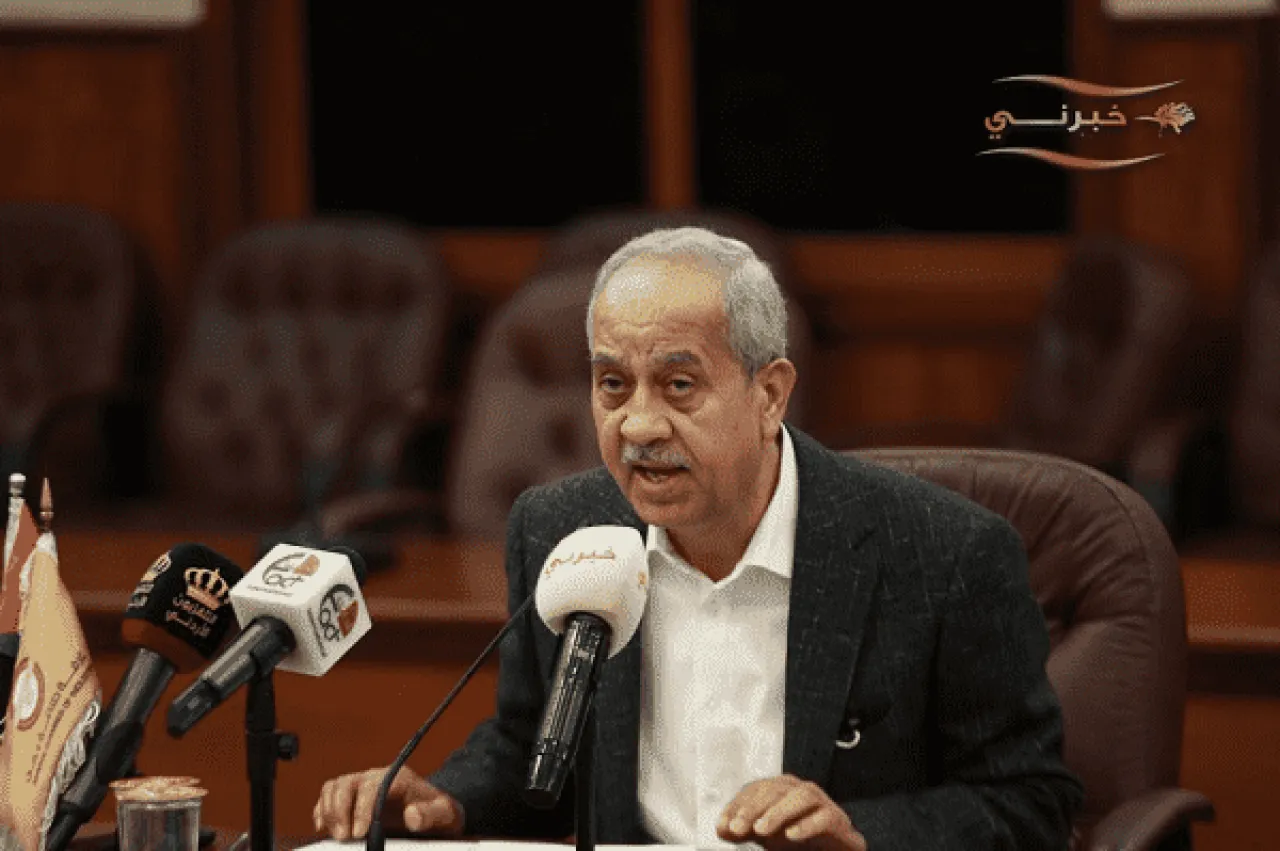
Khaberni - Engineer Fathi Al-Jaghbeer, President of Amman and Jordan Chambers of Industry, emphasized that the ongoing discussion about duties imposed on Syrian imports must be based on a comprehensive reading of numbers and facts, not on partial selection of items or dealing with them out of their complete economic context. He explained that the Syrian side, without prior coordination, imposed new measures at the Jordanian-Syrian border unilaterally, including preventing Jordanian trucks from entering Syrian territories and applying the principle of offloading and reloading up to the drafting of this statement, noting that the Jordanian government has been and still is committed to applying shipping agreements between countries and allowed entry of Syrian trucks loaded with goods. Additionally, the Syrian side also prohibited passenger cars from loading personal Jordanian goods (sailors), while the Jordanian side still allows these vehicles to bring Syrian goods into Jordan.
Regarding customs duties, Al-Jaghbeer explained that what is discussed about duties reaching 70% to 80% in sectors like clothing reflects a limited range of highly sensitive items, and does not represent the general framework of the customs policy, where other goods are distributed at different levels according to the nature of the product and the Syrian side's reaction.
He indicated that these measures come in the context of reciprocity especially in chemical, textile, and food industries, where the Syrian side imposes customs duties in dollars per ton, echoing the protective duties recently imposed by Jordan. For example:
- The detergents sector 3402: The Syrian customs duty is about $500 / ton, which equals 88% of the product price.
- The clothing sector (61-63): The Syrian customs duty is about $4004 / ton, a ratio that amounts to about 225% for some customs items reaching an average equivalent to 68% of the ready-made clothing price, while this ratio in products such as socks goes up to 166% averaging 86%, and the treated clothes are 103% reaching an average of 70% of the goods' value.
- The cement sector 2523: The Syrian customs duty is about $29 / ton, equivalent to 45% of the export price of the product.
This is in addition to clear differences in production costs and support between countries, which necessitates the use of regulatory tools to ensure fair competition in the domestic market.
Al-Jaghbeer also noted that the difficulty of Syrian products entering the Jordanian market should be considered within this framework, confirming that the Jordanian market is open and receives imports from various countries around the world, but based on clear regulatory foundations that balance openness and fair trade policy. Jordan had previously offered several proposals for exempt lists between the two countries to maximize trade and ensure integration, but Syria's domestic trade policy has leaned towards protectionism.
Regarding the trade balance, he clarified that the figures indicating a surplus exceeding 90% in favor of Jordan reflect the nature of the economies and not a result of emergency measures, stressing that addressing this imbalance is not done through reciprocal or escalatory measures, but through enhancing productive capacity and export capability, and building real industrial partnerships. He emphasized that sustainable solutions are based on gradual balance and integration, not reactions.
Al-Jaghbeer confirmed that Jordan deals with this file within a clear economic approach based on maintaining the fluidity of trade, opening the field for industrial integration that enhances the value of trade exchange rather than reducing it.
He pointed out that the decision to postpone some measures reflects flexibility in managing the file, aiming to avoid harming importers who had prepared their goods while the decision not to allow trucks was enforced by the Syrian side immediately, causing damage to many stakeholders from both parties.
As for Syrian investments in Jordan, everyone's approach from day one regarded them as Jordanian investments benefiting from all the advantages offered by the productive Jordanian economy, from trade agreements and open policies to the world and freedom of movement and markets.
Al-Jaghbeer concluded by emphasizing that the brotherly relationship between the two sibling countries is a firm principle for every Jordanian and that what Jordan has offered the Syrian siblings at all levels inside and outside Jordan during past periods does not require boasting about, and that the economic relationship between countries should be built on clear foundations of balanced treatment and accurate reading of numbers, ensuring sustainable growth in trade exchange and protecting the interests of producers in both countries.